
Review · NAIROBI
Kibera Chocolate City Tour
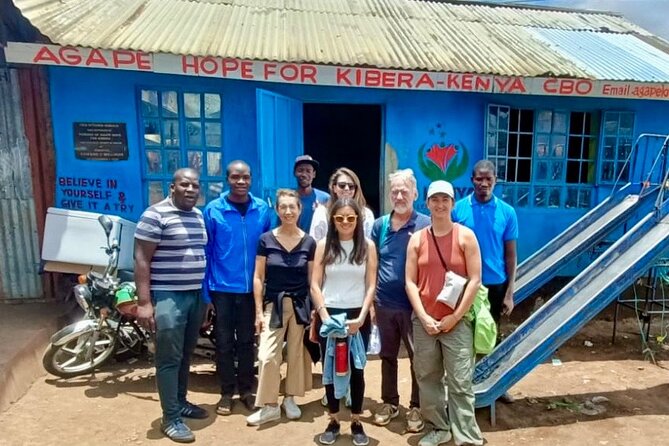
Kibera Chocolate City Tour takes you beyond Nairobi’s usual sights and into a community rarely understood from the outside. Local guides such as Collins, who grew up in Kibera, lead you through Toi Market, Victoria Bones Craftshop, an Agape Hope school and library, and the historic railway.
I like two things right away: the guide’s personal connection to Kibera and the chance to meet people through ordinary places of work, study, and play. The $22 price is also fair for a two-hour local tour, especially when the visit supports community work. The main consideration is that this is a walk through a densely populated, under-resourced area, so you should come ready for an honest look at difficult living conditions, not a polished sightseeing route.
Key points at a glance
- Local guides with lived experience: Collins, Allan, and Rama are named as guides, with Collins described as having grown up in Kibera.
- Four useful stops: The route includes Toi Market, Victoria Bones Craftshop, an Agape Hope school and library, and the historic railway.
- A community-focused visit: The tour explains local challenges while showing enterprise, creativity, education, and neighborhood ties.
- About two hours on foot: The route begins and ends at Kibera Town Centre, so you do not need to arrange a second pickup point.
- Good value at $22: The price is modest for a guided local experience, and the organization says its work supports children and community projects.
- Small enough to stay personal: The maximum group size is 30, though a private tour can be requested.
Why Kibera Chocolate City Tour feels different

Many city tours keep you at a safe distance from everyday life. This one does the opposite. You walk through Kibera with someone who can explain the area from personal experience, introduce you to local businesses, and connect what you see to the wider story of the community.
That personal link matters. Collins is repeatedly identified as a guide who was born and raised in Kibera. Allan and Rama are also named as guides. You are not simply being shown a collection of poor buildings. You are being introduced to a place where people work, trade, teach, raise children, make art, and organize to improve daily life.
The tour also tries to correct a common problem with visits to low-income communities: reducing residents to hardship. You will hear about serious challenges, but the route also points to resilience, creativity, and community cooperation. That balance is one of the strongest reasons to choose this experience.
Still, you need the right mindset. Kibera is not a museum or a staged cultural show. The streets can be crowded and conditions can be basic. Some parts may feel confronting. Go with respect, listen more than you speak, and ask before taking photographs.
More City Tours with Chocolate in the world:
- Zurich: City Tour, Cruise, and Lindt Home of Chocolate Visit
★ 4.5 · 4,624 reviews - Puerto Plata Private City Tour with Mount Isabel & Rum &Chocolate
★ 4.5 · 123 reviews - Tony`s private city tour with picnic & chocolate degustation
★ 5.0 · 80 reviews
Starting at Kibera Town Centre

The meeting point is Kibera Town Centre at Kamukunji Grounds in Nairobi. The activity ends at the same place, which keeps the logistics simple. The tour operates daily between 8:00 a.m. and 6:00 p.m., with the walking experience taking about two hours. The full booking window is described as two to three hours, so allow a little extra time.
Beginning at the town centre gives you a clear point of reference before the route moves into the surrounding community. Your guide provides the broad picture first: how people live, how businesses operate, and how community groups respond to local needs.
This opening is important because Kibera can be easy to misunderstand if you only notice the physical conditions. A local guide helps connect the streets and buildings to people’s routines. You can ask questions early, then use the rest of the walk to see those explanations in real life.
The meeting point is near public transportation. The exact transport route is not provided, so you should confirm your preferred way of reaching Kamukunji Grounds before setting out. Confirmation is sent at booking, and a mobile ticket is accepted.
Toi Market: the working side of Kibera
Toi Market is one of the most useful stops because it shows Kibera as a place of trade, not only a place of need. The market is home to many local businesses, and your guide explains how people make a living through small-scale commerce.
You can expect a busy, practical stop rather than a formal market tour. The value comes from seeing how local enterprise fits into daily life. Your guide can add context about the people you meet and the goods being sold, while you get a sense of the market’s role in the wider community.
This is also a good place to keep your behavior low-key. Ask before taking pictures, do not block walkways, and remember that vendors are working. The point is to learn about the market, not turn people into scenery.
One of the tour’s most useful themes is how residents support themselves despite limited resources. The market makes that visible. You see initiative and work alongside the obstacles, which gives you a more accurate picture than a short photo stop ever could.
Victoria Bones Craftshop and local creativity

The next stop is Victoria Bones Craftshop. The name suggests a craft-based business, and the visit adds a creative and commercial side to the tour. It shows how local makers can turn skill and available materials into products for sale.
The craftshop also gives you a natural chance to support a local business. If you want to buy something, you can ask your guide about the work and the best way to purchase respectfully. The supplied details do not list specific products or prices, so do not arrive expecting a particular item.
I like this stop because it keeps the tour from becoming a simple account of hardship. Craft work requires imagination, patience, and a market. Seeing it in context helps you understand how local people build income and identity through practical creativity.
Keep your expectations grounded. This is not presented as a large commercial workshop or a major tourist attraction. Its value lies in meeting a local enterprise and seeing another way people create opportunity within the community.
More Chocolate Tours around the world:
- Lindt Home of Chocolate Museum Entry Ticket
★ 4.7 · 9,329 reviews - Choco-Story Brussels: Chocolate Museum Entrance with Tasting
★ 4.3 · 4,883 reviews - The Chocolatarium Chocolate Tour Experience in Edinburgh
★ 5.0 · 4,322 reviews - Award-Winning Geneva Chocolate &Old Town Tour with Boat Ride (3h)
★ 5.0 · 3,721 reviews
Agape Hope school and library

The visit to the Agape Hope school and library brings education into the story. You will see a place where children receive lessons and have space to play with friends. The organization connected to the tour also works to support children, and the school gives that work a direct, human focus.
This stop can be especially meaningful, but it calls for care. Children should not be treated as photo subjects, and you should follow your guide’s instructions about photography and interaction. The information provided does not promise a formal classroom activity or a chance to volunteer, so treat it as an educational visit rather than an aid project you can join on the spot.
Some accounts of the tour describe entering a school and seeing how the organization supports children. They also say that a large part of the money given goes toward children. That makes the $22 fee feel more useful than the price alone suggests, although you should ask the operator directly if you want a precise explanation of how funds are allocated.
The school and library also help explain why community-led work matters. A guide who knows the area can show you both the need and the effort being made to respond to it. You see children learning and playing, not only statistics about poverty.
Walking beside the historic railway

The final part of the route follows the historic railway. From here, your guide gives you a broader view of Kibera and helps place the neighborhood within Nairobi’s past and present.
The railway is not simply a scenic viewpoint. It helps you understand how movement, settlement, and city growth shaped the area. The provided details do not give a full railway history, so expect your guide to explain what is relevant to Kibera rather than a long transport lecture.
This section can also help you pause after the closer street-level stops. You have seen shops, craft work, school life, and local streets. The railway offers a wider perspective before you return to the town centre.
The route is on foot, and the experience lasts about two hours. Wear comfortable shoes and expect ordinary urban walking conditions. The operator says the tour requires good weather, so rain can affect the schedule.
What the guides add
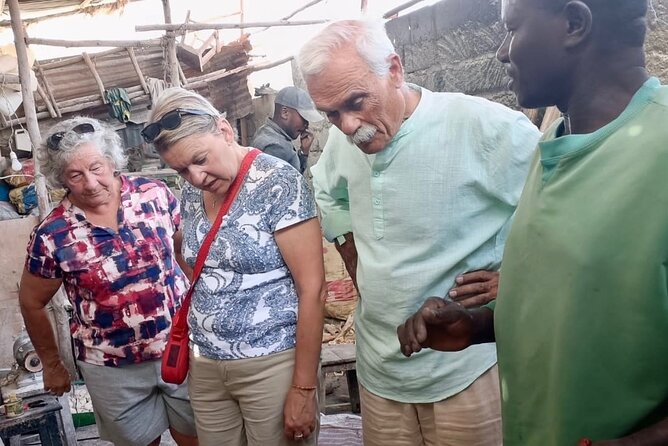
A good guide is essential on a tour like this. Collins receives the strongest attention in the supplied comments, with visitors describing him as someone raised in Kibera who cares deeply about improving his community. Allan and Rama are also named as guides.
That background changes the tone of the walk. Instead of receiving only an outsider’s explanation, you can ask how people work, study, organize, and support one another from someone with a close connection to the area.
The guides are also described as welcoming and attentive. One practical strength is that you are looked after throughout the walk, which can matter if you feel unsure at first. You should still remain alert to your belongings and follow normal city precautions, since the tour does not promise special security arrangements.
The operator says private tours and custom subjects can be arranged. If you want to focus on education, local businesses, community projects, or the railway, ask before booking. A private format may suit families, photographers, students, or anyone who wants more time for questions.
The $22 price and what you receive

At $22 per person, this is a reasonably priced two-hour experience in Nairobi. The cost includes the guided walk and visits to the listed stops. Admission tickets are not charged at the route itself.
The value depends on what you want from a tour. If you are looking for monuments, a polished performance, or a long list of formal attractions, this will not be the right use of your money. If you want direct contact with a local guide, context for Kibera, and a chance to support community work, the price is easier to justify.
The school and library are central to that value. The organization says its work benefits children, and the tour gives you a way to learn about that work while seeing the setting directly. Ask questions if the community contribution is important to your decision.
The maximum group size is 30. That is manageable for a walking activity, but it can still feel large in narrow streets or at busy stops. If personal conversation matters most, request a private tour or ask how large your booked group will be.
Who should book this experience

I would recommend the tour to you if you want a direct, local explanation of Nairobi and are willing to look beyond the city’s tourist center. It suits curious adults, older children with appropriate preparation, students, and people interested in education, small businesses, and community development.
It is also a good fit if you want to meet people through everyday places rather than watch a staged performance. The market, craftshop, school, and railway each show a different part of life, giving the walk a clear structure.
You may want to choose another activity if you have limited mobility or do not feel comfortable walking through a crowded community. The supplied information says most people can participate, but it does not provide details about pavement, seating, restroom access, or the exact walking distance.
You should also think carefully about your purpose. Do not book this merely to collect dramatic photographs or to confirm stereotypes. Book it if you want to listen, ask respectful questions, and understand a community on its own terms.
Practical details before you go
The tour runs Monday through Sunday, from 8:00 a.m. to 6:00 p.m. The activity starts and ends at Kibera Town Centre, Kamukunji Grounds, Nairobi. A mobile ticket is accepted, and confirmation arrives when you book.
Service animals are allowed, and the location is near public transportation. The operator says most people can participate, but you should contact them in advance about any specific mobility or access needs.
The experience can accommodate up to 30 people. Private tours and special interests may be possible if arranged ahead of time. The route requires good weather. If poor weather causes cancellation, you are offered another date or a full refund.
Cancellation is free up to 24 hours before the start time. Inside that 24-hour window, you cannot receive a refund or make changes. The cut-off follows Nairobi local time, so check the time carefully if you are booking from another country.
Should you book Kibera Chocolate City Tour?
Book this tour if you want an honest, community-led look at Kibera, especially with a guide such as Collins who grew up there. The strongest parts are the personal storytelling, the useful mix of market, craft, school, and railway stops, and the chance to understand both hardship and local effort.
At $22, it offers good value for a focused two-hour walk. Go with comfortable shoes, a respectful attitude, and realistic expectations. If that sounds right for you, Kibera Chocolate City Tour can add a side of Nairobi that most standard sightseeing routes leave out.
FAQ
How much does the Kibera Chocolate City Tour cost?
The tour costs $22 per person.
How long does the tour last?
The walking tour takes about two hours. The full activity is listed as approximately two to three hours.
Where does the tour begin?
It begins at Kibera Town Centre, Kamukunji Grounds, Nairobi, Kenya.
Where does the tour end?
The activity ends back at the meeting point at Kibera Town Centre.
Which places does the tour visit?
The route includes Toi Market, Victoria Bones Craftshop, an Agape Hope school and library, and the historic railway.
Who leads the tour?
Named guides include Collins, Allan, and Rama. Collins is described as having been born and raised in Kibera.
What is the maximum group size?
The tour accepts a maximum of 30 people.
Can I cancel for a refund?
Yes. You can cancel at least 24 hours before the start time for a full refund. Cancellations or changes made less than 24 hours before the start time are not accepted, and poor-weather cancellations offer another date or a full refund.
Freshly tempered around the world
- Zurich Open-top Tour and Chocolate and Cheese Countryside★ 3.5 · 11 reviews
- Lindt Chocolate Museum with Cruise Transfer from Zurich★ 4.6 · 7 reviews
- Zurich: Chocolate Tasting and Walking Tour with a Local★ 4.2 · 13 reviews
- Zagreb: Lake Bled and Ljubljana Day Tour with Chocolate Gift★ 5.0 · 26 reviews
- York: Introduction to Chocolate Making Experience★ 4.9 · 10 reviews
- Zaandijk-Near Zaanse Schans Chocolate making demo & tasting★ 4.8 · 13 reviews
- Private Wine and Chocolate Tasting Experience★ 4.4 · 3 reviews
- Yarra Valley: Wine and Chocolate tasting tour.★ 5.0 · 5 reviews