Review · BELGIUM
Brussels: Make Your Own Chocolates Workshop with Tastings
The most unusual part of this Brussels workshop comes before the sweets: you handle a fresh cacao pod, taste its beans, and try the white mucilage, the fruity juice around them. Then the bean-to-bar process becomes something you can see, smell, and taste rather than a vague phrase on a chocolate wrapper.
I like the mix of learning and making. You taste cacao from several origins, including Haiti’s Grand Anse, and you leave with three kinds of chocolate: mendiants, truffles, and a personalized bar. The instructors, including Elizabeth, Elisabeth, and Patricia, bring plenty of energy to the explanations.
The main caution is dietary. Dark chocolate is the only option for vegans and people avoiding lactose, toppings contain nuts, and the activity is not suitable for people with food allergies, gluten intolerance, lactose intolerance, or nut allergies. Also, arrive early. Late arrivals are not accepted.
Key points at a glance
- Taste cacao at several stages: Try fresh beans, cacao mucilage, and cacao liquor, which contains no alcohol.
- Make three chocolate treats: Create mendiants, truffles, and a decorated bar to take home.
- Use traceable Haitian cacao: The workshop uses organic cacao from small farmers and premium chocolate from Haiti’s Grand Anse.
- Meet working chocolate makers: The English-language instruction comes from certified Belgian artisan chocolate makers.
- Visit the machinery: See the bean-to-bar equipment and learn how raw beans become finished chocolate.
- Save on more chocolate: A 20 percent discount applies to the maker’s chocolate collection in its stores.
Starting at Place de la Justice 5
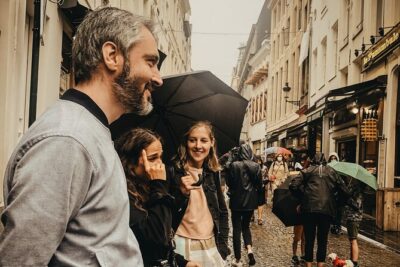
Your chocolate lesson begins at The Belgian Chocolate Makers ticket office at Place de la Justice 5, near Brussels Central Station and Mont des Arts. This is not the workshop room itself. First, staff check your ticket, provide a hairnet and wristband, and then walk you about 200 meters to the training centre.
Arrive at least 15 minutes early. The check-in desk closes when the session starts, and no late entry is allowed. That rule matters here because the workshop runs on a fixed schedule, with sessions at 11am, 2pm, and 5pm.
Tie back long hair before you arrive. You will wear a hairnet in the training centre, and large bags, luggage, food, drinks, smoking, and pets are not allowed. Plan this as a tidy, hands-on activity rather than something you squeeze in with a suitcase.
The training centre is a new, 150-square-meter space that can hold up to 60 people. That is a fairly large possible group, although the exact number in your session may vary. The room is fully air-conditioned, so bring an extra layer. Chocolate needs a controlled temperature, but you may find the workshop cool.
More Chocolate Making Workshops in Belgium
- Brussels: Belgian Chocolate Making Workshop with Tastings
★ 4.7 · 1,629 reviews - Brussels: 2.5-Hour Belgian Chocolate Making Workshop
★ 4.8 · 933 reviews - 1.5h Belgian Chocolate Workshop in Brussels (bean to bar)
★ 4.5 · 462 reviews
Your first taste is not chocolate
The lesson begins with an explanation of cacao and the path from bean to finished chocolate. The staff are certified Belgian artisan chocolate makers, and the focus is on how they actually work rather than on a short demonstration followed by a quick decorating task.
You handle a fresh cacao pod and taste a fresh cacao bean. Do not expect the bean to taste like a chocolate bar. It is notably bitter, and that contrast helps explain why fermentation, roasting, grinding, and careful blending matter so much.
You also taste the cacao pod’s mucilage, sometimes described as cacao juice. This pale, fruity pulp surrounds the beans inside the pod. It is one of the most memorable parts of the session because it shows that cacao begins as a tropical fruit, not as a brown confection.
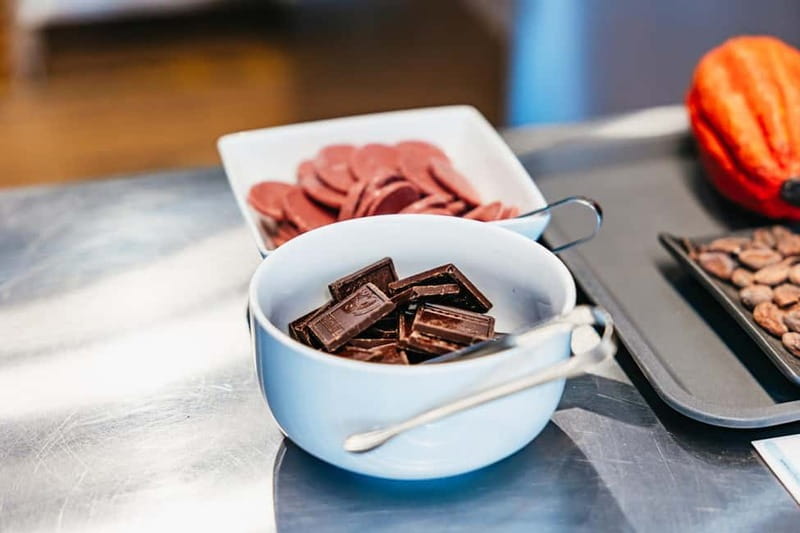
Next comes cacao liquor. The name can confuse people, but there is no alcohol involved. It is the ground cacao mass used to make chocolate, with a dark, direct flavor that gives you a clearer sense of the raw material than a finished truffle can.
Several premium origin cacaos are available to taste, with Haiti’s Grand Anse specifically included. Comparing origins gives the tasting a useful purpose. You are not just eating samples. You are learning that cacao can vary by place, farming, and processing.
Making mendiants, truffles, and a personal bar
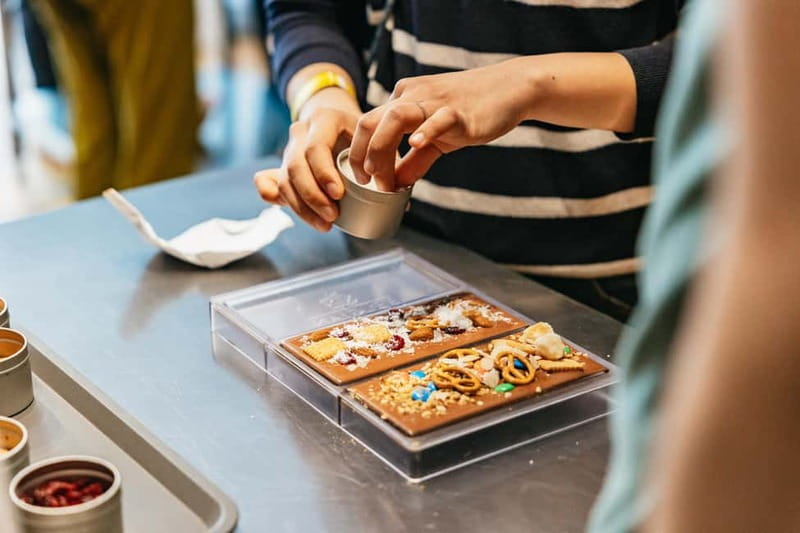
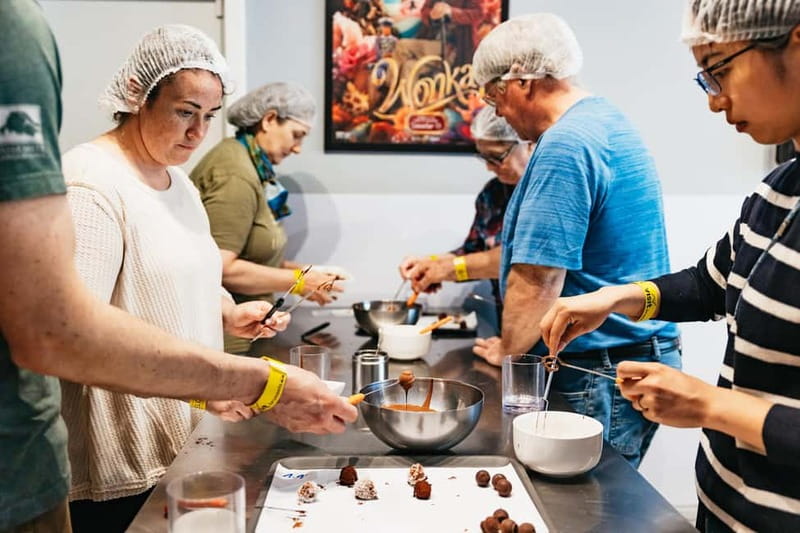
The practical portion gives you three different ways to work with chocolate. You make mendiants, prepare truffles, and create a personalized bar. Everything you make is yours to take home, packed in a box.
Mendiants are usually chocolate rounds finished with toppings. This is likely the easiest of the three tasks, but it still gives you room to make choices about appearance and texture. The toppings contain nuts, so anyone with a nut allergy should not book this activity.
Truffles offer a different kind of work. You shape and finish small chocolate pieces, learning how a simple chocolate mixture becomes a hand-made confection. The process is more tactile than simply pouring melted chocolate into a mold.
The custom bar is the souvenir with the most personal touch. You decide how to decorate it, then take it home with the other pieces. Several people who enjoyed the class particularly liked making three different chocolate types, since the activity does not feel like the same task repeated three times.
The chocolate used is handcrafted from premium cacao rather than industrial chocolate. The company says it does not use industrial chocolate in its workshops, and that all cacao has a 100 percent traceable supply chain. It also says the cacao is sourced without deforestation or child labor and that farmers receive a fair level of revenue.
Those claims are part of the experience’s value, not just marketing decoration. You get a closer look at what small-scale chocolate production involves, including the connection between farmer, bean, machine, and finished product.
Meeting the chocolate makers
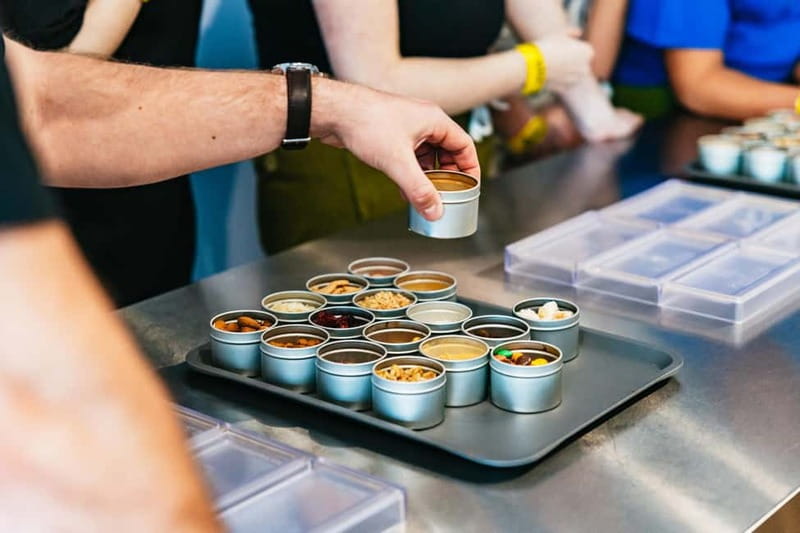
The instructors are a big part of the session. Elizabeth, also spelled Elisabeth in some information about the activity, is associated with an informative and friendly teaching style. Patricia is another instructor noted for making the process easy to follow and fun. The exact instructor depends on the session.
That personal contact gives the workshop more life than a self-guided museum display. You can ask questions while handling the ingredients, and explanations arrive at the point where they make sense. When you taste a cacao bean, you can immediately ask why it is so bitter. When you see the machinery, the earlier tasting suddenly has context.
The activity is conducted in English. The format also suits solo visitors. It is a group class, but the combination of shared work and clear instruction gives you something to do right away, rather than leaving you standing awkwardly at the edge of a group.
The class has also received praise for its pacing. Ninety minutes is long enough to cover the main chocolate-making stages and complete the three projects, but short enough to fit neatly into a day of sightseeing. One piece of feedback found that the actual session felt shorter than the advertised time, so I would treat 90 minutes as the scheduled duration, not a promise of a long, leisurely class.
More Chocolate Making Workshops in Brussels
- Brussels: Chocolate Truffle & Belgian Hot Chocolate Workshop
★ 4.7 · 367 reviews - Brussels: Chocolate Workshop and Guided Walking Tour
★ 4.6 · 263 reviews - 1.5h Hands on Chocolate Workshop: Truffles & Tasting
★ 4.5 · 76 reviews - Chocolate Workshop and Self-Guided Museum Visit at Choco-Story in Brussels
★ 4.5 · 72 reviews
The bean-to-bar machinery visit
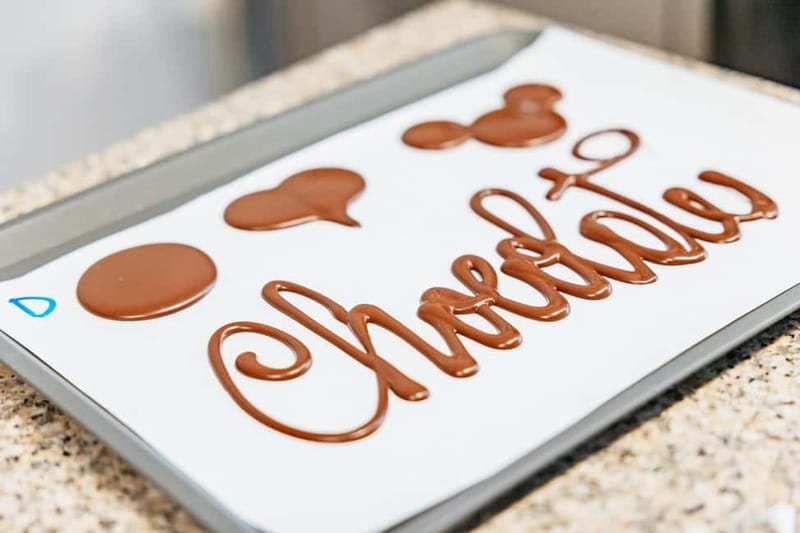
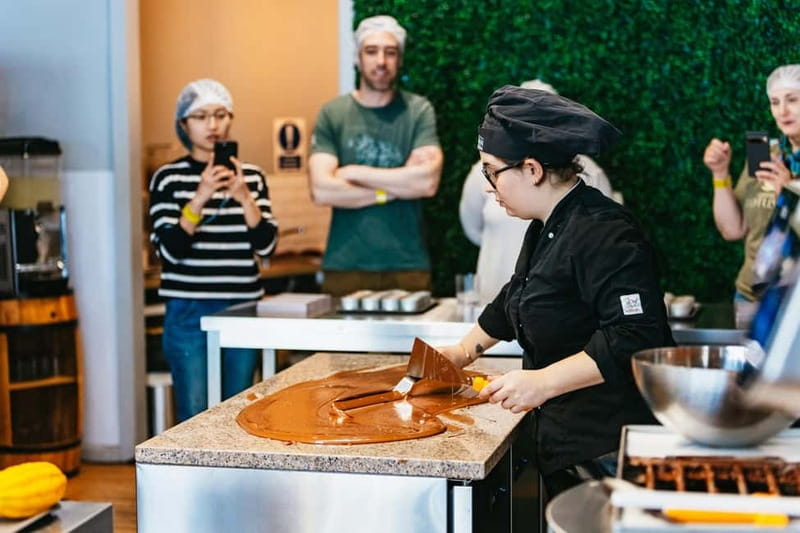
After the hands-on work, you visit the bean-to-bar machinery. The chocolate maker explains the steps used to turn cacao beans into chocolate, linking the equipment to the flavors you have just tasted.
This is an important part of the experience for anyone who wants more than a candy-making lesson. The word artisan can be used loosely, but here the workshop is built around a working chocolate business that produces its own collection. You get to connect the raw pod, the bitter bean, the cacao mass, and the final bar.
The machinery visit is included in the standard experience information. A laboratory visit is listed as a VIP upgrade, so do not assume that every booking includes a full behind-the-scenes laboratory tour. The regular activity does include access to the bean-to-bar machinery after the workshop.
What the $89 price gives you
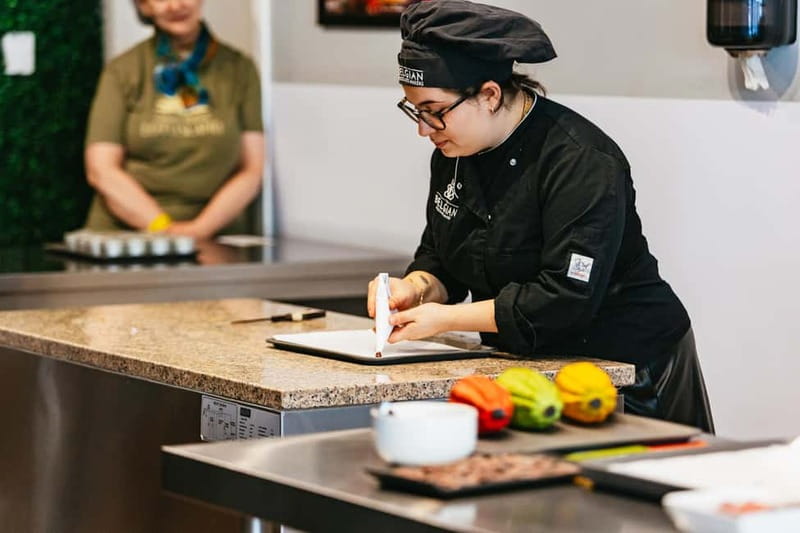
At $89 per person, this is not the cheapest chocolate tasting in Brussels. You are paying for a guided activity, hands-on instruction, multiple tastings, ingredients, equipment, and a box of chocolate you make yourself.
The price makes more sense if you value participation. A simple tasting gives you samples. Here, you taste cacao in unusual forms, learn how chocolate is made, and leave with mendiants, truffles, and a bar. The take-home chocolate also turns part of the admission into an edible souvenir.
The value is stronger for couples, families with older children, and solo visitors who want an organized activity. Children under six cannot join, and unaccompanied minors are not accepted. The workshop can also work well as a birthday treat or a rainy-day break from Brussels sightseeing.
Check the booking details carefully for VIP extras. A VIP upgrade may include a glass of champagne, an embroidered apron, and a laboratory visit. Recent booking information also shows that the apron and bubbly are not necessarily part of the standard price. Do not count on receiving an apron unless your selected option says so.
A 20 percent discount on the chocolate collection in the stores adds value if you plan to buy gifts. It also gives you a chance to try more of the maker’s work after seeing how the production starts.
Dietary limits deserve serious attention
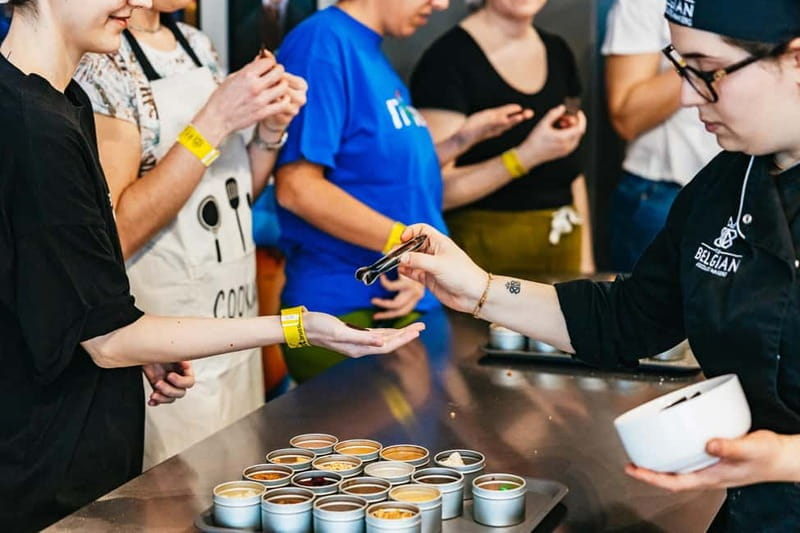
The chocolate comes from Haiti, and the workshop offers dark and milk chocolate. If you are vegan or lactose intolerant, you can work only with dark chocolate. The activity information also lists lactose intolerance, gluten intolerance, food allergies, and nut allergies among the reasons not to book.
Toppings contain nuts, which is the most important detail for anyone managing an allergy. Tell staff about food intolerances or allergies at check-in, but do not treat that conversation as a guarantee that the activity is safe for every condition. The published restrictions are broad.
Food and drinks are not allowed in the training centre. Water dispensers are available. A disabled toilet is also available, and the workshop is wheelchair accessible.
A few practical details before you book
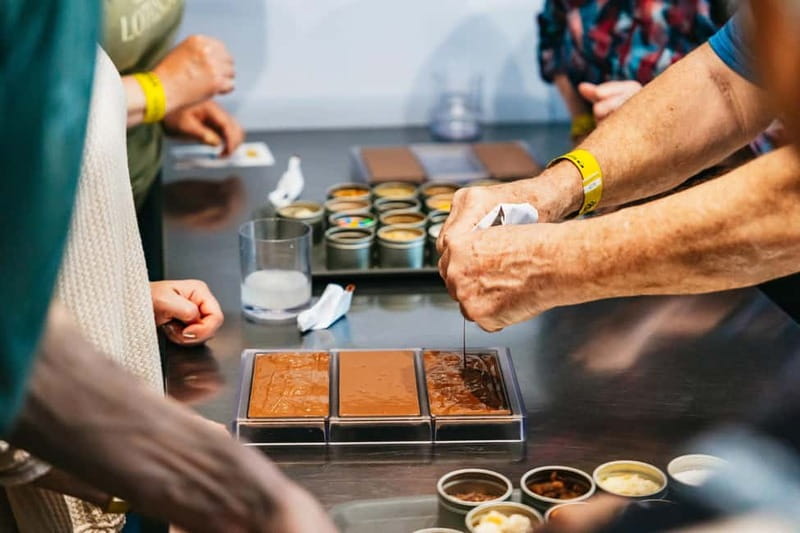
The workshop is offered in English and runs three times daily at 11am, 2pm, and 5pm. High demand can make advance booking sensible, especially if you need a particular time.
The training centre is air-conditioned and may feel cold. Wear something comfortable that you can work in, and bring a light layer. Long hair must be tied back under the hairnet.
You can cancel up to 24 hours before the activity for a full refund, and a reserve-now, pay-later option may be available. Check the exact terms at booking, particularly if your plans in Brussels are still changing.
The experience is available throughout the year, with hot chocolate offered in winter and a chocolate granita in summer. A champagne serving belongs to the VIP option rather than the basic experience.
Who will enjoy this chocolate workshop most?
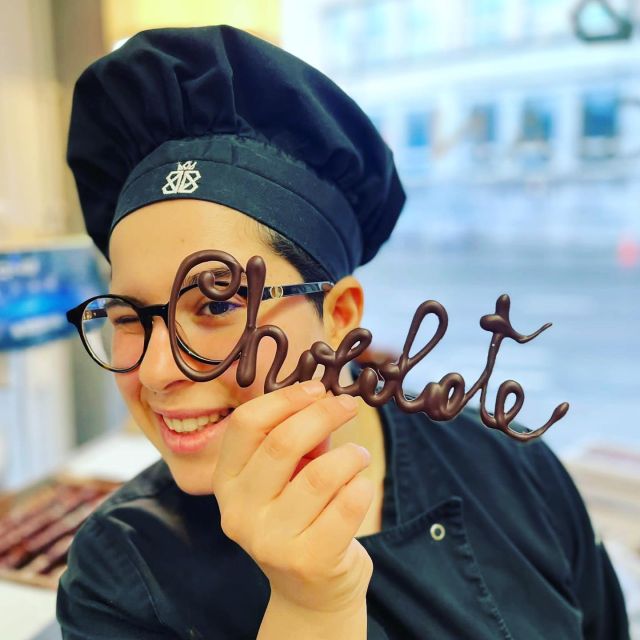
I would recommend it to anyone who wants to understand Belgian chocolate by working with it. It is especially good for people who enjoy food culture, practical demonstrations, and souvenirs they create themselves.
It also suits a first visit to Brussels because the location is central and the 90-minute schedule leaves time for Mont des Arts, the historic centre, museums, or a meal nearby. The activity gives you a break from looking at buildings and lets you use your hands for a change.
Solo visitors should feel comfortable booking. The structure gives you a clear task, and the instructors keep the group moving. Couples can treat it as a playful date, while older children can take part if they meet the minimum age and have an accompanying adult.
I would skip it if you want to make white chocolate. The workshop focuses on dark and milk chocolate, and two otherwise happy participants specifically wished white chocolate had been included. I would also skip it if allergies or dietary restrictions make shared chocolate equipment a concern.
Should you book it?
Book this workshop if you want more than a standard Brussels chocolate tasting. The fresh cacao pod, bitter bean, mucilage, and cacao liquor make it unusually educational, while the three finished treats keep the lesson active.
At $89, it is best viewed as a food workshop and souvenir package rather than a quick attraction. Choose the VIP option only if the champagne, embroidered apron, or laboratory visit matters to you. For most people, the standard class offers the main reward: clear English instruction, traceable Haitian cacao, a look at real bean-to-bar machinery, and a box of chocolate you made yourself.
FAQ
Where does the chocolate workshop start?
Check in at The Belgian Chocolate Makers ticket office at Place de la Justice 5, near Brussels Central Station and Mont des Arts. Staff then walk participants about 200 meters to the training centre.
How early should I arrive?
Arrive at least 15 minutes before the scheduled start. The ticket check closes when the workshop begins, and late arrivals are not accepted.
How long does the activity last?
The scheduled duration is 90 minutes.
What will I make during the workshop?
You will make mendiants, truffles, and a personalized chocolate bar. Everything you make is yours to take home in a box.
Is the workshop suitable for vegans or people avoiding lactose?
Only dark chocolate is available for vegans and people with lactose intolerance. The activity is not suitable for people with lactose intolerance according to the listed restrictions, so check your needs carefully before booking.
Are there allergy restrictions?
Yes. The activity is not suitable for people with food allergies, gluten intolerance, lactose intolerance, or nut allergies. Toppings contain nuts. Tell staff about allergies or intolerances at check-in.
What is included in the VIP upgrade?
The VIP option may include a glass of champagne, an embroidered apron with the logo, and a visit to the laboratory. The standard workshop includes chocolate tastings, a take-home box, the hands-on chocolate making, and the bean-to-bar machinery visit.
More Chocolate Tastings in Brussels
- Brussels: Belgian Chocolate Tasting Tour
★ 3.4 · 32 reviews - Beer and Chocolate Tasting Tour in Brussels min 6 pax
★ 5.0 · 11 reviews - Brussels: Beer and Chocolate Pairing Class with Tastings
★ 4.6 · 9 reviews - Brussels: Chocolate and Beer Private Tour with Tastings
★ 4.6 · 7 reviews
More Chocolate Tastings in Belgium
- Brussels Walking and Tasting Tour (Beers,Chocolates&Fries/Waffle)
★ 5.0 · 929 reviews - Brussels Chocolate Tasting Tour
★ 5.0 · 568 reviews - Brussels: Beer Tour with 6 Beers and 3 Chocolate Tastings
★ 4.7 · 392 reviews - Brussels: Belgian Chocolate, Beer, and Fries Tasting Tour
★ 4.5 · 54 reviews
Freshly tempered around Brussels
- Brussels Chocolate Tour Private & Personalized with a Local Guide★ 5.0 · 13 reviews
- Navigate through Brussels and Discover Beer and Chocolate★ 5.0 · 9 reviews
- Beer and Chocolate Tasting Tour in Brussels min 6 pax★ 5.0 · 11 reviews
- Afternoon Tipsy Tour with Cocktails & Chocolates in Brussels★ 5.0 · 9 reviews
- Private: Discover Brussels beer & breweries by a young local (incl. chocolate)★ 5.0 · 8 reviews
- Brussels: Tour Bruges & Ghent with Cruise + Chocolate visit★ 4.0 · 24 reviews
- Beer & Chocolate Tasting in a Brewery-Distillery★ 5.0 · 4 reviews
- Beer & Chocolate pairing in Brussels★ 5.0 · 4 reviews
More Belgium Chocolate Tours to compare.
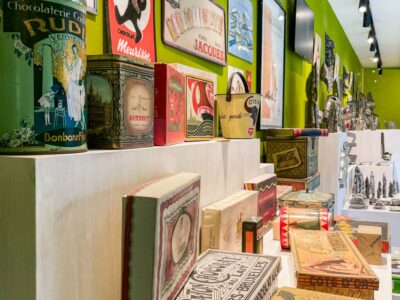
Choco-Story Brussels: Chocolate Museum Entrance with Tasting
Read our review →
Hungry Mary’s Famous Beer and Chocolate Tour in Brussels
Read our review →
Brussels: Belgian Chocolate Making Workshop with Tastings
Read our review →
Brussels: Chocolate Museum Visit with Workshop
Read our review →
Bruges: Choco-Story Chocolate Museum Guided Tour w/Tastings
Read our review →
Brussels: Historical Tour with Chocolate & Waffle Tasting
Read our review →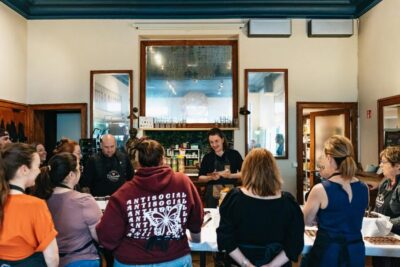
Brussels: 2.5-Hour Belgian Chocolate Making Workshop
Read our review →