

Review · NAIROBI
Visit kibera Slum the chocolate city
Kibera is not a museum exhibit or a quick photo stop. It is a living Nairobi community, and this 150-minute walk gives you a guided look at its history, daily challenges, creative energy, and local efforts to improve life. You’ll start at Equity Ayani, walk through Kibera, and return there with a better sense of how urban Kenya works beyond the usual city sights.
I like the focus on community projects, including education, skills training, and social enterprise. I also like that the tour includes historical and cultural context rather than only a walk through streets. The main consideration is that this is a visit to a marginalized community, so you’ll need to listen carefully, ask permission before taking photographs, and treat people as neighbors rather than attractions. Entrance fees and pickup are not included.
Key points
- Meet at Equity Ayani: The tour begins and ends at this stated meeting point, with no pickup included.
- A 150-minute walking route: You have enough time for context, conversation, sightseeing, and scenic views on the way.
- Local voices matter: The tour connects you with residents, community leaders, and organizations working inside Kibera.
- Daniel receives special praise: A verified booking specifically highlights his kind and professional guiding style.
- A useful social context: You’ll learn how Kibera fits into Kenya’s wider story of urban growth and social challenges.
- $25 before extra costs: The price is reasonable for a guided community visit, but entrance fees are separate.
Starting at Equity Ayani in Nairobi

Your meeting point is Equity Ayani, where the tour begins and ends. Since pickup is not included, plan your own way to this location and allow time to arrive without rushing. The activity information does not provide a hotel transfer, private vehicle, or transport between the meeting point and Kibera.
That detail matters. A tour can feel much easier when a driver collects you, but this experience puts the responsibility for reaching Equity Ayani on you. Once there, the guide leads the walk and brings you back to the same place, which gives the outing a clear beginning and finish.
The stated price is $25 per person. That is a fair amount for a 2.5-hour guided walk if you want local explanation and access to community initiatives rather than a simple drive-by view. Still, check the final cost carefully because entrance fees are not included. The available details do not state the amount of any entrance fee, so ask before booking if you need to keep a strict budget.
More Chocolate Tours around the world:
- Lindt Home of Chocolate Museum Entry Ticket
★ 4.7 · 9,329 reviews - Choco-Story Brussels: Chocolate Museum Entrance with Tasting
★ 4.3 · 4,883 reviews - Zurich: City Tour, Cruise, and Lindt Home of Chocolate Visit
★ 4.5 · 4,624 reviews
Walking through Kibera for 150 minutes

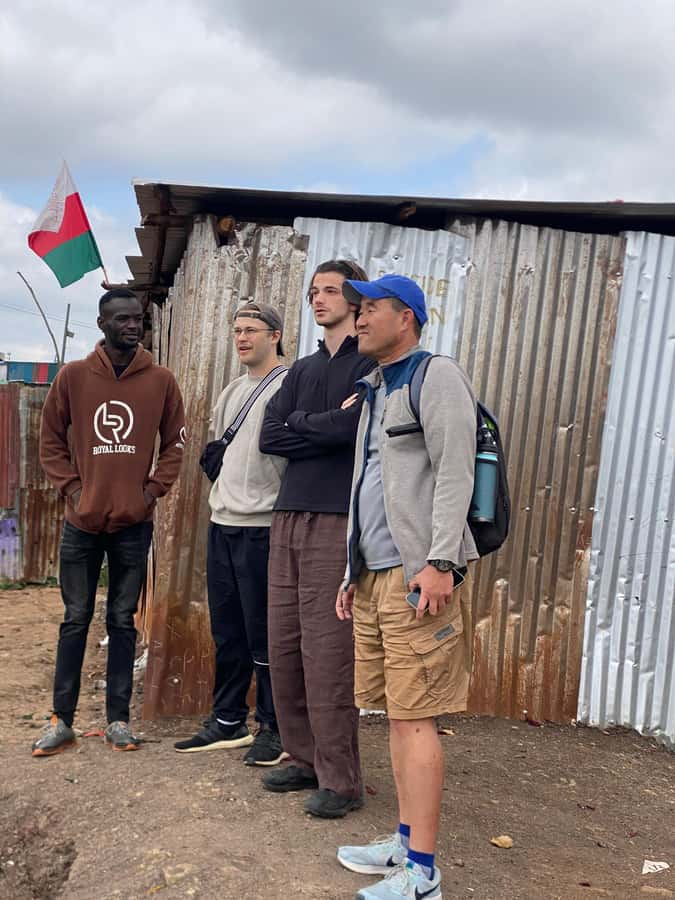
The central part of the experience is a walk through Kibera, described as Nairobi’s largest informal settlement. You are not simply passing through in a vehicle. You are moving on foot, seeing the area at street level, and hearing how the community developed within Kenya’s wider urban story.
The walk includes sightseeing and scenic views along the way. The description does not specify a fixed list of streets, landmarks, or viewpoints, so you should not book this expecting a standard monument-to-monument route. Its value lies in the guide’s explanation and the human stories connected to the area.
The guide is there to help you understand what you are seeing. That can include the settlement’s development, the pressures created by urban growth, and the ways residents respond to those pressures. The tour presents Kibera as a community with difficulties, but also with initiative, work, culture, and a strong sense of identity.
I would keep your expectations practical. The activity is a 150-minute walking visit, not a luxury sightseeing excursion. Conditions may feel basic, and the route is intended to show everyday life rather than polish it for visitors. Wear comfortable shoes, keep your belongings secure, and bring a respectful attitude.
Meeting residents and community leaders
Community engagement is one of the strongest reasons to choose this experience. You may interact with local residents and community leaders, hearing about their experiences, local initiatives, and the challenges they face.
That contact can make the tour more useful than a general lecture. Instead of treating Kibera as a single story, the visit gives you a chance to hear how different people understand their home and their work. The exact people you meet are not listed, so the conversations may vary by date and availability.
This is also where your behavior matters most. Ask questions in a polite way, listen more than you speak, and do not assume that one person represents the whole community. If you want photographs, ask first. A respectful visit should leave room for people to say no without pressure.
The responsible-tourism element is not a decorative extra. It is central to the experience. You are being asked to consider how visits to marginalized communities can help or harm, and why support for local initiatives should be more important than collecting dramatic images.
Seeing empowerment projects in action

The tour may include visits to local organizations and social enterprises. Their work is connected to education, skills training, and community development.
Because no specific organizations are named, I would treat this part as a chance to learn about local responses rather than a guaranteed visit to one particular project. The benefit is the broader picture: Kibera is not defined only by poverty or limited services. Residents and organizations are also building ways for people to learn, earn, and support one another.
This is valuable for you as a visitor because it adds practical detail to the historical discussion. You can see how community development works at a local level, and how social enterprise may offer tools for residents who face limited opportunities.
Some projects may also have entrance fees or other costs, since entrance is listed separately from the tour price. Ask your guide how any additional payment is handled and whether it directly supports the organization you are visiting. That simple question helps you understand the value of what you are paying for.
Same cocoa, a different bite:
- The Chocolatarium Chocolate Tour Experience in Edinburgh
★ 5.0 · 4,322 reviews - Award-Winning Geneva Chocolate &Old Town Tour with Boat Ride (3h)
★ 5.0 · 3,721 reviews - Melbourne: Yarra Valley Wine, Gin, Whisky and Chocolate Tour
★ 5.0 · 3,667 reviews - 4×4 Dominican Adventure with Chocolate and Coffee Tasting
★ 5.0 · 2,920 reviews
Culture, art, music, and local enterprise

Kibera’s cultural side is another important part of the walk. The experience introduces you to art, music, entrepreneurship, and the area’s cultural diversity.
The information does not promise a concert, a performance, or a specific artist. Instead, expect these themes to appear through the places you visit and the stories your guide tells. The cultural details help balance the social challenges discussed during the tour.
I especially like this approach because it prevents Kibera from being presented as a place with only one problem. You may find art, music, small businesses, and personal enterprise alongside difficult conditions. These details show how residents shape their own community and maintain a sense of purpose.
The quality of this section will depend heavily on the guide and the day’s route. Daniel is the only guide named in the available feedback, and he received a five-star assessment for being kind and professional. That is useful information if you are looking for a guide who can handle a sensitive subject with care, although the booking details list several possible guide languages rather than guaranteeing Daniel specifically.
Understanding Kibera’s place in Kenya

A good Kibera tour should leave you with more than impressions. It should explain how the settlement grew, why informal communities develop around major cities, and how housing, work, services, and population movement connect to urbanization in Kenya.
That historical context is included here. The guide explains Kibera’s development and its place within wider social challenges in the country. The available information does not give a detailed historical timeline, so you should expect a spoken overview rather than a formal history lesson.
This context matters because a short walk can otherwise reduce a complex community to whatever you happen to see on one street. A guide can connect those observations to larger issues and help you avoid easy conclusions.
I would listen for the difference between a fact, a local viewpoint, and a general explanation. The best conversations often come from asking how a project works, what residents want visitors to understand, and what changes the community hopes to see. You do not need to turn the tour into an academic exercise. A few thoughtful questions can make the experience more meaningful.
Price, languages, and booking flexibility
At $25 per person, the tour sits at a modest price for a 150-minute guided experience. You are paying mainly for the guide’s time, interpretation, community connections, and route. You are not paying for hotel pickup, and entrance fees are separate.
The listed guide languages are English, Chinese, Esperanto, German, Italian, Spanish, and French. Confirm your preferred language when booking because a long language list does not necessarily mean every language is available at every departure.
The provider is Royal Safaris. The activity offers free cancellation up to 24 hours before the start for a full refund, and you can reserve now and pay later. Those options are helpful if your Nairobi schedule is still changing.
The rating shown is 4.8 from three reviews. Two written five-star comments give specific praise: Sara from Spain names Daniel and describes the tour as excellent, while a verified booking from Switzerland highlights a guide who was very kind and professional. That points to courteous guiding as a strength, but the small number of ratings means you should not treat the score as a complete measure of every departure.
Who will appreciate this Kibera walk
I would recommend this tour to you if you want to understand Nairobi through local community life rather than only through major sights. It suits curious visitors who are comfortable walking, listening, and dealing with a subject that requires tact.
It is also a good match if you want your spending to connect with local organizations, education, skills training, or community development. Ask how the projects operate and where any extra entrance payment goes. That can help you decide if the experience matches your own approach to responsible tourism.
You may want to choose another activity if you prefer a conventional sightseeing route, fixed landmarks, private transport, or a polished attraction with little uncertainty. The itinerary does not promise a particular set of buildings or performances, and the nature of the visit means conditions may be more demanding than on a standard city tour.
Bring comfortable footwear and a respectful manner. Keep the group’s focus on listening and learning. The walk is more rewarding when you treat it as a meeting with a community, not as a chance to collect unusual photographs.
Should you book the Kibera Slum Chocolate City tour?

Book it if you want a short, guided introduction to Kibera that combines history, culture, local initiatives, and conversations about responsible tourism. The $25 price is sensible for the guide-led experience, especially if you value context and community engagement.
Before paying, confirm the meeting details at Equity Ayani, the language available for your date, and any separate entrance fee. I would also ask whether Daniel is guiding your departure if his calm, professional style is part of your decision.
This tour is not for every visitor. If you approach it with respect and realistic expectations, it can help you see Nairobi in a fuller way, with attention not only to hardship but also to work, creativity, local leadership, and community effort.
FAQ
Where does the Kibera tour start?
The tour starts at Equity Ayani.
Where does the tour finish?
You return to Equity Ayani at the end of the walk.
How long does the experience last?
The activity lasts 150 minutes, or 2.5 hours.
How much does the tour cost?
The listed price is $25 per person.
Is pickup included?
No. Pickup is not included, so you must make your own way to Equity Ayani.
Are entrance fees included?
No. Entrance fees are not included in the listed price.
Which languages are available?
The listed guide languages are English, Chinese, Esperanto, German, Italian, Spanish, and French.
Can I cancel for a refund?
Yes. You can cancel up to 24 hours in advance for a full refund.
Can I reserve now and pay later?
Yes. The activity allows you to reserve your place and pay later.
Freshly tempered around the world
- Zurich Open-top Tour and Chocolate and Cheese Countryside★ 3.5 · 11 reviews
- Zurich: Chocolate Tasting and Walking Tour with a Local★ 4.2 · 13 reviews
- Lindt Chocolate Museum with Cruise Transfer from Zurich★ 4.6 · 7 reviews
- Zagreb: Lake Bled and Ljubljana Day Tour with Chocolate Gift★ 5.0 · 26 reviews
- York: Introduction to Chocolate Making Experience★ 4.9 · 10 reviews
- Zaandijk-Near Zaanse Schans Chocolate making demo & tasting★ 4.8 · 13 reviews
- Private Wine and Chocolate Tasting Experience★ 4.4 · 3 reviews
- Yarra Valley: Wine and Chocolate tasting tour.★ 5.0 · 5 reviews