
Review · USA
Big Island Hawaii: Craft Chocolate Tasting and Farm Tour
The most interesting part of this Big Island outing is that it treats chocolate as an agricultural product, not just a sweet snack. At Honolii Orchards, you follow cacao from tree to pod to fermentation, then taste how soil, weather, and genetics change the final bar. Fresh cacao juice and roasted beans make the lesson especially concrete.
I like the serious tasting lineup, which includes at least 10 single-origin bars from farms across Hawaii. I also like the setting: a family farm about five minutes from Hilo, with ocean and valley views from the tasting room. The main drawback is the access road and the length of the visit. You need to drive 1.7 miles up Puia Road, and a full three and a half hours may be more chocolate education than casual snackers want.
Key points to know before you book
- Taste Hawaiian cacao side by side: Compare at least 10 single-origin bars and notice how much their flavors differ.
- See the work behind the bar: The orchard and fermentation-room visits explain the stages most chocolate tours skip.
- Meet passionate guides: Wren and Jude have led especially engaging sessions, with Wren explaining farming and processing in clear, practical terms.
- Enjoy more than chocolate bars: The tasting includes fresh cacao juice, roasted cacao beans, cacao tea, chocolate-covered macadamias, and seasonal fruit.
- Allow a full 210 minutes: This is a farm lesson, scenic outing, and tasting rather than a quick stop.
- Plan your ride carefully: The farm is easy to reach by car, but ride-hailing pickup can be slow because the entrance is on a rural road.
Why this Hilo chocolate tour is different
Many chocolate tastings focus on finished products. This one starts much earlier, with the cacao tree and the work required to turn a harvested pod into something worth tasting.
That distinction matters. You will not simply hear that one bar is fruity and another is nutty. You will learn why those differences can appear, including the roles of cacao genetics, growing conditions, harvesting, fermentation, and roasting. Once you understand those steps, tasting becomes more than picking a favorite wrapper.
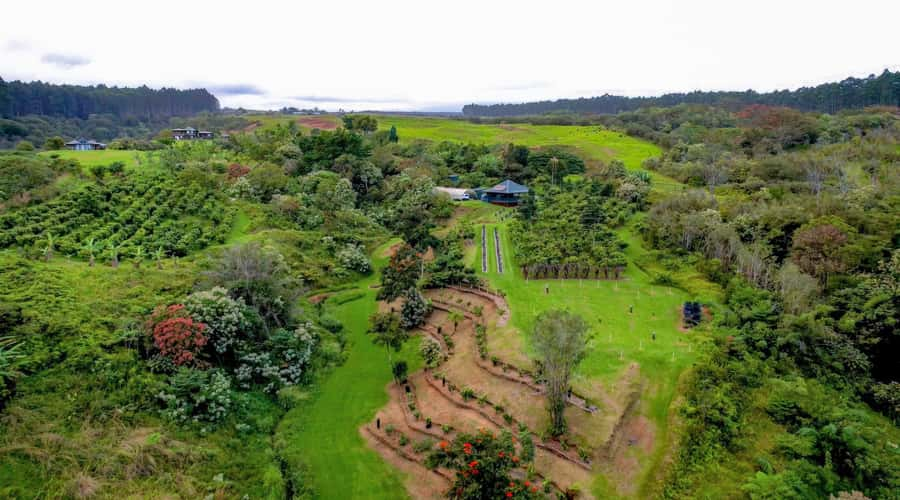
Honolii Orchards is a family-owned farm in Paukaa, just outside Hilo. The property sits among old agricultural land associated with breadfruit, sugarcane, macadamia nuts, and cattle. The drive gives you a look at a quieter side of the Big Island, away from the main visitor routes.
The experience costs $130 per person. That is a substantial price for a food tour, but the visit lasts 210 minutes and includes a guided farm walk, a look at the fermentation room, a history lesson, and a tasting of at least 10 bars. You are paying for access to the production side of cacao as much as for the chocolate itself.
If you want a box of sweets and a quick explanation, this is more than you need. If you enjoy food, farming, and the science behind flavor, the price makes more sense.
More Chocolate Tastings in the USA
- Princeville Botanical Gardens Tour and Chocolate Tasting Ticket
★ 5.0 · 774 reviews - Kauai Chocolate Farm Tasting Tour
★ 5.0 · 666 reviews - Nashville’s Goo Goo Chocolate Tasting & Candy Making Class
★ 5.0 · 247 reviews
Finding Honolii Orchards near Hilo
The farm address is 1533 Puia Road in Paukaa, Hawaii 96720. The most useful navigation method is the provided Google Maps pin. Use Google Maps rather than relying on every road sign, since Puia Road is mislabeled as Woa Road in the area.
From Hilo, head toward Paukaa and turn off Mamalahoa Highway onto Kulana Street. Continue through Paukaa Town, then turn onto Puia Road near the Paukaa Kingdom Hall of Jehovah’s Witnesses. From there, drive about 1.7 miles uphill for roughly five to 10 minutes.
Look for the open green gate and the large vinyl sign on the left. That entrance detail matters because the road is not a polished resort driveway, and you could easily wonder if you have gone too far.
The scenic approach is part of the charm, but it also creates a practical issue. A ride-hailing car may have trouble finding the entrance or returning for you. One booking party waited a long time for a driver after the tour. If you plan to use a taxi or app-based ride, arrange pickup carefully and do not assume the driver will spot the farm without help.
Starting in the tasting room
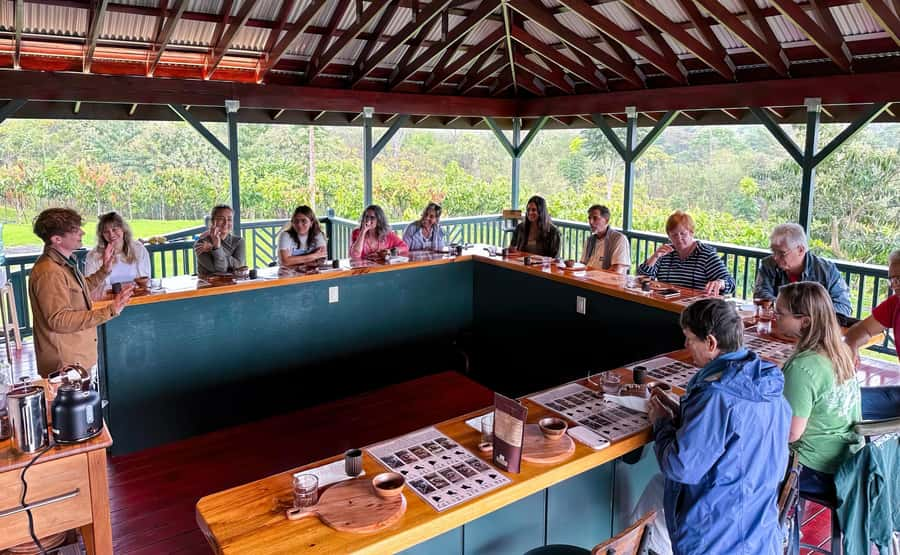
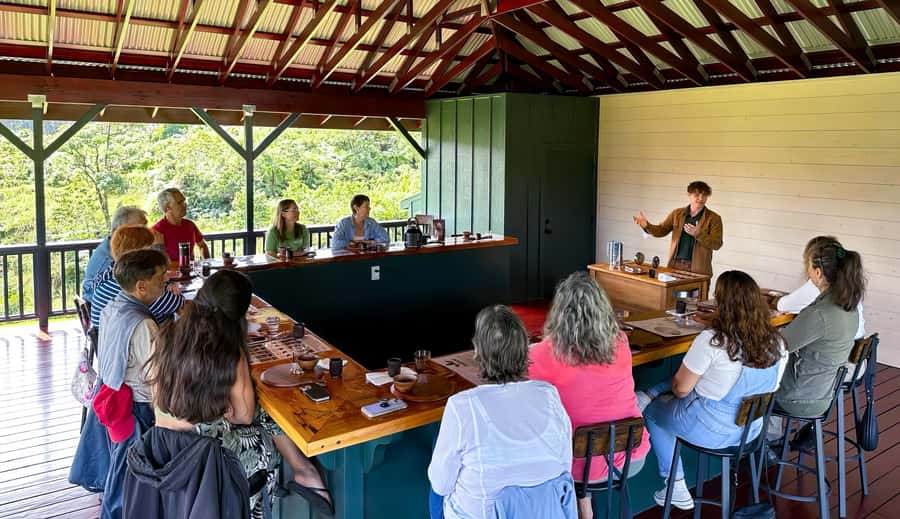
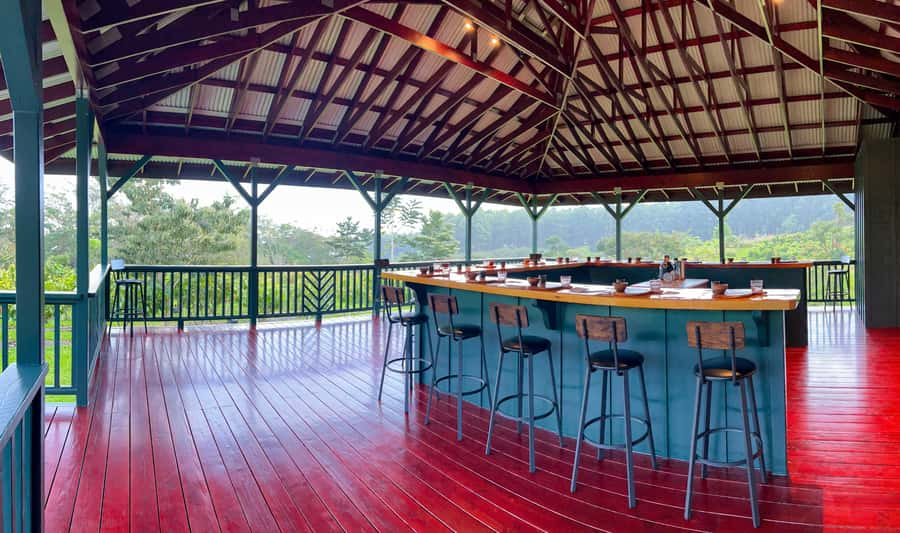
The visit begins in the tasting room, where you can settle in with a welcome refreshment and a little conversation before heading outside. This opening gives the guide time to explain what you will be seeing and gives you a chance to ask about the farm.
The room sits above the orchard canopy and has broad views toward the ocean and nearby valleys. It is a comfortable place to begin and end the visit, especially if you have spent the morning driving or walking elsewhere on the island.
The setting also helps frame the larger point of the tour. You are not tasting chocolate in an anonymous shop. You are looking out over the kind of agricultural terrain that supports the crop you are about to study.
Guides such as Wren bring a strong interest in cacao farming and processing. Jude has helped host the tasting portion, keeping the food moving while explaining the products. The best part of the guiding style is its willingness to answer detailed questions without assuming that you already know the difference between a cacao bean and a finished chocolate bar.
Walking through the cacao orchard
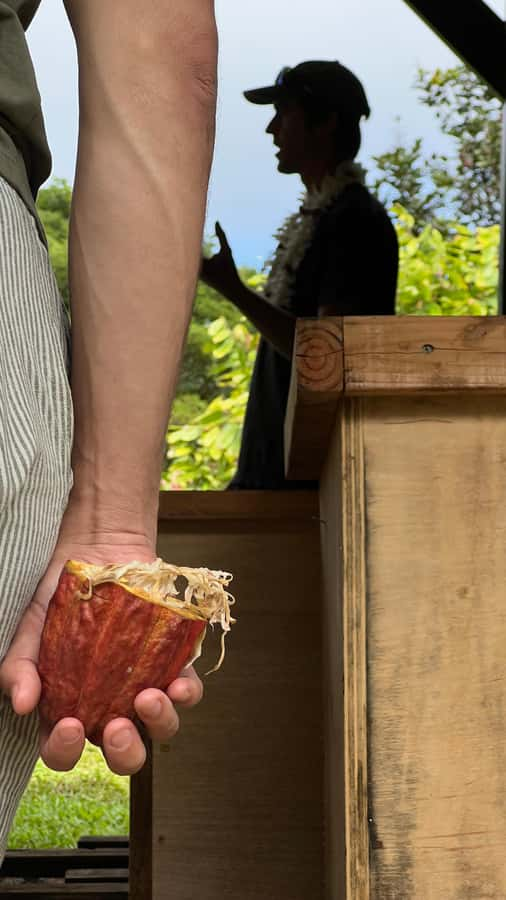
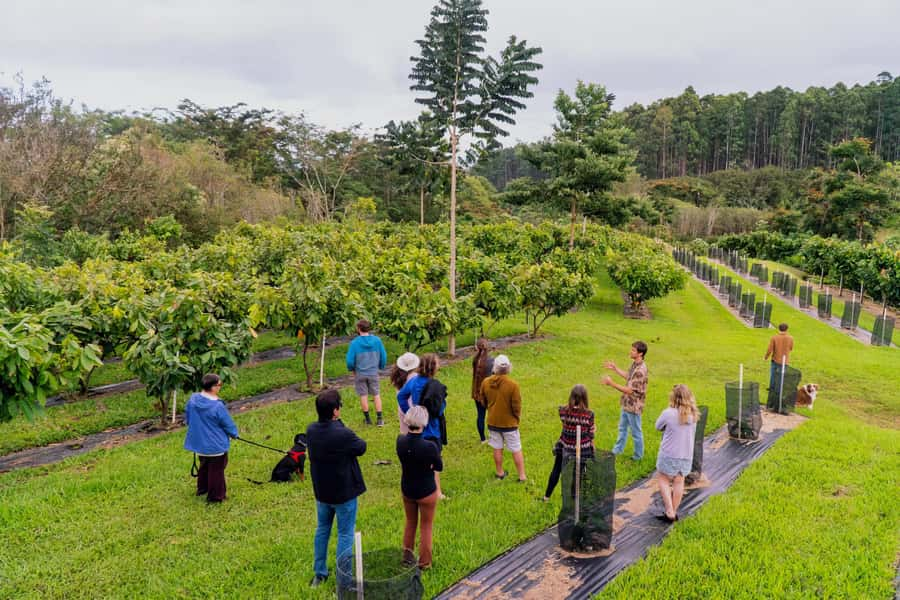
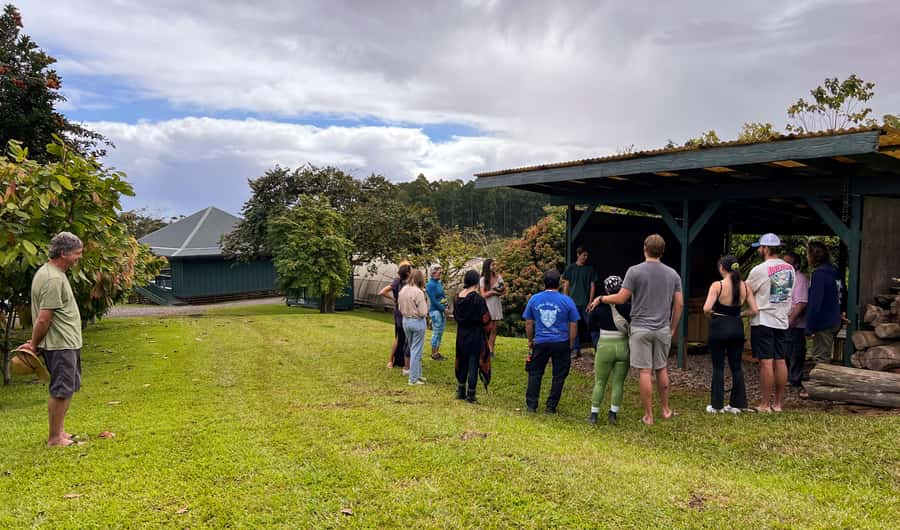
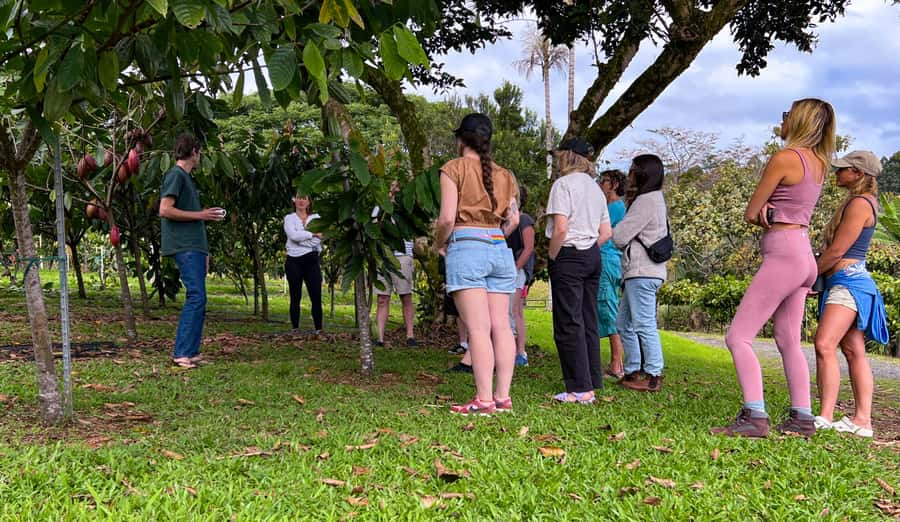
The orchard walk shows you the cacao tree in its growing environment. You will learn about cultivation, harvest, and the path from fruit to finished chocolate.
Cacao is not a simple crop. The tree produces pods, and those pods contain the beans used to make chocolate. But the beans do not taste like the bar you know from a supermarket shelf. They require several stages of handling before they develop the flavors associated with chocolate.
The guide also connects cacao farming to the agricultural past of the Hamakua Coast. Sugarcane once shaped much of this part of the island, and that history helps explain why the area contains such a mix of old farm land and newer specialty crops.
The walk is informative rather than strenuous, but you should let the farm know in advance if you have trouble standing for long periods or have mobility concerns. The activity includes walking outdoors and moving between the orchard, fermentation area, and tasting room.
You will get more from this section if you ask questions. The farm encourages curiosity, and this is the point where you can connect the broad history lesson to actual trees, fruit, and growing conditions in front of you.
More Cacao Farm Tours in the USA:
- Lahaina: Maui Ku’ia Estate Guided Cacao Farm Tour and Tasting
★ 5.0 · 1,103 reviews - Award Winning Farm Tour: Coffee, Chocolate and Unique Gifts
★ 5.0 · 484 reviews - Lahaina: Maui Ku’ia Estate Guided Cacao Farm Tour & Tasting
★ 4.8 · 137 reviews - Oahu: Chocolate Farm Tour with Tasting – Kamananui Cacao
★ 5.0 · 33 reviews
The fermentation room and the science of flavor
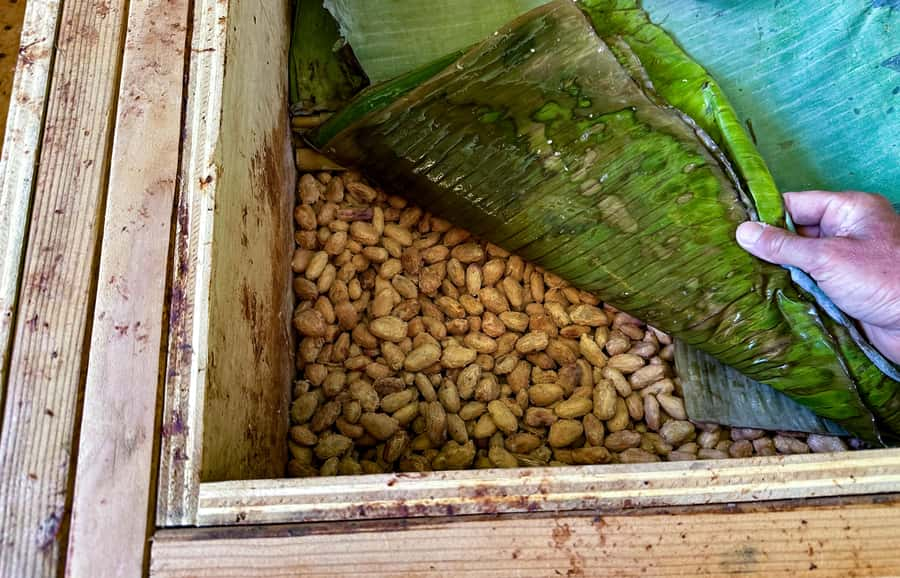
The fermentation-room visit is one of the strongest reasons to choose this experience instead of a standard chocolate shop tasting.
After cacao pods are harvested and opened, the beans need careful post-harvest treatment. Fermentation affects the flavor and aroma that later appear after drying and roasting. Small changes in timing and conditions can produce noticeable differences in the finished chocolate.
You will hear how this stage works and why it matters to craft producers. The lesson gives useful context for the tasting that follows. A bar with bright fruit notes, earthy tones, or a more nutty character is not simply flavored that way by accident. The raw material and the processing choices both play a part.
This section also shows the difference between a farm selling a crop and a farm trying to make a distinctive chocolate product. The work is precise, and the process leaves room for experimentation.
The fermentation room may be less visually dramatic than the orchard or the ocean view, but it is the most important stop for understanding quality. Without fermentation, the tasting would be reduced to a series of labels and opinions.
A history lesson from Mesoamerica to Hawaii
Back in the tasting room, the guide traces chocolate from its origins in ancient Mesoamerica to the modern craft chocolate movement.
That history gives the tasting a useful frame. Cacao has long been tied to culture, trade, farming, and ritual, not just dessert. You will also learn how craft chocolate differs from mass-produced chocolate, including why single-origin bars can show more variation.
The lesson is designed for a general audience, so you do not need a background in food science. One guide has been especially good at explaining technical ideas in plain English, which helps if English is not your first language.
The conversation then turns to Hawaii. The farm presents the islands as a rising center for specialty cacao, with different growing regions and farm practices producing distinct results. The comparison to wine is useful here, as you begin to notice the role of place in the flavor of each bar.
Do not expect a formal lecture with no room for questions. The strongest sessions are conversational, and your questions can steer the discussion toward farming, processing, history, or flavor.
Tasting at least 10 Hawaiian chocolate bars
The final tasting is the centerpiece. You will sample at least 10 single-origin craft chocolate bars made from cacao sourced from farms across the Hawaiian Archipelago.
That number is large enough to make comparison possible. Instead of tasting one bar and trying to remember its flavor later, you can move from one sample to the next and notice contrasts. Some may be excellent for your palate, some less appealing, and some may surprise you.
This is where the earlier orchard and fermentation lessons pay off. You can start looking for the influence of origin, genetics, soil, climate, and processing. You might find fruit-like notes in one sample and a more roasted or nutty character in another.
The tasting is not designed to tell you which chocolate is objectively best. It helps you identify what you like. That is a useful skill if you plan to buy craft chocolate later, since the labels often contain more information than the packaging at a standard candy shop.
The exact number can vary. The experience promises at least 10 bars, and some sessions have included 11 or even 15 types. You should expect a generous selection, but not assume a fixed number.
Cacao juice, tea, beans, and local treats
The chocolate bars are only part of the food served. You may also try fresh cacao juice, roasted cacao beans, cacao tea, chocolate-covered macadamias, seasonal fruit, and other farm-fresh treats.
Fresh cacao juice is especially useful because it shows a side of the fruit that many people never encounter. The juice comes from the cacao pod, while the beans are processed into chocolate. Tasting both helps you understand that cacao is a fruit before it becomes a confection.
Roasted cacao beans offer another useful comparison. They are more direct and less polished than a finished bar, letting you focus on the base ingredient.
The cacao tea and chocolate drink add variety to the session. One tasting included a chocolate drink that made a strong impression, so expect more than a row of small chocolate squares. Still, the exact seasonal items can change, and the provided description does not promise every extra treat at every visit.
If you have dietary restrictions, ask before booking or contact the farm ahead of time. The available information does not specify allergy handling or a full ingredient list.
What the $130 price includes
At $130, this is not a bargain snack stop. It is a specialized half-day activity with a farm visit attached.
The price includes the guided cacao-orchard tour, the fermentation-room visit, the history and production discussion, and a tasting of at least 10 single-origin bars. It also includes the cacao juice, roasted beans, cacao tea, seasonal fruit, and other listed samples.
You do not receive every chocolate you taste as part of the booking. Afterward, you can purchase bars, chocolate tea, and brewing chocolate separately. That is useful if you discover a favorite, but you should set aside extra money if you want to take products home.
I think the price works best for people who value explanation and access. You are not only consuming chocolate. You are learning how a small agricultural industry operates and seeing the stages that are normally hidden from the buyer.
For families or groups with mixed interests, the value is less certain. Anyone who does not care about chocolate, farming, or food history may find the three-and-a-half-hour format long.
Who will enjoy this farm visit most
I would choose this tour if you like specialty food, coffee, wine, beer, agriculture, or hands-on production stories. The format rewards attention, questions, and a willingness to compare subtle flavors.
It is also a good fit if you want something close to Hilo that feels different from a beach or volcano outing. The scenic drive and farm setting provide a quieter change of pace.
The experience is not suitable for children under nine. Unaccompanied minors are not allowed, and the activity may not suit anyone who has difficulty standing or walking for extended periods unless arrangements are discussed in advance.
This is a guided English-language experience. If you are comfortable with English but prefer plain explanations, the guides have shown care in explaining scientific terms in accessible language.
Bring only what you need. Large bags, oversize luggage, coolers, strollers, bikes, handcarts, and scooters are not allowed. Smoking, alcohol, drugs, weapons, and sharp objects are also prohibited.
Small details that can shape your day
The visit lasts 210 minutes, so do not schedule it as a quick stop between two tightly timed activities. Give yourself enough time to reach the farm, find the entrance, and stay through the full tasting.
Use the Google Maps pin and watch for the green gate. The road-name confusion is a real reason to rely on the pin instead of memory.
You can stay in the tasting room after the formal tour or take a leisurely walk through the orchards. That option is useful if you prefer not to rush straight back into the car.
The farm allows free cancellation up to 24 hours before the start time, and you can reserve now and pay later. Those policies are helpful if your Big Island schedule depends on weather or changing plans.
Should you book the Honolii Orchards experience?
Book it if you want to understand how chocolate is grown and made, not just eat it. The orchard walk, fermentation-room visit, and side-by-side tasting give you a much clearer picture of cacao than a shop-based sampling can provide.
I especially recommend it for adults and older children with a real interest in food, farming, or Hawaiian agriculture. Wren and Jude bring warmth and enthusiasm to the experience, while the setting near Hilo adds scenery without requiring a full-day drive.
Skip it if you want a short, inexpensive treat or if nobody in your group enjoys extended tastings. The rural access and three-and-a-half-hour schedule require planning.
For the right person, $130 buys a rare look at Hawaii’s developing craft chocolate scene, along with enough samples to figure out what you actually like.
FAQ
Where is Honolii Orchards located?
Honolii Orchards is at 1533 Puia Road in Paukaa, Hawaii, about five minutes from Hilo.
How do I find the farm?
Use the provided Google Maps pin. Turn from Mamalahoa Highway onto Kulana Street, continue through Paukaa Town, then take Puia Road and drive about 1.7 miles uphill. Puia Road may be mislabeled as Woa Road.
How long does the experience last?
The activity lasts 210 minutes, or about three and a half hours.
What does the $130 price include?
The price includes a guided tour of the cacao orchard, a guided visit to the fermentation room, a tasting of at least 10 single-origin chocolate bars, and samples of cacao juice, roasted cacao beans, cacao tea, seasonal fruit, and other listed treats.
Are chocolate purchases included?
No. You can buy the chocolates you tasted, along with chocolate tea and brewing chocolate, after the tour.
How many chocolate bars will I taste?
The experience includes at least 10 different single-origin craft chocolate bars. The number may be higher during some sessions.
Is the tour offered in English?
Yes. The live tour guide and activity are offered in English.
Are children allowed?
Children under nine are not suitable for this activity. Unaccompanied minors are also not allowed.
Is the farm accessible for people with mobility issues?
If you have mobility concerns or difficulty standing for extended periods, contact the farm before visiting so they can discuss your needs.
Can I cancel the booking?
Yes. You can cancel up to 24 hours in advance for a full refund. Reserve now and pay later is also available.
Freshly tempered around the USA
- Waterfall, Chocolate Tour, Rainforest, Royal Historical★ 4.6 · 16 reviews
- Vegas: Taste, Explore & Shop Chocolate Tour★ 3.4 · 16 reviews
- Churches & Chocolate Cart Tour★ 5.0 · 4 reviews
- Savannah History plus Coffee and Chocolate Walking Tour★ 5.0 · 28 reviews
- Make your own Chocolate Bars & Chocolate Box★ 4.5 · 38 reviews
- Santa Fe Chocolate Tasting and History Exploration Tour★ 5.0 · 6 reviews
- Santa Barbara’s Ultimate Wine and Chocolate Walking Tour★ 5.0 · 19 reviews
- Shared Wine, Chocolate and Cheese Tasting in Conesus Lake★ 5.0 · 13 reviews
More USA Chocolate Tours to compare.
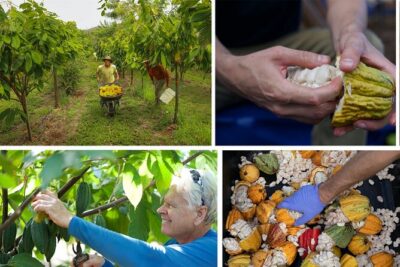
Lahaina: Maui Ku’ia Estate Guided Cacao Farm Tour and Tasting
Read our review →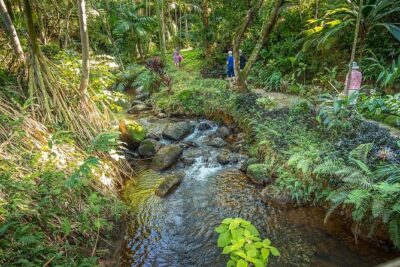
Princeville Botanical Gardens Tour and Chocolate Tasting Ticket
Read our review →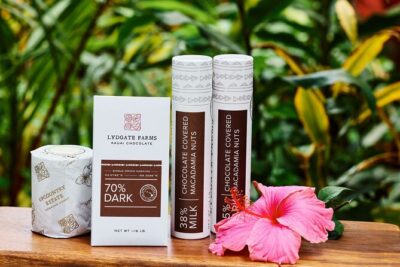
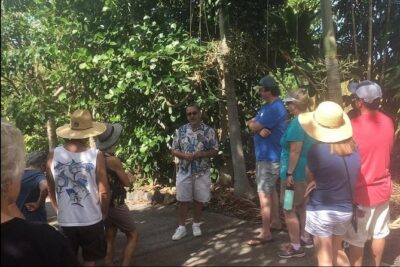
Award Winning Farm Tour: Coffee, Chocolate and Unique Gifts
Read our review →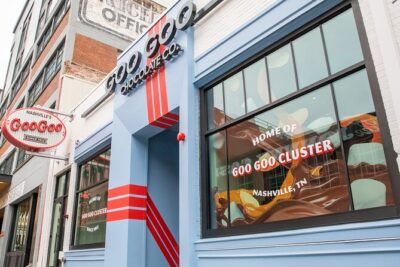
Nashville’s Goo Goo Chocolate Tasting & Candy Making Class
Read our review →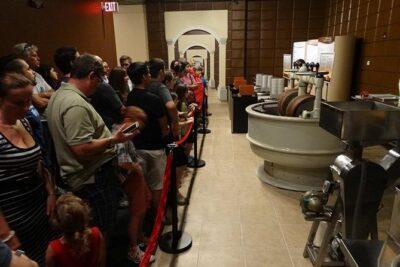
Orlando: Factory Adventure Tour in Chocolate Kingdom
Read our review →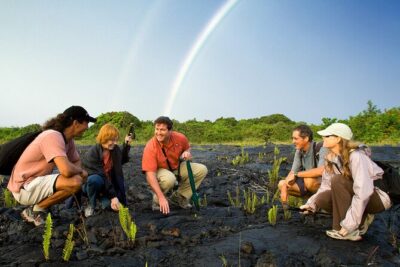
Volcano, Chocolate and Waterfalls of the Big Island
Read our review →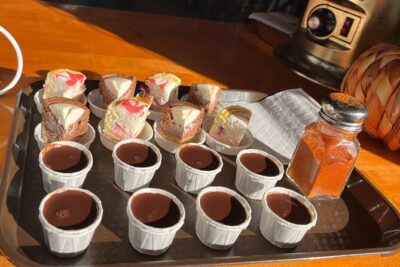
Chocolate lists with this tour