
Review · VIETNAM
Alluvia Hoi An Chocolate Making Class
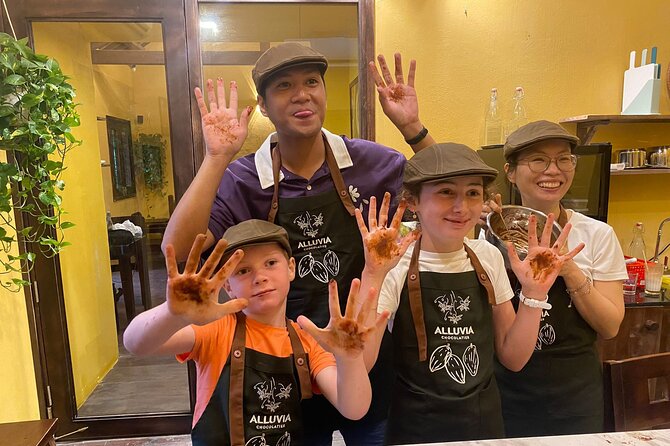
Hoi An’s Alluvia chocolate class turns a sweet treat into a hands-on lesson about Vietnamese cacao. In about two hours, you’ll go from cacao pod to chocolate bar, temper dark chocolate, shape a 30-gram bar, and make pralines and truffles with local ingredients.
I like the small maximum of six people, which gives the instructor room to explain the fiddly parts. I also like that you leave with actual chocolate and practical tips you can use at home. The main drawback is the cool classroom, kept around 16 to 20 degrees Celsius, so bring a light jacket even if Hoi An is hot outside.
Key points to know before booking
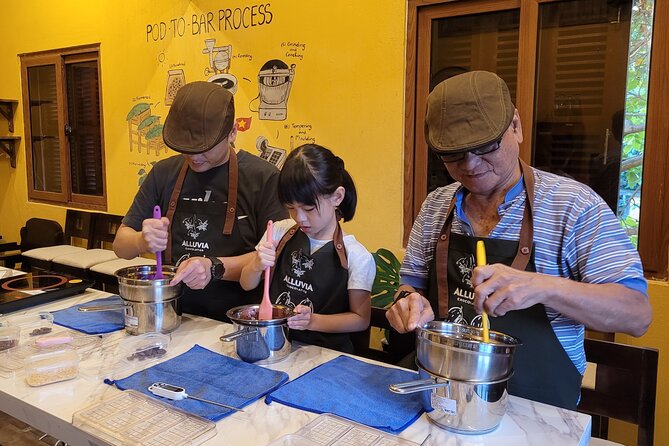
- You make several kinds of chocolate: The class covers a wrapped 30-gram bar, pralines, and truffles.
- Vietnamese cacao gets proper attention: You learn about cacao trees and chocolate production in Vietnam, not just the mechanics of melting chocolate.
- The group is capped at six: This is a small workshop rather than a crowded demonstration.
- Dark chocolate is the standard: Milk chocolate costs a small extra amount if you choose it.
- One drink is included: Pick one coffee or tea from the menu, with refillable water available.
- The class begins at 2 p.m.: Meet at Alluvia Chocolate House, 36 Đ. Phan Chu Trinh, in Hoi An’s Minh An area.
Why this Hoi An class is more than a chocolate tasting
Many chocolate activities stop at sampling. This one asks you to work with the chocolate yourself. That distinction matters. You are not simply handed a finished truffle and told where it came from. You learn enough of the process to understand why temperature, texture, ingredients, and timing affect the final result.
The class begins with the cacao tree and cacao production in Vietnam. This gives the practical work some context. You learn what the tree is like, how cacao is produced locally, and how Vietnamese ingredients fit into the finished chocolate.
I find that useful because chocolate can seem like a European product, even though the starting point is a tropical cacao pod. Vietnam has its own cacao-growing and chocolate-making story, and this workshop makes that part of the experience visible.
The class is also short enough to fit neatly into a Hoi An afternoon. At roughly two hours, it does not take over your day. You can schedule it at 2 p.m., then continue with dinner, an evening walk, or another activity afterward.
More Chocolate Making Workshops in Vietnam:
- Bean to bar Chocolate Workshop in Ho Chi Minh City
★ 5.0 · 10 reviews - Ho Chi Minh City: Premium Bean-to-Bar Chocolate Workshop
★ 4.8 · 8 reviews - Da Lat: Handmade Chocolate Workshop
★ 5.0 · 4 reviews
Inside Alluvia Chocolate House at 2 p.m.
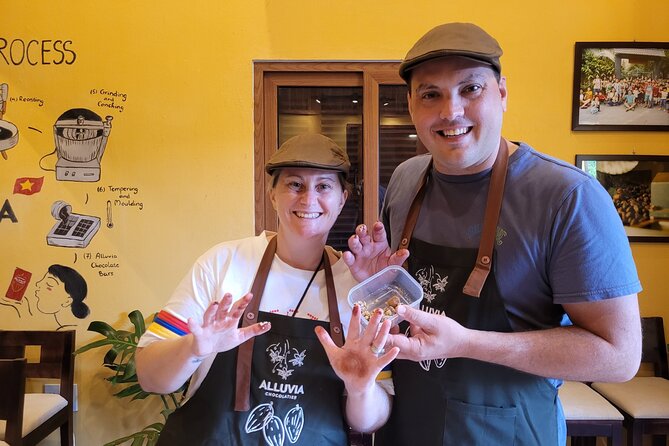
Your meeting point is Alluvia Chocolate House, at 36 Đ. Phan Chu Trinh in Hoi An’s Minh An area. The activity begins and ends there, so you do not need to arrange a separate return ride or figure out a second pickup point.
The location is near public transportation, which helps if you are not staying within an easy walk. The mobile ticket also keeps the arrival process simple. Confirmation is provided when you book, so keep the ticket available on your phone.
The class has a maximum of six people. That small size is one of its strongest practical features. Chocolate work often involves small details, and a limited group gives you a better chance to see what is happening and ask for help when a mixture does not behave as expected.
Do not dress only for the street temperature. The classroom is kept at about 16 to 20 degrees Celsius, which is useful for working with chocolate but may feel chilly after walking around Hoi An. A light jacket or long-sleeved shirt is a sensible addition.
From cacao tree to Vietnamese chocolate
The opening lesson covers the cacao tree and the production of cacao in Vietnam. You are introduced to the path from pod to bar, giving you a basic framework before you begin making anything.
This section is brief, but it fills an important gap. You learn that chocolate is not simply a matter of buying a packet, melting it, and adding decorations. The final bar begins with a plant, a growing region, and a production process. The class connects those stages to the chocolate you handle at the table.
You will also hear how Vietnamese makers use local ingredients. The supplied details do not list every ingredient available on the day, so the choices may vary. The useful part is the chance to select ingredients for your own bars, pralines, or truffles instead of following a completely fixed demonstration.
For me, that makes the workshop feel more personal. You are learning a basic method, then making decisions within it. The class remains accessible to beginners, but it is not just a passive talk about cacao.
Tempering dark chocolate without guesswork
The technical heart of the class is tempering dark chocolate. You are instructed in the process rather than expected to know it already.
Tempering controls how chocolate sets. It affects the finished texture and appearance, so it is one of the most useful skills to take home. The class focuses on dark chocolate as the standard option. If you prefer milk chocolate, you can choose it for a small additional payment.
This is also the part where the small class size matters most. Tempering can feel fussy, and the instructor provides tips related to the chocolate-making process. You can ask questions as you work rather than trying to copy a technique from a distance.
The class does not promise to turn you into a professional chocolatier. It gives you a working introduction and enough guidance to repeat the basic process at home. That is the right expectation. You are learning a useful kitchen skill in a compact workshop, not completing a formal qualification.
More Chocolate Tours around Vietnam:
- Can Tho: A Real Mekong Tour, Floating Market, Cacao & Life’s
★ 4.9 · 574 reviews - Cai Rang floating market, Cacao & hidden small canal
★ 5.0 · 244 reviews - Can Tho: Floating Market, Canal, Cacao Farm & Mekong’ Life
★ 5.0 · 45 reviews - Cai Rang floating market, see sunrise, CaCao orchard, small canal
★ 5.0 · 44 reviews
Making and wrapping your 30-gram chocolate bar
After the introduction to tempering, you make a 30-gram chocolate bar. You also learn how to wrap it in paper.
The bar is a modest size, but that is part of the appeal. It gives you a clear finished project without creating too much waiting time or waste. You can concentrate on the process, see the result, and leave with something that feels like your own work.
The paper wrapping adds a practical touch. A chocolate bar is more satisfying as a souvenir when it is ready to take home rather than left as an unmarked slab. It also shows you how a simple presentation can turn homemade chocolate into a small gift.
You may choose other ingredients for your bar, depending on the options available in the class. Since the exact choices are not specified, I would treat that part as an opportunity to experiment rather than expect a particular menu of fillings or toppings.
Pralines and truffles bring variety
The workshop also teaches you how to make chocolate pralines and truffles. This broadens the class beyond one bar and gives you different textures and shapes to work with.
A bar is relatively straightforward. Pralines and truffles require a different approach, and they give you more room to see how fillings and coatings change the result. The instructor provides the chocolate and other ingredients used for the activity, along with the equipment.
The class supplies what you need to make the items, so you do not have to bring kitchen tools. That is especially helpful for people staying in hotels or guesthouses, where there is little chance of having suitable equipment.
You will leave with plenty of chocolate compared with the short length of the class. The exact amount beyond the 30-gram bar is not stated, so I would not book it expecting a precise quantity. The important value is the combination of making, learning, and taking home finished pieces.
What the free drink adds to the afternoon
One coffee or tea from the menu is included, along with water available for refill. You can choose any one free drink offered on the menu.
That small inclusion makes the two-hour class feel less rushed. You have a place to pause while the chocolate work progresses, and the drink gives the session a simple café element. Other drinks, desserts, and meals are not included, so do not treat this as lunch.
The timing helps here. Starting at 2 p.m., the workshop works well as an afternoon break, especially if you want a planned indoor activity during the warmest part of the day. The cool room is another reason it can feel comfortable after time outside, though you may want that extra layer once you are inside.
Is $21.76 a fair price?
At $21.76 per person, the value depends on what you want from a chocolate activity. If you only want to eat chocolate, you can likely find a cheaper snack. If you want a guided lesson, equipment, ingredients, a drink, and several finished chocolate items, the price is more reasonable.
You are paying for more than the final sweets. The fee includes instruction about Vietnamese cacao, guidance on tempering, the equipment needed for bars and pralines or truffles, the chocolate and other ingredients, and one coffee or tea.
The small group improves the value. A six-person limit means this is not a large production where you watch from the back of a room. You get direct instruction and a better chance to receive help during the hands-on stages.
I would call it a good-value choice for couples, solo visitors, and small groups who genuinely want to make something. Families should check the age suitability directly before booking, since no minimum age is provided. Food lovers who want a full meal should plan lunch or dinner separately.
Who will enjoy this class most?
I would recommend the class to you if you like chocolate but also want a local food experience with some instruction behind it. It suits people who enjoy learning by doing and want a souvenir they made themselves.
It is also a good fit for solo visitors. A six-person maximum keeps the setting small, and the work gives you a natural activity to focus on. Couples can make it a relaxed afternoon date, while friends can compare their bars, pralines, and truffles.
The class is less suitable if you want a long factory tour, a full meal, or a broad tasting session. The experience is brief and focused. You learn the basics, make chocolate, and receive useful tips, but you do not spend a whole day visiting cacao farms or following every stage of commercial production.
Anyone who dislikes cool indoor rooms should bring a layer. That is a minor issue, but the classroom temperature is specific enough to plan for.
Booking, cancellation, and weather details
The experience is often booked about 22 days ahead, so I would reserve early if the 2 p.m. start is important to your schedule. Confirmation arrives at booking, and the activity uses a mobile ticket.
You can cancel up to 24 hours before the start time for a full refund. Changes or cancellations made within 24 hours are not accepted and are not refunded.
The experience requires good weather and a minimum number of participants. If poor weather or insufficient bookings cause a cancellation, you are offered another date or experience, or a full refund. The cancellation cut-off follows Hoi An local time.
Final call: should you book Alluvia’s chocolate class?
Book it if you want a short, hands-on Hoi An activity that combines Vietnamese cacao, basic chocolate technique, and edible souvenirs. The best reasons are the six-person limit, the chance to make a bar plus pralines and truffles, and the practical advice you can use at home.
Skip it if you are looking for a full meal, a long cacao-farm visit, or an advanced professional course. For most chocolate fans, though, $21.76 buys a pleasant two-hour workshop with real participation rather than a simple tasting. Bring a light jacket, arrive for the 2 p.m. start, and expect to leave with both chocolate and a better sense of how Vietnamese cacao becomes a finished bar.
FAQ
Where does the chocolate class start?
It starts at Alluvia Chocolate House Hội An, 36 Đ. Phan Chu Trinh, Phường Minh An, Hội An, Quảng Nam, Vietnam.
What time does the class begin?
The class starts at 2 p.m.
How long does the experience last?
The experience lasts approximately two hours.
Where does the activity end?
It ends back at the Alluvia Chocolate House meeting point.
How many people can join the class?
The activity has a maximum of six participants.
What chocolate will I learn to temper?
The standard instruction covers dark chocolate. Milk chocolate is available for a small additional payment.
What will I make during the class?
You will make a 30-gram chocolate bar, learn how to wrap it with paper, and make chocolate pralines and truffles.
Is a drink included?
Yes. You can choose one free coffee or tea from the menu. Water is also available for refill.
Is food included?
No lunch, other desserts, or additional meals and drinks are included beyond the one free drink.
What should I wear to the classroom?
The classroom is kept at approximately 16 to 20 degrees Celsius. Bring a light jacket or wear a long-sleeved shirt.
Can I cancel for a full refund?
Yes. You can cancel at least 24 hours before the start time for a full refund. Cancellations within 24 hours are not refunded.
Freshly tempered around Vietnam
- Full Day Experience to Farm and Chocolate★ 5.0 · 22 reviews
- Bean to bar Chocolate Workshop in Ho Chi Minh City★ 5.0 · 10 reviews
- Can Tho Motorbike Tour – Rhythms of the Mekong Delta★ 5.0 · 4 reviews
- Phu Quoc: Bittersweet Chocolate Factory Tour & Workshop★ 4.5 · 38 reviews
- Ho Chi Minh City: Premium Bean-to-Bar Chocolate Workshop★ 4.8 · 8 reviews
- Group Tour: Floating Market, Rice Noodle, nursery vegatable★ 4.6 · 8 reviews
- Da Lat: Handmade Chocolate Workshop★ 5.0 · 4 reviews
- Can Tho: Floating Market, Cacao & Canals with French Guide★ 5.0 · 37 reviews
More Vietnam Chocolate Tours to compare.

Can Tho: A Real Mekong Tour, Floating Market, Cacao & Life’s
Read our review →
Cai Rang floating market, Cacao & hidden small canal
Read our review →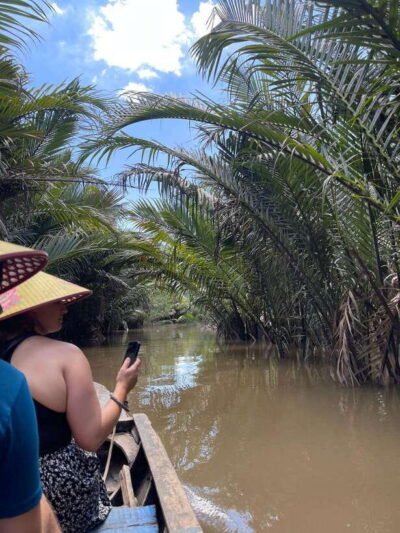
Can Tho: Floating Market, Canal, Cacao Farm & Mekong’ Life
Read our review →
Cai Rang floating market, see sunrise, CaCao orchard, small canal
Read our review →
Can Tho: Floating Market, Canals, Nature Reserve & Forest
Read our review →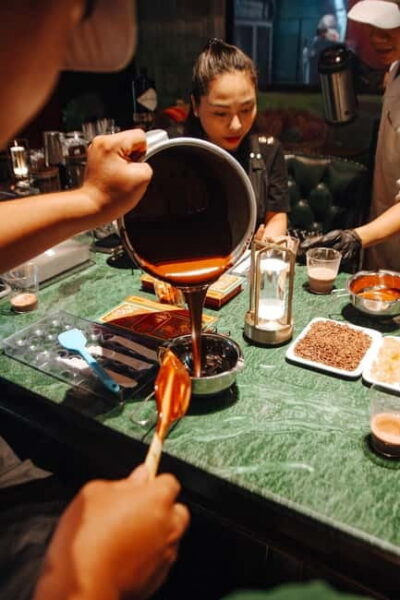
Phu Quoc: Bittersweet Chocolate Factory Tour & Workshop
Read our review →
Can Tho: Floating Market, Cacao & Canals with French Guide
Read our review →
Chocolate lists with this tour