
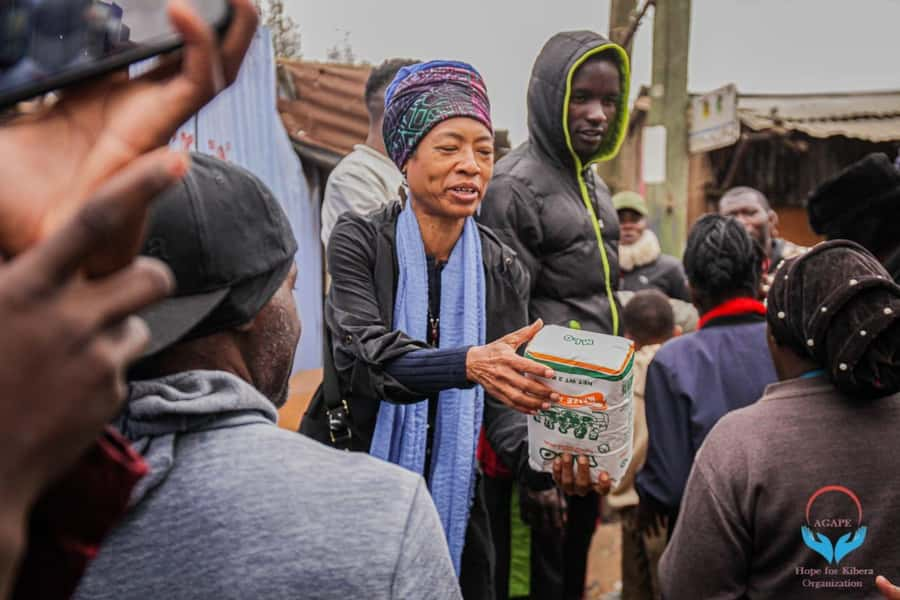
Review · NAIROBI
Nairobi: Chocolate City Kibera Slum Walking Tour
Kibera is not a museum or a backdrop. It is a living Nairobi neighborhood, and this local-led walking tour gives you a close look at its homes, markets, schools, work, and community projects. Guides such as Collins and Allan come from the area, which helps turn a difficult subject into a personal conversation rather than a quick drive past.
I like the direct support for Agape Hope Children Centre and the community beadwork project. I also like the careful guiding: Collins helped one visitor reach a taxi, and buying souvenirs was not pushed. The main consideration is emotional. You may find the conditions confronting, and the advertised language choices appear less dependable than the booking page suggests, with English the safest choice.
Key points to know before you go

- Local guides lead the way: Collins and Allan are named guides who know Kibera personally and make time for questions.
- Agape Hope Children Centre is a central stop: Your fee helps connect the tour with education, care, and community support.
- The route includes working places: Expect Toi Market, a beadwork factory, a home visit, and streets where daily life continues around you.
- Safety is built into the experience: A briefing and guided route help you move through the area with more confidence.
- The tour is low-cost and flexible: It costs $15 per person, with cancellation up to 24 hours before departure and pay-later booking.
- English is the practical language choice: French, German, Japanese, Italian, and Spanish are offered, but recent Japanese bookings were handled in English.
Kibera is the subject, not a staged attraction

The Chocolate City Kibera Slum Walking Tour takes you into Nairobi’s largest informal settlement for a short, focused look at how people live and work there. The name Chocolate City refers to Kibera itself, not a separate attraction with a ticket booth or formal entrance. You walk through an active neighborhood, with local residents going about ordinary routines.
That distinction matters. You are not visiting a recreated village, and you should not expect a neat sequence of photo stops. The value comes from seeing the links between homes, small businesses, markets, children’s services, and community projects.
The route is described as lasting two hours, while the detailed itinerary gives the Kibera portion as two and a half hours. Allow extra time rather than planning a tight connection afterward. The experience is best treated as a compact half-day commitment, especially if you need time to reach the starting point or arrange a taxi at the end.
The price is $15 per person. For that, you receive a professional English-speaking guide, bottled water, the walking tour, visits to Agape Hope Children Centre and a beadwork factory, a home visit, and contact with a community-based beadwork project. I consider that good value if your goal is understanding and local contact, not comfort or entertainment.
More Chocolate Walking Tours in the world:
- Brussels: Historical Walking Tour with Chocolate & Waffle Tasting
★ 5.0 · 1,165 reviews - Brussels Walking and Tasting Tour (Beers,Chocolates&Fries/Waffle)
★ 5.0 · 929 reviews - Brussels Chocolate Walking Tour and Workshop
★ 4.5 · 885 reviews
Starting at Ayany or Prestige Plaza
The meeting arrangement depends on the option you choose. One set of directions points to Ayany Equity Bank in Kibera, while another offers Agape Hope for Kibera or Prestige Plaza Shopping Mall as the starting location. Check the exact meeting point on your confirmation before leaving your hotel.
Ayany Equity Bank is described as the place where the walk begins, a useful local landmark in an area where a vague street address would not help much. Prestige Plaza gives you a more familiar shopping-center reference point. Because the start and end options can differ, do not assume you will finish at the same place where you began.
The guide gives a safety briefing before you set off. That is important here. Kibera has narrow, busy streets and a complex layout, so walking with someone who knows the route is far more practical than trying to find your own way. The tour description also lists bus and self-guided options in the itinerary, but the central experience is presented as a guided walking tour. Confirm your chosen format if that distinction matters to you.
Wear comfortable, closed-toe shoes. High heels and bare feet are not allowed, and practical footwear will help on uneven or crowded surfaces. Bring only what you need, keep valuables secure, and follow the guide’s advice about photography and personal interaction.
Walking through the Chocolate City
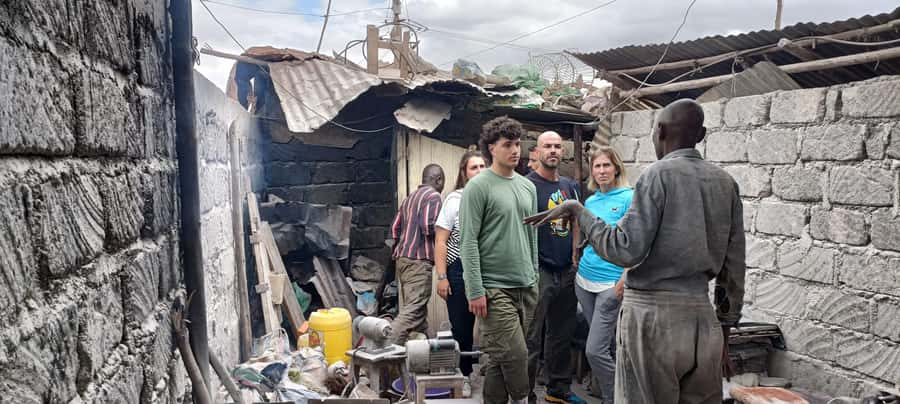
The first section introduces Kibera as a place of contrasts and daily work. You pass through streets where homes, shops, services, and social activity sit close together. The guide’s job is not simply to point out buildings. It is to explain what you are seeing and answer questions about the realities of life in the area.
That personal conversation is one of the strongest reasons to book this particular tour. Collins, named by several visitors, is from Kibera and has a direct connection to the neighborhood. Allan is also praised for being attentive, including waiting until a taxi arrived at the end. Those details suggest a guide who treats the walk as a responsibility, not just a route to complete.
You should expect the experience to challenge easy assumptions. A short visit cannot explain every part of Kibera, and it cannot represent every resident’s experience. Still, it can give you a clearer starting point than seeing the area from a vehicle or hearing only broad statistics.
Photography needs care. The route includes photo opportunities, but people are not props. Ask before photographing individuals, especially children, and accept a no without argument. The tour’s stated aim is connection and understanding, and your conduct should support that aim.
The safety focus is reassuring, though it does not remove the need for ordinary street awareness. Stay with the guide, follow instructions, and avoid turning the walk into a solo photo hunt. One of the most useful features is that the guide remains involved through the return, including helping with onward transport when needed.
Agape Hope Children Centre
Agape Hope Children Centre gives the tour a clear community focus. Rather than only showing difficult living conditions, the visit points toward local work in education, health, and economic support. That changes the tone of the outing. You see hardship, but you also see organized efforts to create better options for children and families.
The center is not presented as a quick photo stop. It is part of the reason the tour exists, and your ticket is intended to support community initiatives. That makes the $15 fee feel more meaningful than a simple sightseeing charge, although you should still keep your expectations modest. A short visit cannot solve the problems facing a large settlement.
You may have the chance to speak with people connected to the center and learn how the project operates. The exact interaction can vary, so arrive ready to listen rather than expecting a performance. If children are present, let the guide manage introductions and photography.
One Japanese visitor wished there had been more time to interact with children, but also noted that this could have been discussed with the guide. That is useful advice. If respectful conversation with the center is important to you, say so early. The guide can explain what is appropriate and possible on the day.
More Chocolate Tours around the world:
- Lindt Home of Chocolate Museum Entry Ticket
★ 4.7 · 9,329 reviews - Choco-Story Brussels: Chocolate Museum Entrance with Tasting
★ 4.3 · 4,883 reviews - Zurich: City Tour, Cruise, and Lindt Home of Chocolate Visit
★ 4.5 · 4,624 reviews - The Chocolatarium Chocolate Tour Experience in Edinburgh
★ 5.0 · 4,322 reviews
Toi Market and the beadwork route
Toi Market adds a different layer to the walk. Here, commerce and movement replace the quieter focus of the children’s center. The market brings color, noise, smells, and everyday bargaining, giving you a chance to see how people earn money and exchange goods within the neighborhood.
Do not expect a calm shopping district. Markets are active places, and the guide’s role is especially useful when the route gets crowded. You can ask questions about what is being sold and how the market fits into local life, but keep the pace set by the group.
The beadwork part of the tour is one of its most appealing practical features. You visit a beadwork factory and take part in a community-based beadwork project. This gives you a look at a skill being used for income, not just a decorative craft displayed for visitors.
Buying something is not forced. That point matters because craft stops can sometimes feel like sales presentations. Here, the activity is framed as a way to support local work, but you remain free to look, ask questions, and decide for yourself. If you do buy beadwork, treat it as a direct contribution to the makers rather than assuming every purchase has the same effect.
The factory and project also help balance the tour. Without them, the walk could leave you focused only on poverty. With them, you see one example of people creating work and building community income within difficult circumstances.
The home visit and the question of respectful tourism

A home visit is included, and it may be the most personal part of the experience. It can help you understand the scale and character of domestic life in Kibera in a way that a street walk cannot. At the same time, entering someone’s home requires extra humility.
Follow the guide’s lead on where to stand, what to photograph, and how long to stay. Do not assume that an invitation gives permission to inspect personal belongings or ask intrusive questions. A home visit should be treated as a privilege, not a spectacle.
This is also where you need to decide if slum tourism suits you. Some people value the chance to learn directly from residents and support local initiatives. Others find the idea uncomfortable, especially if the visit feels too focused on poverty. This tour works best for someone willing to examine that discomfort and behave with care.
The guide’s local connection can help keep the visit grounded, but no short tour can remove the ethical questions. You are still entering a community for a limited period and then leaving. Spend your time listening, avoid dramatic reactions, and remember that the neighborhood is home to millions of ordinary lives, not a single story of hardship.
Safety, comfort, and the limits of the format
Safety receives strong attention throughout the experience. You receive a briefing, stay with an experienced guide, and follow a planned route. The guide team is also described as helping with taxis at the end, which is a small but valuable service if you are unfamiliar with Nairobi.
Still, guided does not mean risk-free. Use practical judgment, stay alert, and avoid carrying unnecessary valuables. Closed shoes, water, and modest clothing are sensible choices. The tour includes bottled water, but you may want additional water if you find the walk tiring.
The experience is not suitable for wheelchair users or people with mobility impairments. Pregnant people, people with epilepsy, and babies under one year are also listed as unsuitable. The booking information gives several different age restrictions for young children, including children under two, three, and four. That wording is not perfectly clear, so confirm the minimum age before booking with a child.
People prone to motion sickness should also take note, although the core activity is on foot. The itinerary includes bus-tour language, which may explain that warning. Ask the operator to clarify the transport element if motion sickness is a concern.
The guide languages are listed as English, French, German, Japanese, Italian, and Spanish. In practice, recent Japanese bookings were conducted in English despite Japanese being selected at booking. If you need a non-English guide, confirm this directly rather than relying only on the language menu.
What the $15 price really buys

At $15, this is one of those tours where the financial value and the personal value are closely linked. You are not paying for polished facilities, a long meal, or a large attraction. You are paying for a local guide, a planned route, access to community projects, and a safer way to approach a place you should not explore casually on your own.
The included water and visits are useful, but they are not the main reason to choose it. The real value is the context. A guide can explain what you are seeing, introduce you to community work, and help you avoid the clumsy behavior that can come from arriving without local direction.
The tour also offers free cancellation up to 24 hours before departure and a reserve-now, pay-later option. Those terms make it easier to fit into a changing Nairobi schedule. Starting times depend on availability, so check before building the rest of your day around it.
Do not book this expecting a relaxing walk. The subject is serious, the setting is demanding, and the emotional effect can linger. Book it if you want an honest introduction to Kibera and are prepared to give the neighborhood respect.
Who should book the Chocolate City walk
I would recommend this experience to you if you want a community-led view of Nairobi beyond the usual safari and city sights. It suits people who ask questions, listen well, and understand that the best moments may come from conversation rather than photographs.
It is also a good fit if you want your payment connected to local work. Agape Hope Children Centre and the beadwork project give the tour a practical purpose, while the home visit and market walk add a personal view of daily life.
I would be more cautious if you want a carefully controlled sightseeing outing or a guaranteed tour in a language other than English. The walk is direct and serious, and the language information deserves confirmation. Families with young children and anyone with mobility, pregnancy, epilepsy, or baby-care concerns should check the restrictions carefully before paying.
Book this tour if you can accept the responsibilities that come with visiting a real neighborhood. Choose comfortable shoes, keep your questions respectful, and tell the guide what you hope to understand. For $15, it offers a memorable and useful look at Kibera, provided you approach it as a community visit rather than a human-interest show.
FAQ
How long does the Kibera walking tour last?
The activity is advertised as two hours, while the detailed Kibera itinerary lists two and a half hours. Allow extra time so you are not rushed afterward.
What is included in the price?
The $15 price includes a professional English-speaking guide, bottled water, the Kibera walking tour, a visit to Agape Hope Children Centre, a community beadwork project, a beadwork factory visit, and a home visit.
Where does the tour start?
The meeting point depends on the option booked. Possible starting points include Agape Hope for Kibera, Ayany Equity Bank in Kibera, and Prestige Plaza Shopping Mall. Check your booking confirmation for the exact location.
Where does the tour finish?
Possible drop-off points are Prestige Plaza Shopping Mall and Agape Hope for Kibera. The end point depends on the option selected.
Is the tour available in languages other than English?
The listed guide languages are English, French, German, Japanese, Italian, and Spanish. Recent Japanese bookings were handled in English, so confirm the language directly if you need anything other than English.
What should I wear and bring?
Wear comfortable, closed-toe shoes. High heels and bare feet are not allowed. Bottled water is included, and you should follow the guide’s advice about belongings and photography.
Can children or wheelchair users join?
Wheelchair users and people with mobility impairments are not considered suitable for this tour. The information also lists restrictions for babies and young children, with different minimum ages shown, so confirm the exact child policy before booking. Pregnant people and people with epilepsy are also listed as unsuitable.
Freshly tempered around the world
- Zurich Open-top Tour and Chocolate and Cheese Countryside★ 3.5 · 11 reviews
- Zurich: Chocolate Tasting and Walking Tour with a Local★ 4.2 · 13 reviews
- Lindt Chocolate Museum with Cruise Transfer from Zurich★ 4.6 · 7 reviews
- Zagreb: Lake Bled and Ljubljana Day Tour with Chocolate Gift★ 5.0 · 26 reviews
- York: Introduction to Chocolate Making Experience★ 4.9 · 10 reviews
- Zaandijk-Near Zaanse Schans Chocolate making demo & tasting★ 4.8 · 13 reviews
- Private Wine and Chocolate Tasting Experience★ 4.4 · 3 reviews
- Yarra Valley: Wine and Chocolate tasting tour.★ 5.0 · 5 reviews