
Review · COSTA RICA
Chocolate Making and Tasting at a Local Factory in San José
The most interesting part of this San José workshop is that you taste cacao at nearly every stage, including fresh cocoa fruit, fermented or processed seeds, nibs, powder, butter, drinks, and finished chocolate. Then you use what you have learned to make your own bars with local fillings and toppings.
I like the hands-on work and the chance to create chocolate that suits your own taste. I also like the personal scale, especially when the group is small, and the eco-friendly packaging lets you turn your chocolates into a proper souvenir. The main caution is group size: the experience is promoted as intimate, but one session reportedly had about 20 people, which slowed the making portion.
Key points to know before booking
- Taste cacao from fruit to chocolate bar: This is more than a standard chocolate sampling.
- Make your own chocolate: You choose fillings, toppings, shapes, and packaging for your creations.
- Mauricio often leads the workshop: He is praised for clear explanations, patience, and a warm manner.
- Plan around a 3 pm start: The workshop lasts about two hours and ends where it begins.
- Barrio Escalante adds appeal: You are in one of San José’s best areas for food and drinks afterward.
- Check the expected group size: The details refer to both a maximum of 8 and a maximum of 12, so ask ahead if a small class matters to you.
Starting with fresh cacao in Barrio Escalante
Tapir Chocolates operates in Barrio Escalante, a central San José neighborhood known for restaurants, cafés, and nightlife. The meeting point is Tapir Chocolates, San José, Barrio Escalante, 10101. You arrange your own way there because private transportation is not included.
The 3 pm start is useful for a late-afternoon plan. You can spend the morning seeing central San José, have lunch, and then head to the workshop. Once the chocolate session ends, you are already in a neighborhood with plenty of food options, which makes this a handy activity for your final evening in the city.
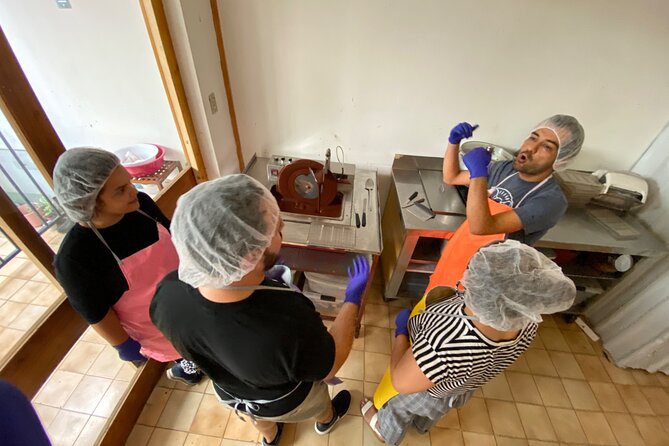
The first part focuses on cacao’s place in the Americas. You get a short introduction to the crop and its cultural importance before tasting the fresh fruit itself. This matters because many people know chocolate only as a finished candy. Cacao fruit has a very different texture and flavor, and trying it gives you a better sense of where chocolate begins.
I especially like that the session does not rush straight to a chocolate bar. You work through the raw material first, so the later tasting has some context. It is a small distinction, but it makes the workshop more useful than a simple demonstration followed by a box of samples.
More Chocolate Making Workshops in the world:
- Vienna: Chocolate Workshop in Chocolate Museum w/ Tasting
★ 4.5 · 1,802 reviews - Brussels: Belgian Chocolate Making Workshop with Tastings
★ 4.7 · 1,629 reviews - Brussels: 2.5-Hour Belgian Chocolate Making Workshop
★ 4.8 · 933 reviews
A full cacao tasting, from seed to finished chocolate
The tasting covers the main cocoa by-products. You may sample whole cocoa beans, beans at different stages of processing, nibs, cocoa powder, cocoa butter, chocolate drinks, and chocolate at different cocoa concentrations.
This progression shows how one ingredient changes through roasting, grinding, blending, and refining. Nibs have a firmer, more direct cacao flavor. Powder is dry and concentrated. Cocoa butter shows the fatty side of the bean, while a chocolate drink gives you another way to understand texture and aroma.
You also taste different chocolate concentrations before making your own. That is helpful if you are unsure whether you prefer mild milk chocolate, darker chocolate, or something in between. Instead of guessing at the worktable, you have already sampled the basic options.
The workshop includes snacks, water, and a cacao drink. More than 15 fillings and toppings are available for your creations. The exact choices can vary, but the point is flexibility: you are not simply copying a bar made by the instructor. You combine the chocolate with local ingredients and use your own ideas.
This is a good setup for families and mixed groups. Children can focus on decorating and choosing toppings, while adults may be more interested in fermentation, flavor, or the technical side of chocolate making. Several families with teenagers found the two-hour format easy to enjoy, and the activity is also suitable for couples, solo visitors, and friends.
Making two personal chocolate bars
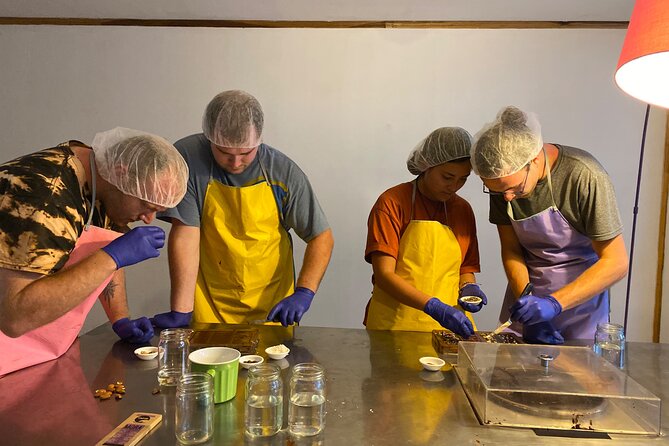
The practical section is the heart of the experience. You put on the supplied apron, gloves, and cap, then use the molds, spatulas, and other equipment provided. The team explains each step and helps you handle the chocolate.
The exact number of finished pieces can vary by session, but many participants leave with two chocolate bars each, and some report taking home four chocolates. The common format includes one bar with toppings and another with a filling. It is worth checking the current arrangement when you arrive if the number matters to you.
You choose what goes into the chocolate and how it looks. That makes the final product personal rather than a generic factory sample. It also gives the session a playful edge. One participant compared the experience to feeling like Willy Wonka, which is a fair description of the fun, hands-on mood without suggesting this is a polished theme-park attraction.
Mauricio is often the instructor, and his style seems to suit beginners. He explains the steps clearly, answers questions, and helps people who feel nervous about getting the technique right. That patience is important because chocolate work can become frustrating when a group has different skill levels.
The workshop is not a professional pastry course. You will not leave with a certificate or a full set of chocolatier skills. What you do get is a clear introduction to the basics, a chance to handle the ingredients, and chocolate you made yourself.
Designing eco-friendly packaging
After the chocolate work, you package your creations using boxes, wrapping paper, stickers, and other supplied materials. The packaging is designed to be more environmentally friendly, and you get to decorate it yourself.
This final step adds real value. Homemade chocolate is difficult to carry around in a hotel room if it is not wrapped properly, and a decorated box makes the souvenir feel finished. If you are giving the chocolates to someone at home, the personal wrapper adds a nice touch.
The packaging also slows the experience down in a good way. You are not pushed out as soon as the chocolate is poured. Instead, the workshop ends with something you can keep, carry, and show to friends.
Because the chocolate needs to set, the exact timing of when you receive or pack each item may depend on the session. The supplied information confirms that you take your creations home, but it does not specify a particular cooling method or storage rule. Ask the instructor if you are traveling in hot conditions or have a long journey ahead.
More Chocolate Factory Tours in the world:
- Lindt Home of Chocolate Museum Entry Ticket
★ 4.7 · 9,329 reviews - Zurich: City Tour, Cruise, and Lindt Home of Chocolate Visit
★ 4.5 · 4,624 reviews - Zurich Sights: Cruise, Lindt Chocolate and optional FIFA Ticket
★ 4.0 · 1,028 reviews - Full-Day Tour: Concord Waterfall, Chocolate Factory, Rum Distillery, Grand Etang
★ 5.0 · 871 reviews
What the small-group promise means
Tapir Chocolates presents this as a personal workshop rather than a large factory tour. Several sessions have had only three or four people, creating a nearly private class. In that setting, you can ask more questions, get direct help, and move through the tasting without much waiting.
The published details are not fully consistent about capacity. The highlights refer to a maximum of 8 people, while the additional information gives a maximum of 12. One booking had at least 20 people, and the participant found that the chocolate-making portion became slow and less organized.
That does not make the activity a bad choice, but it is the biggest practical issue to consider. If personal attention is central to your decision, contact the operator before booking and ask how many people are expected for your date. A small class can feel warm and relaxed. A large one may mean standing around while others use the equipment.
There is also a language consideration. The workshop can be explained in multiple languages, which is helpful for mixed groups. At the same time, hearing two languages in one session may slow the pace or make it harder to follow every explanation. If you are sensitive to that, ask what language the class will use and whether interpretation will be needed.
Is $57.50 a fair price?
At $57.50 per person, this is not a budget chocolate tasting. You are paying for about two hours, instruction, a broad cacao tasting, equipment, protective supplies, ingredients, fillings and toppings, snacks, a drink, and packaging materials.
The value depends on what you want. If you only want to taste chocolate, you can spend less at a shop or café. If you want an activity that combines education, food, creativity, and a souvenir, the price is easier to justify. You are also supporting a local chocolate business rather than buying a mass-produced product from a hotel gift shop.
The price includes more than a guided talk. You handle the ingredients and make your own bars, which gives the experience a stronger return for families and couples who want to do something together. For a solo visitor, the value depends more on how much you enjoy food workshops and meeting other people.
One poor experience was linked to leaving early, which cut the class short and meant the participant did not complete the chocolate-making process. That is a useful warning: allow the full two hours. This is not a good activity to squeeze between two fixed appointments.
Who will enjoy this workshop most?
I would choose this for anyone who likes food with a story behind it. You do not need prior cooking or chocolate-making experience, and the staff provides the materials and equipment.
It is especially well suited to:
- Families with children or teenagers
- Couples looking for a shared afternoon activity
- Solo visitors who enjoy small classes
- Friends celebrating a birthday or bachelorette occasion
- Chocolate fans curious about cacao beyond the finished bar
- Visitors with a free final evening in San José
The workshop is less suitable if you want a large commercial factory tour, a fast tasting, or a fully private class at the advertised price. It may also disappoint if you expect a quiet, highly polished culinary school environment. Tapir is a small operation, and the quality of the experience depends partly on group size and organization that day.
Service animals are allowed, and the meeting point is near public transportation. The activity ends back at Tapir Chocolates. Confirmation is provided when you book.
Practical planning for your San José afternoon
Give yourself enough time to find the workshop in Barrio Escalante. One participant found the place difficult to locate, so do not arrive at 2:59 pm and expect to walk straight in without checking the address.
Wear something comfortable and suitable for a food activity. Aprons and gloves are supplied, but you will be handling chocolate and toppings, so practical clothing makes sense. The supplied information does not give a dress code or a specific age minimum.
The experience requires a minimum number of participants. If the operator cancels because that minimum is not met, you are offered another date or activity, or a full refund. The listed policy also allows free cancellation up to 24 hours before the 3 pm start. Changes or cancellations inside 24 hours are not accepted, and the amount paid is not refunded.
The activity also carries a weather-related cancellation rule, although it takes place indoors. If poor weather affects the session, you are offered another date or a full refund. Keep that policy in mind when building a tightly scheduled day.
My verdict: book it if the making matters
I would book this workshop if I wanted an active San José experience rather than another sightseeing stop. The strongest features are the fresh cacao fruit, the step-by-step tasting, the chance to create two personal bars, and the handmade eco-friendly packaging. Mauricio’s patient teaching style is another plus when he leads the session.
I would not book without checking the expected group size if close instruction matters to me. The difference between three people and 20 people is substantial, especially during the hands-on portion. At $57.50, you should expect the full two-hour experience and enough access to the equipment to make it worthwhile.
For chocolate fans, families, and anyone with a free afternoon in Barrio Escalante, this is a good pick. For a quick, cheap sample of Costa Rican chocolate, choose a shop instead.
FAQ
Where does the chocolate workshop take place?
The workshop takes place at Tapir Chocolates in Barrio Escalante, San José, Costa Rica. The address is listed as San José, Barrio Escalante, 10101.
What time does the activity begin?
The stated start time is 3 pm.
How long does the experience last?
The workshop lasts approximately two hours.
What is included in the price?
The price includes tasting supplies, snacks, a cacao drink, water, fillings and toppings, aprons, gloves, caps, chocolate-making equipment, and eco-friendly packaging materials.
Do I get to take chocolate home?
Yes. You make your own chocolates and package your creations to take home. Many sessions include two chocolate bars per person, though the exact number can vary.
Is transportation included?
No. Private transportation is not included. The meeting point is near public transportation, and the activity ends back at Tapir Chocolates.
How many people can join the workshop?
The published details give different limits. One section states a maximum of 8 people, while another states a maximum of 12. One session had about 20 people, so ask the operator about the expected group size for your date.
Are service animals allowed?
Yes. Service animals are allowed.
Can I cancel for a full refund?
You can cancel for a full refund at least 24 hours before the experience begins. Cancellations or changes made less than 24 hours before the 3 pm start are not accepted for a refund.
Freshly tempered around the world
- Zurich Open-top Tour and Chocolate and Cheese Countryside★ 3.5 · 11 reviews
- Zurich: Chocolate Tasting and Walking Tour with a Local★ 4.2 · 13 reviews
- Lindt Chocolate Museum with Cruise Transfer from Zurich★ 4.6 · 7 reviews
- Zagreb: Lake Bled and Ljubljana Day Tour with Chocolate Gift★ 5.0 · 26 reviews
- York: Introduction to Chocolate Making Experience★ 4.9 · 10 reviews
- Zaandijk-Near Zaanse Schans Chocolate making demo & tasting★ 4.8 · 13 reviews
- Private Wine and Chocolate Tasting Experience★ 4.4 · 3 reviews
- Yarra Valley: Wine and Chocolate tasting tour.★ 5.0 · 5 reviews
More Costa Rica Chocolate Tours to compare.

Puerto Viejo hands on chocolate making class. From bean to bar, get chocolatey!
Read our review →
Chocolate Experience in Jaco Beach and Los Suenos
Read our review →
Coffee & Chocolate Tour+Sloths Park & Llanos de Cortez Waterfall
Read our review →
Chocolate Experience by Bribri Indigenous Culture
Read our review →
Sloths in the Rain Forest and Safari by the River
Read our review →
Ocean View Canopy Zip line + Chocolate Experience
Read our review →Chocolate lists with this tour