
Review · ITALY
Turin Sweet & Chocolate Walking Food Tour by Do Eat Better
Turin’s best sightseeing may come in small bites. This 2.5-hour walk moves through elegant squares and historic café districts while you taste the sweets that made the city Italy’s chocolate capital. The star is bicerin, a layered glass of espresso, drinking chocolate, and cream, but gianduiotti, cremini, pastries, and gelato also share the stage.
I like the small group limit of 12, which gives the guide room to explain what you are eating instead of simply passing samples around. I also like the route itself: Giardino Sambuy, Piazza San Carlo, Piazza Castello, and Piazza C.L.N. give you a useful first look at central Turin while you snack.
The main thing to consider is focus. This is a chocolate and sweet-food tour, not a broad Turin food tour, and one review specifically found that the experience was mostly chocolate with gelato at the end rather than a wide range of pastries. Also, the guide may speak both English and Italian.
Five useful things to know before booking
- Five central tasting stops: The route includes chocolate, pastry, bicerin, gianduiotto or cremino, and gelato.
- Bicerin is the local specialty to watch for: This historic coffee-and-chocolate drink is served in layers and is strongly tied to Turin.
- Small groups matter here: The tour is capped at 12 people, useful when tasting delicate sweets in compact cafés and shops.
- The guides can shape the experience: Carolina and Marta received especially strong praise for mixing food explanations with stories about Turin.
- The tour costs $62.75: That is fair if you value several tastings, a local guide, and a short orientation walk through the city center.
- Plan for a moderate walk: You move between five stops, so comfortable shoes and room for sweets afterward are sensible.
Why Turin and chocolate belong together
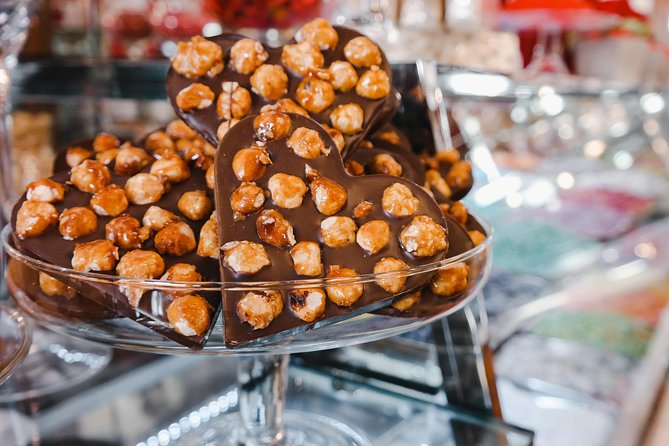
Turin has an unusually strong claim to Italy’s chocolate crown. Piedmont supplies the local hazelnuts that give gianduja its smooth, nutty character, and Turin’s old cafés helped turn chocolate from a luxury drink into a lasting part of the city’s food culture.
You will taste that story rather than hear it in a classroom. The guide explains how local ingredients and traditional methods shaped sweets such as the gianduiotto, a small gold-wrapped chocolate with a soft, creamy texture. The experience works best when the guide connects each bite to the city around you.
That last point matters. A food tour can be little more than a series of samples, but this route gives you a reason to look up between tastings. Turin’s grand squares and café-lined streets provide the setting, while the food gives you a practical way to understand the city.
The strongest guide experiences appear to come from guides such as Carolina and Marta. Carolina, in particular, was praised for talking about both the city and the making of its confections, and for handling groups that included children and adults. Your guide will vary, so the amount of storytelling may not be identical every time.
More Chocolate Walking Tours in Turin:
- Turin’s Sweet Delights: A Chocolate Walking Tour
★ 4.9 · 26 reviews - Turin Chocolate Tasting Walking Tour
★ 5.0 · 4 reviews - Brussels: Historical Walking Tour with Chocolate & Waffle Tasting
★ 5.0 · 1,165 reviews
Giardino Sambuy starts the walk with chocolate
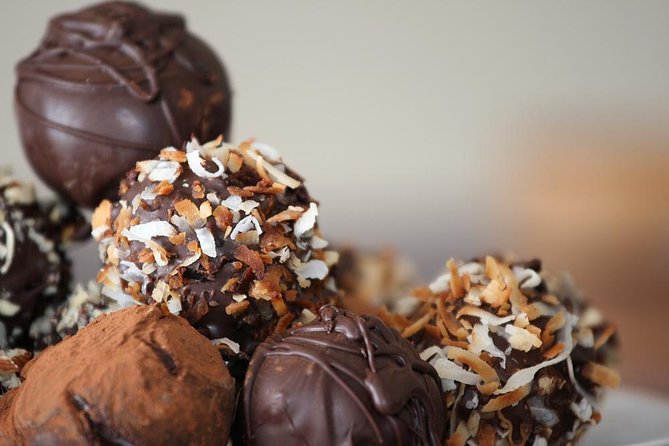
The first stop is near Giardino Sambuy, where you begin with a selection of local chocolates. This is a good opening because it introduces Turin’s most famous food before you have filled up on heavier sweets.
Expect a range of chocolate styles, from smooth and creamy pieces to stronger cocoa flavors. The tasting is meant to show the quality of the ingredients and the Piedmontese methods behind them, rather than simply hand you one famous candy and send you onward.
I would pay attention to texture here. Turin’s chocolate tradition is not only about sweetness. The contrast between creamy gianduja, firmer chocolate, and more intense cocoa gives you a useful basis for judging the later samples.
The tasting lasts about 30 minutes, though the overall experience is approximate. Since the tour is mobile, you are not spending the whole time seated in one shop. That keeps the pace moving, but it also means you should not expect a long formal chocolate workshop.
Pastries near Largo Vittorio Emanuele II
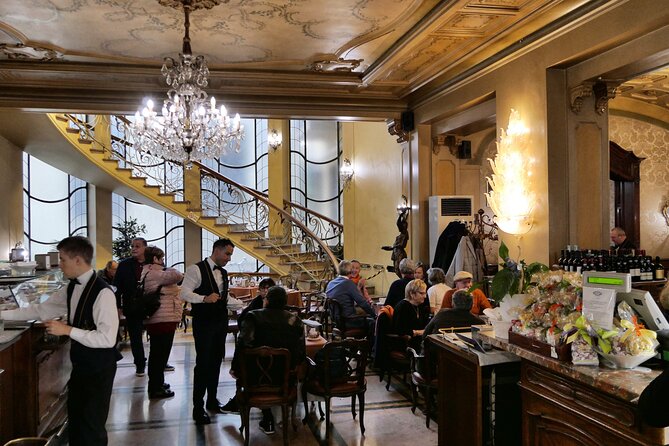
The second stop shifts to classic local pastries near Largo Vittorio Emanuele II. This is the point where you may expect the greatest range beyond chocolate, though the exact selection can vary.
The pastries reflect Turin’s old café culture and its tradition of refined confectionery. They were once associated with historic cafés and the city’s noble households, so this tasting gives you a small taste of the social world that grew around Turin’s coffee rooms.
Here, I would ask the guide what each pastry is called, what makes it local, and whether it is a Turin specialty or a broader Italian sweet. One criticism of this experience was that a guide gave little explanation unless the group asked direct questions. That is useful advice: speak up if you want the food story, not just the food.
Another point is expectation. The tour description promises pastries, but the experience is built around chocolate and sweets as a whole. If you want a full pastry crawl with many different baked goods, this may feel narrow. If you want a taste of Turin’s sweet side, the stop fits well.
Piazza San Carlo and the layered bicerin
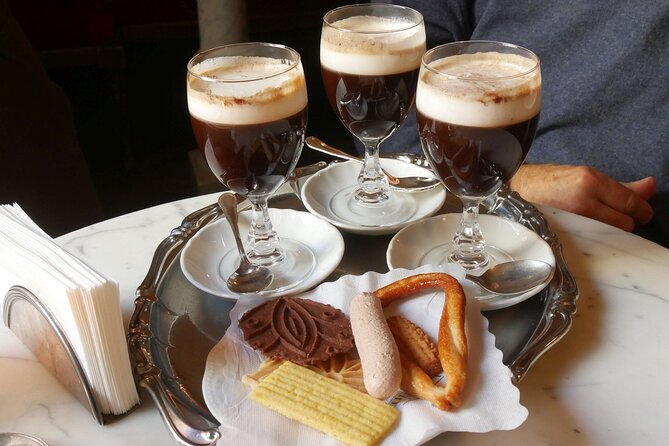
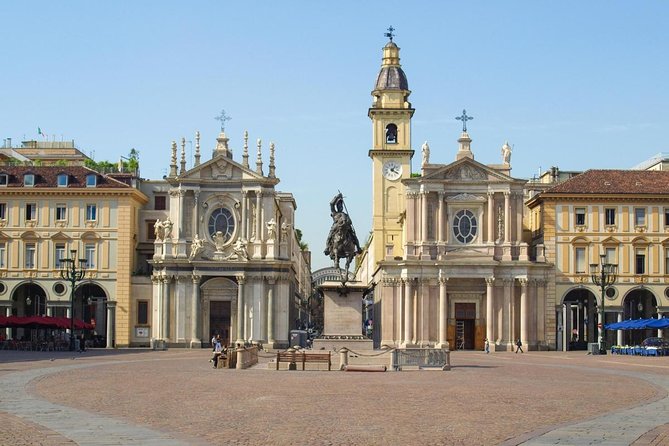
The bicerin is likely the most distinctive tasting on the route. Near the Church of San Carlo Borromeo in Piazza San Carlo, you receive a layered drink made with espresso, drinking chocolate, and whole milk or cream.
It is traditionally served in a glass so you can see the layers. Do not rush to stir it without asking your guide first. Part of the appeal is the way the coffee, chocolate, and dairy meet in the same drink, giving you a taste that is both dessert and café refreshment.
Turin has served bicerin since the 18th century, and Alexandre Dumas praised it in his letters. That small literary connection helps explain why the drink is more than a fashionable café order. It is one of the city’s edible symbols.
This stop can also be a welcome pause in the walking route. The tour has five planned sections of roughly 30 minutes each, so the bicerin provides a natural moment to slow down. Water, coffee, and tea are included as part of the experience, though bicerin is the key drink here.
More Chocolate and Food Tours in Turin:
- A Morning in Paris Food Tour: Croissants, Baguettes & Chocolate
★ 5.0 · 556 reviews - Saint-Germain: Gourmet Chocolate & Pastry Walking Food Tour
★ 4.8 · 495 reviews - Vancouver Food Tour with 6 Tastings of Sushi, Chocolate, and more
★ 5.0 · 419 reviews - Paris Chocolate, Macaron & Pastry Food Tour: 10 Gourmet Tastings
★ 5.0 · 339 reviews
Piazza Castello and two classic chocolates
At Piazza Castello, the tasting returns to solid chocolate with a choice between a cremino and a gianduiotto. Both are closely linked to Piedmont, but they offer different ideas of what Turin chocolate can be.
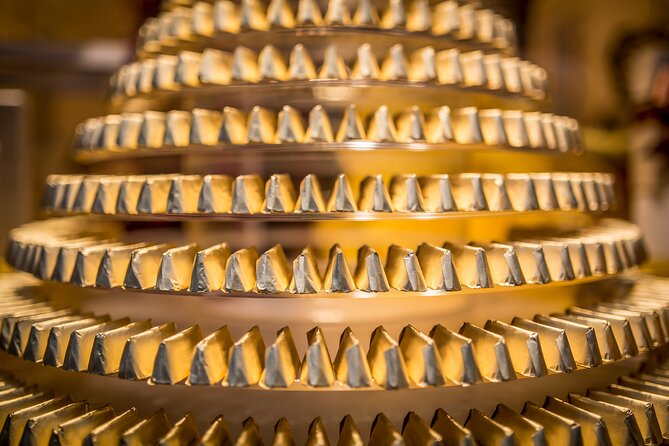
A cremino has three layers. The outside is smooth gianduja, while the middle may carry a flavor such as coffee, hazelnut paste, or lemon. It is a neat, layered piece, and the filling gives it more variety than a plain chocolate square.
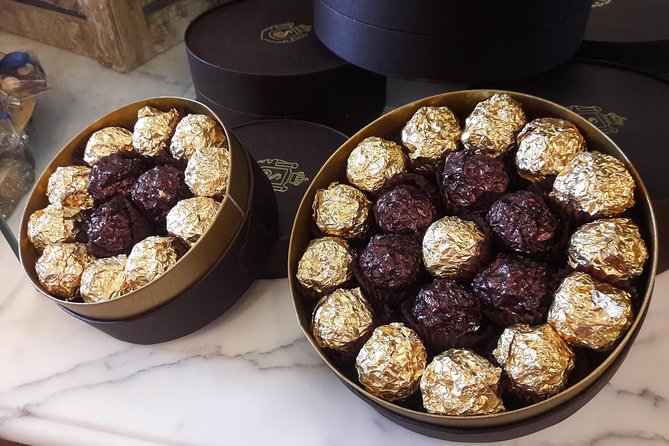
The gianduiotto is Turin’s more recognizable shape. It was first created in the city in 1852 and is formed like a small ingot. Piedmont hazelnuts, cocoa, and sugar produce its soft, creamy texture, while the gold wrapper makes it easy to spot in a shop window.
I would not treat the choice as a contest. The cremino is useful if you want layers and flavored filling. The gianduiotto is the better pick if you want the classic Turin taste and the city’s most famous chocolate shape. If your group includes several people, sharing or comparing the two would give you more useful context, but the stated tasting offers one or the other.
Piazza Castello also helps place the sweets within Turin’s grand center. You are not merely moving from one food counter to another. The route links chocolate to the public spaces and café culture that made it part of daily life.
Piazza C.L.N. finishes with gelato
The final stop is in Piazza C.L.N., where you taste artisanal gelato made with traditional methods and high-quality ingredients. It is a sensible finish: cold, smooth, and easy to enjoy after several chocolate samples.
The square gives you a pleasant setting for the last tasting, surrounded by historic buildings and cafés. The gelato is not presented as a specialty flavor class, so the emphasis is on the quality and traditional preparation rather than a detailed menu.
This final stop also confirms the tour’s limits. Gelato is included, but the experience is not built around savory food, regional wine, or a full meal. You will finish having eaten several sweets, not lunch.
If you are sensitive to sugar, pace yourself. The walk lasts about two and a half hours, and even modest samples add up. I would avoid booking this immediately before a major meal unless you are happy to treat the tastings as dessert.
What $62.75 gets you
At $62.75 per person, the price is reasonable for a small-group tasting walk in central Turin, provided you want both food and explanation. You are paying for five tasting points, an English-speaking local guide, the walking route, and the convenience of trying specialties without having to choose each shop yourself.
The value improves when the guide does the job well. A strong guide turns a gianduiotto into a lesson about Piedmontese hazelnuts, and turns bicerin into a way to understand Turin’s old café life. A weaker guide may leave you asking what each item is and why it matters.
The group limit helps protect that value. With no more than 12 people, questions are easier to ask, and the guide has a better chance of keeping the group together through the central streets. It is not a private tour, but it is much more personal than a large coach excursion.
You should also remember what is not included in the price. This is not a meal replacement, and the information provided does not promise a specific number of individual chocolates or pastries. The tour says you will taste local sweets at at least four stops, while the planned route lists five. Think of it as a guided sampling walk, not a fixed tasting menu.
How the reviews shape your expectations
The most consistent strength is the guide. Carolina received especially warm praise for combining local history with explanations of how the sweets are made, while Marta was described as friendly, well informed, and accommodating. Another strong account praised the way the city and culinary details were connected at each stop.
That quality is important because the food itself is not difficult to find in Turin. You can buy chocolate, gelato, and coffee on your own. The reason to book a tour is to learn what is special, where the traditions come from, and how the samples fit together.
The less positive experience points to a real risk. One person found the tour too light on explanations and had to ask what each item was and why it mattered. I would treat that as a prompt to ask questions early, especially at the pastry tasting and chocolate shops.
There was also a complaint about a last-minute date change. The policy is strict: cancel at least 24 hours before the start for a full refund, while changes or cancellations inside 24 hours are not accepted. That rule is worth noting before you book, particularly if your Turin schedule is unsettled.
A gluten-free guest was accommodated in one reported case, but severe or life-threatening food allergies cannot be accepted for safety reasons. If you have a serious allergy, this is not the right experience.
Who will enjoy this Turin food walk
I would recommend it to a first-time visitor who wants an easy introduction to Turin’s central streets and signature sweets. It also suits anyone who would like help choosing what to buy later, since the tasting gives you a clearer sense of gianduja, gianduiotto, cremino, bicerin, and gelato.
Families can do well here, especially with a guide who enjoys working with children. The 30-minute sections give the walk a clear rhythm, and the food provides enough variety to keep younger participants interested.
Chocolate fans should be especially happy, but pastry specialists need to adjust expectations. One Italian-language review felt the tour was essentially chocolate followed by gelato and did not deliver enough pastries. That is a fair warning if your main goal is a broad survey of Turin baking.
The tour also suits people who prefer a compact activity. At roughly 2.5 hours, it fits neatly into a morning or afternoon. Since it begins near Santa Cristina in Piazza San Carlo and ends on Via Po near the Mole Antonelliana, you can continue sightseeing after the final gelato.
You should have moderate physical fitness. The route is on foot, and the experience is described as an itinerant tour rather than a single seated tasting. Service animals are allowed, and the meeting area is near public transportation.
Should you book the Turin Sweet and Chocolate Walking Food Tour?
Book it if you want Turin’s main sweets explained by a local guide while you walk through the city center. The best reasons are the small group, the bicerin, the chance to compare gianduiotto or cremino, and the way a good guide can connect each taste to Turin’s café culture.
Skip it if you want a full meal, a savory food tour, or a pastry-only crawl. Also think twice if you have a severe food allergy or need complete certainty that the tour will focus heavily on pastries.
For most chocolate lovers, $62.75 is a fair price for a short, focused introduction. Ask questions, pace yourself, and treat the route as both a tasting and a first orientation to Turin.
FAQ
Where does the tour start?
The tour starts at Santa Cristina, at Piazza San Carlo, 10123 Turin.
Where does the tour end?
It ends on Via Po, 10124 Turin, near the Mole Antonelliana.
How long does the tour last?
The tour lasts approximately 2 hours and 30 minutes.
How many people can join the tour?
The tour has a maximum of 12 participants.
What language is the tour offered in?
The tour is offered in English. The guide may also speak Italian during the experience.
What foods and drinks are included?
You taste local chocolate, traditional pastries, bicerin, either a gianduiotto or cremino, and artisanal gelato. Water, coffee, and tea are also included.
Is bicerin included?
Yes. Bicerin is a planned tasting near Piazza San Carlo. It contains espresso, drinking chocolate, and whole milk or cream.
Is this a full meal?
No. This is a walking tasting tour focused on chocolate and sweet foods, not a full meal.
Can people with severe food allergies join?
No. For safety reasons, people with severe or life-threatening food allergies cannot participate.
What is the cancellation policy?
You can cancel at least 24 hours before the start time for a full refund. Cancellations or changes made less than 24 hours before the start are not accepted.
Freshly tempered around Turin
- Willy Wonka in Turin – A chocolate adventure★ 3.7 · 6 reviews
- Turin: 45-Minute Chocolate Workshop at Choco-Story★ 4.7 · 25 reviews
- Turin’s Sweet Delights: A Chocolate Walking Tour★ 4.9 · 26 reviews
- Fine Chocolate Tasting in Turin★ 5.0 · 26 reviews
- Turin Chocolate Tasting Walking Tour★ 5.0 · 4 reviews
- Guided Tour of the Chocolate Factory: Tasting Included★ 4.5 · 3 reviews
- Chocolate Made in Piedmont: Guided Tour with Tastings★ 4.5 · 10 reviews
- The Turin Chocolate Tasting Experience★ 4.5 · 31 reviews
More Italy Chocolate Tours to compare.
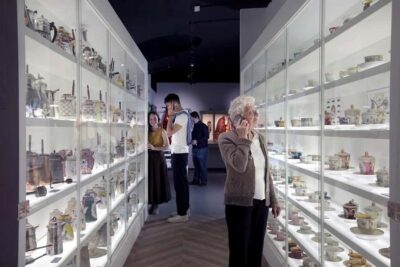
Turin: Visit to the Chocolate and Gianduja Museum, Choco-Story Torino
Read our review →
Pizza Cooking Class with Tiramisù and Wine Tasting in Milan
Read our review →
Chocolate & Sweets of Turin: La Dolce Vita Torino | Semi-Private
Read our review →
Milan: Enrico Rizzi Chocolate Factory Tour with Tasting
Read our review →
Chocolatier for a day: raw bean to bar chocolate in Modica
Read our review →
Turin’s Sweet Delights: A Chocolate Walking Tour
Read our review →Chocolate lists with this tour