
Review · BELGIUM
Chocolate history workshop Ghent
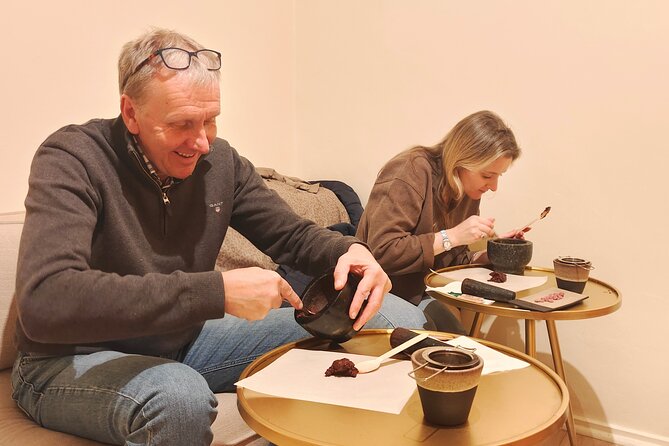
Chocolate here begins with the bean, not a tidy supermarket square. In a 16th-century house near Ghent’s Castle of the Counts, you’ll grind cacao, make your own bar, taste drinks from chocolate’s long past, and finish with four Belgian bonbons. I like the hands-on work and the way the host connects each taste to a story, from the Maya and Aztecs to Marie-Antoinette. I also like that the small group, limited to six, leaves room for questions.
The main thing to understand is that this is a chocolate history and tasting workshop, not a professional confectionery class. You will not learn tempering, melting, or how to shape truffles and bonbons. Grinding cacao takes ordinary strength in your hands and wrists, and the shop is kept cool at about 18°C, so bring a light layer if you chill easily.
Key points at a glance
- Make a chocolate bar from cacao beans: Grind the beans yourself, then work with cacao, sugar, and the resulting chocolate mixture.
- Taste chocolate across 5,000 years: Sample historic drinks and products, including a very old-style cacao drink and a 17th-century recipe.
- Recreate spiced hot chocolate: Adjust the chocolate, sugar, and spices yourself, with care around the chili.
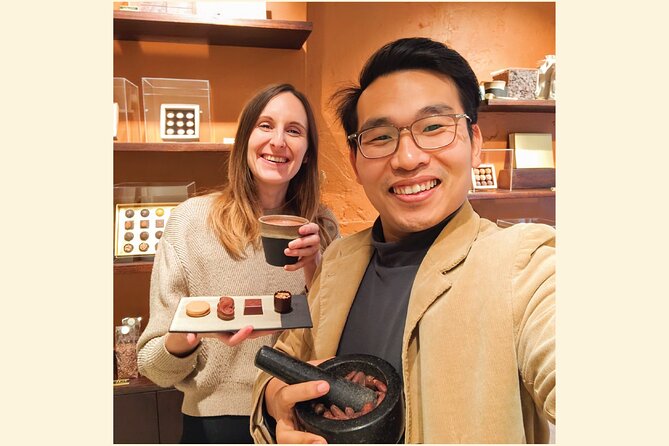
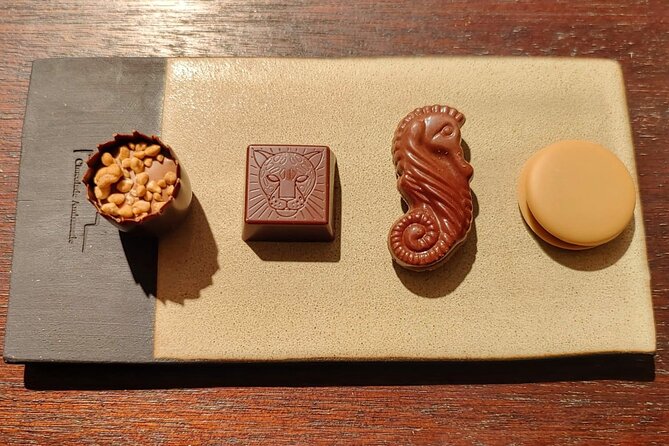
- Try four Belgian bonbons: The tasting includes classic and modern examples from different Belgian makers, including the familiar seashell style.
- Stay in a tiny English-speaking group: The maximum of six participants suits people who prefer a conversation over a large demonstration.
- Walk straight into Ghent sightseeing: Gravensteen, Patershol, Graslei, Korenlei, and boat tours are all within about five minutes.
A chocolate workshop inside an old Ghent house
The setting does a lot of useful work before the tasting even begins. Chocolade Ambassade is located in one of Ghent’s oldest houses, dating from the 16th century, just around the corner from Gravensteen, the Castle of the Counts.
Look for the tallest traditional Flemish stairs house near the castle. That detail matters because the meeting point is easy to miss if you are simply scanning for a modern chocolate shop. Once inside, you are working in an actual chocolate store rather than a purpose-built tourist room. You can browse afterward, but shopping is optional.
The workshop lasts 90 minutes. That is long enough to cover the main ideas and several tastings without taking over your day in Ghent. I would place it before or after a visit to Gravensteen, since the castle and the old Patershol quarter are only a short walk away.
The group size is one of the strongest practical features. With no more than six people and an English-speaking instructor, the session should feel more like a guided conversation than a lecture. You can ask why a drink tastes different, compare your chocolate with someone else’s, or ask for help with your bar without waiting through a large crowd.
More History Tours in Ghent:
- Chocolate history workshop Ghent
★ 5.0 · 34 reviews - Brussels: Historical Tour with Chocolate & Waffle Tasting
★ 4.8 · 1,206 reviews - Brussels: Historical Walking Tour with Chocolate & Waffle Tasting
★ 5.0 · 1,165 reviews
From cacao bean to homemade chocolate bar
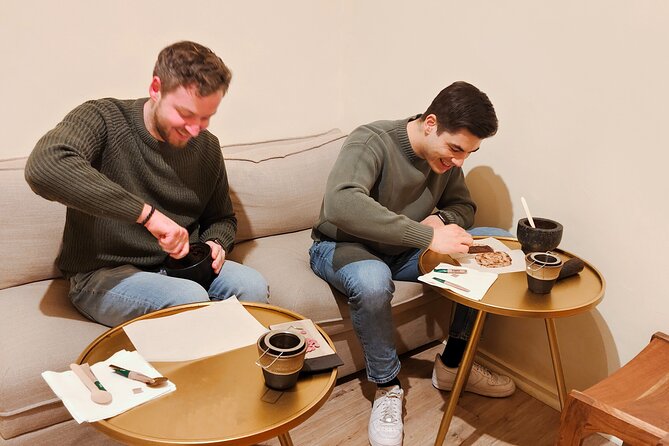
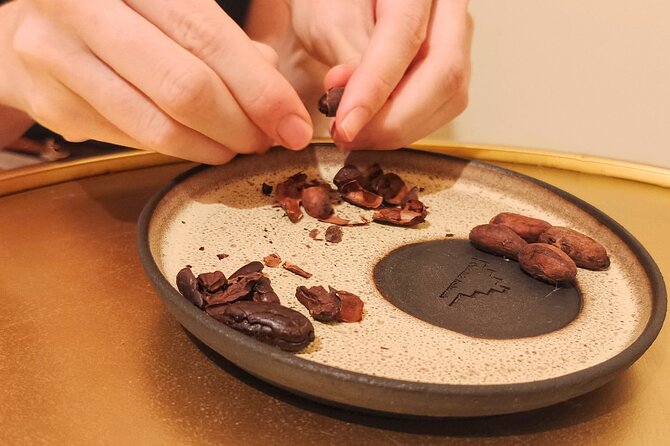
The workshop opens with a short explanation of how chocolate is made from cacao. You then start the part that gives this activity its character: grinding the beans yourself.
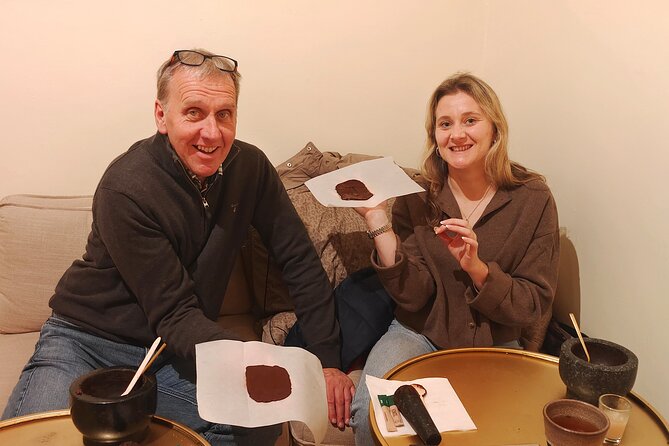
This is not simply a decorative step. It lets you feel how much work sits behind a smooth chocolate bar. You begin with a hard, natural product and gradually turn it into something closer to chocolate. Reviews describe the process as especially satisfying because the result comes from cacao, a little sugar, and your own effort.
The activity calls for normal strength in your hands and wrists. If you have reduced strength because of arthritis, rheumatism, or another condition, grinding may be difficult. This is worth taking seriously, since the hands-on work is central to the experience rather than a minor extra.
You will also want comfortable clothing. A little chocolate may land on your clothes while you work. The shop stays at roughly 18°C, or sometimes cooler, to protect the chocolate, so a sweater or light jacket is a sensible addition even if Ghent outside feels mild.
Your finished bar can be eaten at the end or taken home. That gives you a small choice that changes the feel of the activity. Eat it right away and the workshop ends with one more tasting. Take it with you and you have a personal souvenir to share later.
Chocolate history told through tastes
The historical section is not just a string of dates. The instructor uses food and drink to show how chocolate changed as it moved through different cultures and centuries.
You will hear about the Maya and Aztecs, then follow chocolate into Europe and its changing social role. The stories include Martha Washington and Marie-Antoinette, as well as stranger episodes involving bloodstained lips and the invention of the bonbon in a pharmacy. The subject has plenty of odd turns, and the format keeps the information tied to something you can taste.
One highlight is a cacao drink described as 5,000 years old. This should not be confused with the sweet, thick hot chocolate many people associate with Belgium. Its value is the contrast. You get a sense of chocolate as an ancient drink made from cacao, before modern candy bars and boxed bonbons shaped our expectations.
You will also sample other cacao products along the way. The tasting helps you notice how much chocolate depends on preparation, sugar, spices, and local habits. If you already know Belgian chocolate mainly through pralines and seashells, this broader view adds useful context.
The instructor’s enthusiasm is important here. The most praised part of the session is the clear, lively explanation that links the history to each sample. The host’s name is not provided, but the English-language presentation is designed to move back and forth between talking, tasting, and making rather than leaving you seated for 90 minutes.
Mixing a 17th-century hot chocolate
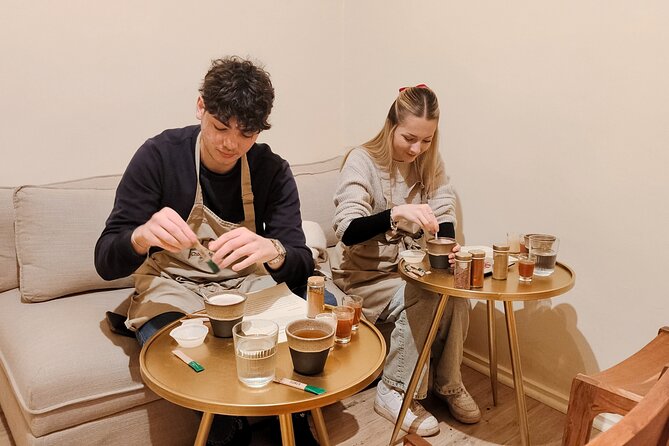
The hot chocolate segment gives you more control than a standard tasting. You recreate a 17th-century recipe and choose how much chocolate, sugar, and spice to add.
That makes this a useful lesson in balance. You can make the drink sweeter, more chocolate-heavy, or more strongly spiced. The chili deserves caution. The warning is not decorative, and a small amount can have more force than you expect.
I like this part because it turns historical food into a personal experiment. You are not merely told that older chocolate drinks used spices. You get to adjust the recipe and taste the result yourself. It also creates a clear contrast with the Belgian bonbons that follow, which are more polished and familiar.
There is a small limitation. Because the workshop is not focused on technical chocolate-making, you should not expect a full lesson in professional hot chocolate preparation or confectionery technique. The value is in understanding the ingredients and the period style, then enjoying the drink you have adjusted.
More Chocolate Tours around Ghent:
- Ghent: Belgian Chocolate Walking Tour with Tastings
★ 4.9 · 259 reviews - Brussels: Bruges & Ghent Tour w/ Cruise & Chocolate Tasting
★ 4.2 · 144 reviews - Ghent: Famous Belgian Chocolate Walking Tour with Tastings
★ 5.0 · 131 reviews - A Taste of Ghent: Beer & Chocolate with storytelling by a local
★ 5.0 · 77 reviews
Four Belgian bonbons, from classic to modern
The final tasting focuses on four chocolate bonbons from different top Belgian chocolatiers. The selection ranges from traditional flavors to more modern styles, and includes classic chocolate seashells.
This is a good way to finish because it shifts from chocolate’s origins to Belgium’s current confectionery culture. You can compare the bonbons rather than treating Belgian chocolate as one single style. The familiar seashells provide a classic reference point, while the newer flavors show how Belgian makers continue to experiment.
The tasting is also useful if you plan to buy chocolate during your stay. You can identify the flavors and styles you prefer before spending money in a shop. The staff can offer personalized suggestions based on your workshop favorites, though there is no pressure to purchase.
Four bonbons will not replace a full chocolate crawl through Ghent, nor is that the point. This is a focused sample that fits into a 90-minute program. If you want a long, highly technical tasting, you may find the selection brief. If you want a well-paced introduction with enough variety to make comparisons, the amount is sensible.
What the $81 price means in practice
At $81 per person, this is not a cheap snack stop. You are paying for a small group, an English-speaking chocolate expert, the hands-on cacao work, several historical tastings, your own chocolate bar, a hot chocolate preparation, and four Belgian bonbons.
The value depends on what you want from a food activity. If you only want to eat Belgian chocolate, you can spend much less at a shop. If you want to understand how cacao changes from bean to drink to bar, the workshop offers more substance than a simple tasting.
The six-person limit improves the value. You are not paying for a large-scale demonstration where the instructor must repeat the same explanation to a crowd. You have a better chance to ask questions and receive help while grinding and shaping your bar.
The activity also uses time well for a city visit. After 90 minutes, you are close to several of Ghent’s best-known sights, rather than stranded outside the center. That makes it easier to add to a day of sightseeing without giving up half a day.
The best comparison is with other food experiences. This is more educational and hands-on than a chocolate shop visit, but less technical than a confectionery course. The price makes sense for someone who values the stories, tastings, and small-group format as much as the chocolate itself.
Who will enjoy this most
I would recommend this for adults, couples, friends, and families with children aged 12 or older who enjoy food with a story attached. A young person who likes dark chocolate can take part, and the activity has enough practical work to keep it from feeling like a school lesson.
It suits first-time visitors to Ghent because the location is central and the workshop gives you a useful indoor break. It also suits people who already like chocolate but want to understand cacao, historic drinks, and Belgian bonbon styles in a more organized way.
You may want to choose another activity if your main goal is learning professional techniques. Tempering, melting, truffle-making, and bonbon shaping are specifically not included. You should also reconsider if grinding with your hands and wrists is likely to be painful or tiring.
The cool room may matter more than you expect. Chocolate needs a controlled temperature, so bring an extra layer if you tend to feel cold. Wear clothes you do not mind getting a small spot of chocolate on, especially if you plan to continue sightseeing afterward.
Planning it around Gravensteen and the old center
The meeting point is near the Castle of the Counts, with the Patershol quarter, Graslei and Korenlei, and boat tours all within roughly five minutes on foot.
That makes the workshop easy to pair with a compact Ghent itinerary. You might visit Gravensteen first, then stop for chocolate, or use the workshop as a break before walking along the waterways. Patershol is also close for continued wandering through the old center.
The activity ends with enough energy for more sightseeing rather than a heavy meal. You have tasted plenty, but the format is not presented as lunch or dinner. Plan another meal if you need something substantial afterward.
Free cancellation up to 24 hours before the start gives you some useful flexibility, and the reserve-now, pay-later option can help if your Ghent schedule is still shifting. Starting times depend on availability, so check the time before arranging your castle visit or boat trip.
Should you book this Ghent chocolate workshop?
Book it if you want more than a box of Belgian sweets. The strongest reasons are the small English-language group, the chance to grind cacao yourself, the unusual historic drinks, and the lively route from ancient cacao to modern bonbons.
Skip it if you want a technical pastry course or a long, indulgent meal. At $81, the cost is easiest to justify when you value the teaching, the tastings, and the personal chocolate bar together.
For most chocolate fans aged 12 and up, I think it is a well-balanced addition to a Ghent day. You leave with a homemade bar, a better sense of how chocolate developed, and several clear ideas about which Belgian chocolates you may want to buy next.
FAQ
Where does the chocolate workshop take place?
It takes place at Chocolade Ambassade, just around the corner from Ghent’s Castle of the Counts. Look for the tallest traditional Flemish stairs house.
How long does the workshop last?
The activity lasts 90 minutes.
What language is the workshop in?
The instructor conducts the workshop in English.
How many people can join the group?
The group is limited to six participants.
Will I learn how to temper chocolate or make truffles?
No. The workshop is not focused on techniques such as tempering, melting, or shaping truffles and bonbons. You will grind cacao beans and make your own chocolate bar.
Can I take my chocolate bar home?
Yes. You can taste your bar at the end or take it home to share.
Is the workshop suitable for children?
Children under 12 are not permitted. Participants should also have normal strength in their hands and wrists because grinding the cacao beans may be challenging otherwise.
Freshly tempered around Ghent
- Chocolate and Jenever (Belgian Gin)Tasting in Ghent★ 5.0 · 2 reviews
- Ghent Chocolate Tasting and Sightseeing Tour★ 5.0 · 21 reviews
- Chocolate history workshop Ghent★ 5.0 · 34 reviews
- Discover authentic Ghent with historian & taste the best chocolate★ 5.0 · 30 reviews
- Private Chocolate Tasting Experience in Ghent★ 4.6 · 7 reviews
- Ghent: Guided City Tour with Chocolate Tastings★ 4.8 · 36 reviews
- Ghent: Belgian Chocolate Making Workshop with Beer Tasting★ 4.3 · 15 reviews
- Private Chocolate Experience in Ghent★ 5.0 · 31 reviews
More Belgium Chocolate Tours to compare.
Choco-Story Brussels: Chocolate Museum Entrance with Tasting
Read our review →
Hungry Mary’s Famous Beer and Chocolate Tour in Brussels
Read our review →
Brussels: Belgian Chocolate Making Workshop with Tastings
Read our review →
Brussels: Chocolate Museum Visit with Workshop
Read our review →
Bruges: Choco-Story Chocolate Museum Guided Tour w/Tastings
Read our review →
Brussels: Historical Tour with Chocolate & Waffle Tasting
Read our review →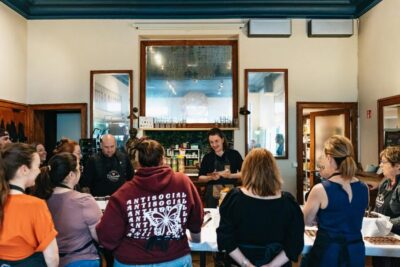
Brussels: 2.5-Hour Belgian Chocolate Making Workshop
Read our review →
Brussels Walking and Tasting Tour (Beers,Chocolates&Fries/Waffle)
Read our review →Chocolate lists with this tour