
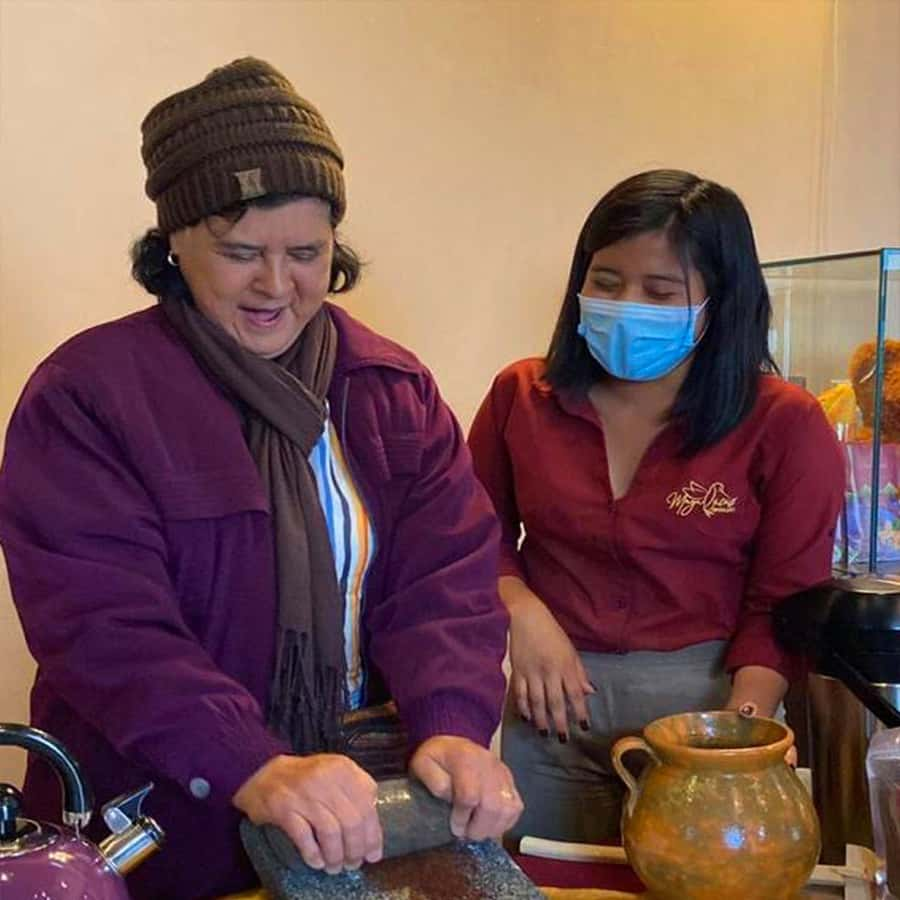
Review · CHOCOLATE MAKING WORKSHOPS
Chocolate workshop; gastronomic experience of cocoa.
Cocoa takes center stage here, not as a sweet snack but as a food with a long Guatemalan story. In about 1.5 hours, you learn how cocoa mattered to the Maya, taste it at different stages, then roast, shell, grind, and shape your own bar.
I like the hands-on process and the fact that your finished chocolate is included. I also like the small private-group setup, which leaves room for questions and makes this a good family activity for children aged seven and older.
The main consideration is language: instruction is in Spanish. Guides such as Andrea, Ingrid, and Bea have helped non-Spanish speakers with patience and written information, but you should still be comfortable using translation help if needed.
What makes this cocoa workshop worth your time
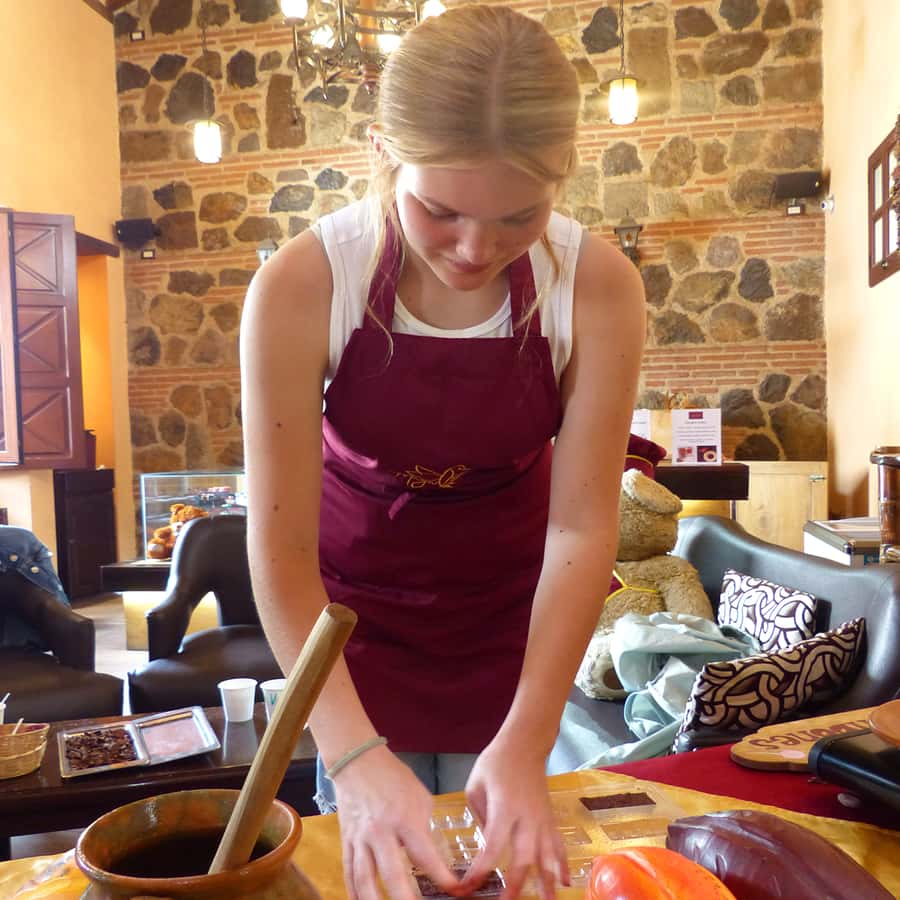
- You follow the bean from raw cocoa to chocolate bar, rather than simply sampling finished sweets.
- Maya cocoa traditions give the tasting a cultural setting, so the food has meaning beyond flavor.
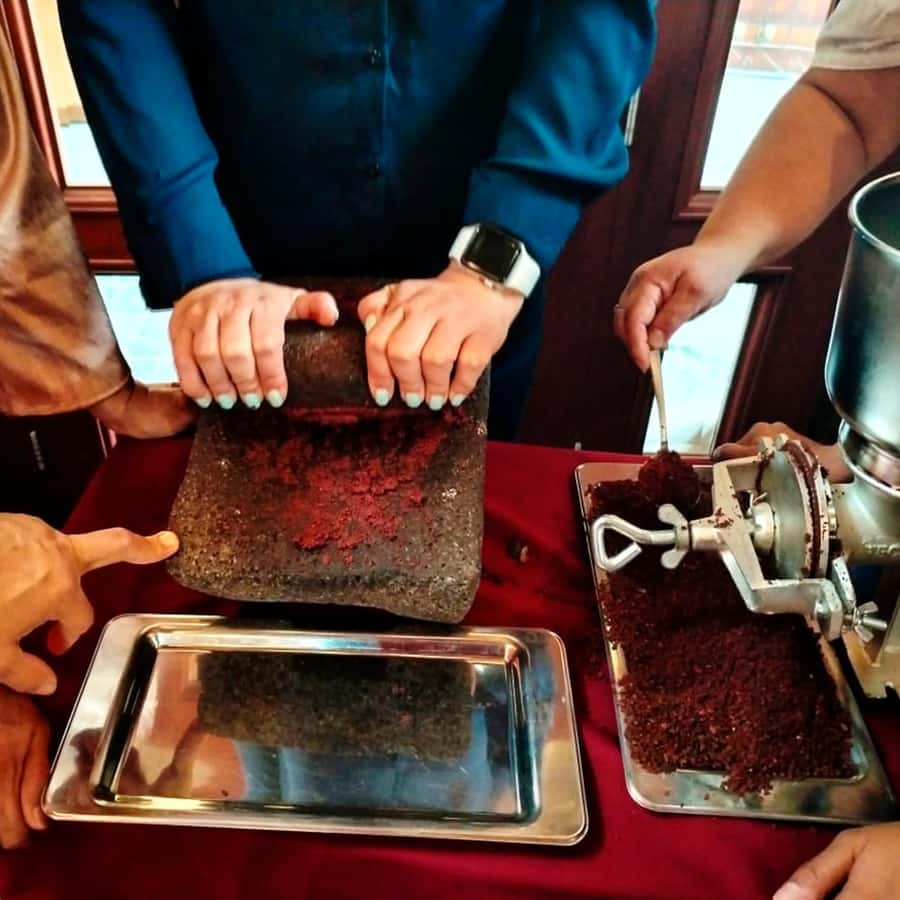
- Roasting, shelling, and grinding use your own hands, making the class active and memorable.
- Your materials, tastings, and handmade bar are included in the $32 price.
- Private groups and wheelchair access make the experience easier to tailor to your party.
- A 5% store discount gives you a small reason to browse after the class.
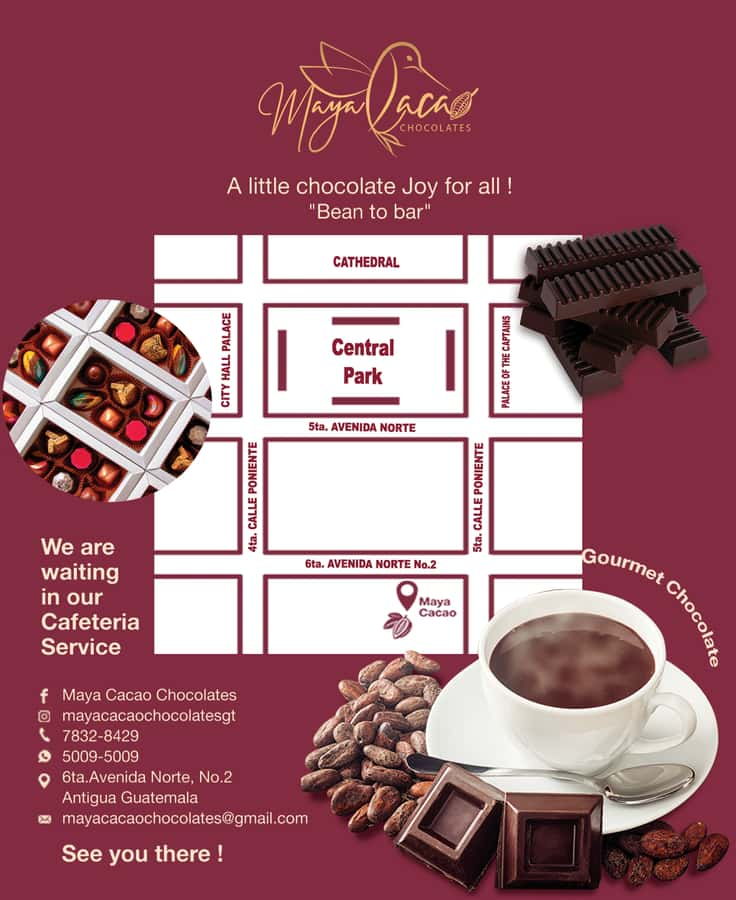
Starting near Antigua’s Parque Central
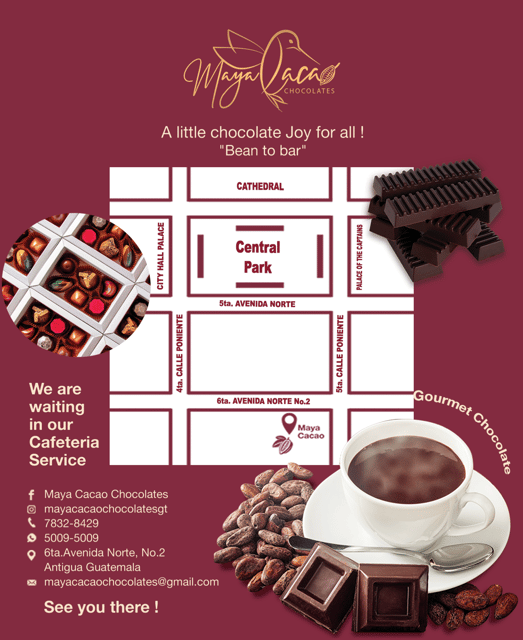
The meeting point is at 6a Avenida Norte 6, one block from Parque Central in Antigua Guatemala. Look for the mustard-colored house. A teddy bear at the door acts as your welcome marker, which is more useful than a vague address when you are walking Antigua’s streets.
This central location makes the workshop easy to fit into a day of sightseeing. You do not need to arrange separate transport for the activity, and the short walk from the park means you can combine it with other plans in central Antigua.
Still, use the full address when finding the place. One participant found the directions harder to follow than expected, so do not rely only on the general phrase one block from the park. Give yourself a little time to locate the mustard-colored house before the start.
The activity is valid for one day, with available start times shown during booking. The listed workshop lasts about 1.5 hours, while the overall product is sold as a one-day experience. That makes it a manageable stop rather than a full-day excursion.
More Chocolate Making Workshops in the world:
- Vienna: Chocolate Workshop in Chocolate Museum w/ Tasting
★ 4.5 · 1,802 reviews - Brussels: Belgian Chocolate Making Workshop with Tastings
★ 4.7 · 1,629 reviews - Brussels: 2.5-Hour Belgian Chocolate Making Workshop
★ 4.8 · 933 reviews
Beginning with cocoa in Maya life
The class opens with cocoa in the time of the Maya. You learn about its origin, importance, and uses before handling the beans yourself.
That introduction matters. Without it, roasting and grinding could feel like a simple cooking demonstration. With it, you have a reason to pay attention to how the ingredient changes. Cocoa is presented as part of Guatemalan food culture, not merely as the base for a modern candy bar.
The emphasis is on Guatemalan aroma cocoa, and the session uses your five senses. You smell and taste cocoa in its different processes, then notice how the character changes as you work with it.
You should not expect a long museum-style lecture. This is a practical food workshop with cultural context at the beginning. If you enjoy learning through touch, smell, and taste, the format should suit you better than a purely historical talk.
Sorting, roasting, and shelling the beans
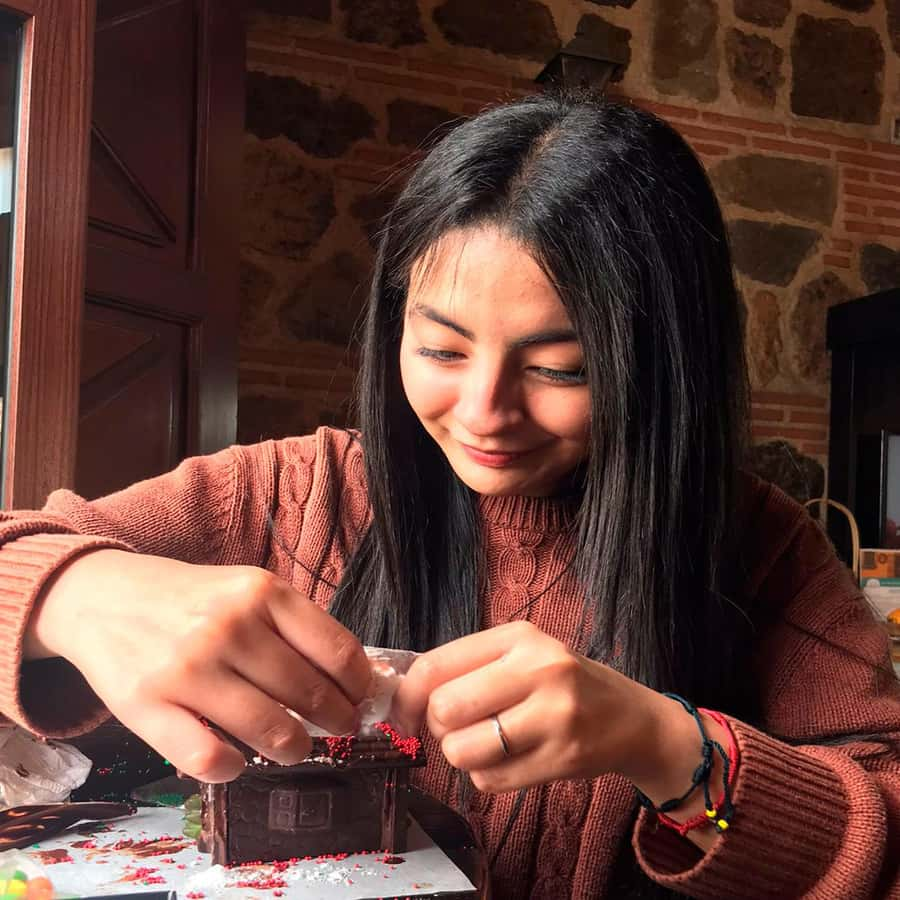
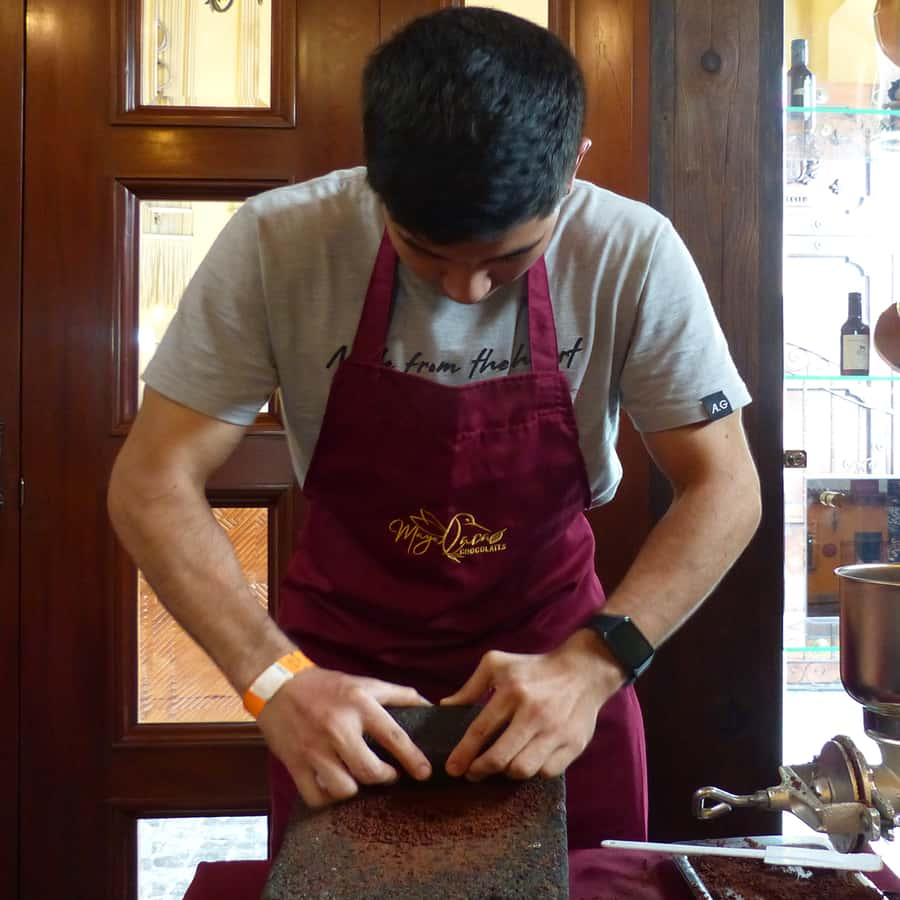
The working part begins with the cocoa beans. You learn to sort them, roast them, and remove the shells.
Sorting is a small step, but it helps you see that chocolate begins with preparation. Roasting changes the aroma and flavor, and shelling reveals the part that will be ground. You are not simply watching a guide perform each stage behind a counter.
The exact equipment and roasting method are not specified, so the emphasis is best understood as participation rather than a technical chocolatier course. You will handle the beans and take part in the sequence, but this is not presented as professional confectionery training.
This stage is especially useful for children and first-time chocolate makers. It gives the activity a clear rhythm: inspect the cocoa, heat it, remove the husk, and prepare it for grinding. Children under seven are not accepted, but older children can follow a process with a visible result.
Grinding cocoa and forming your bar
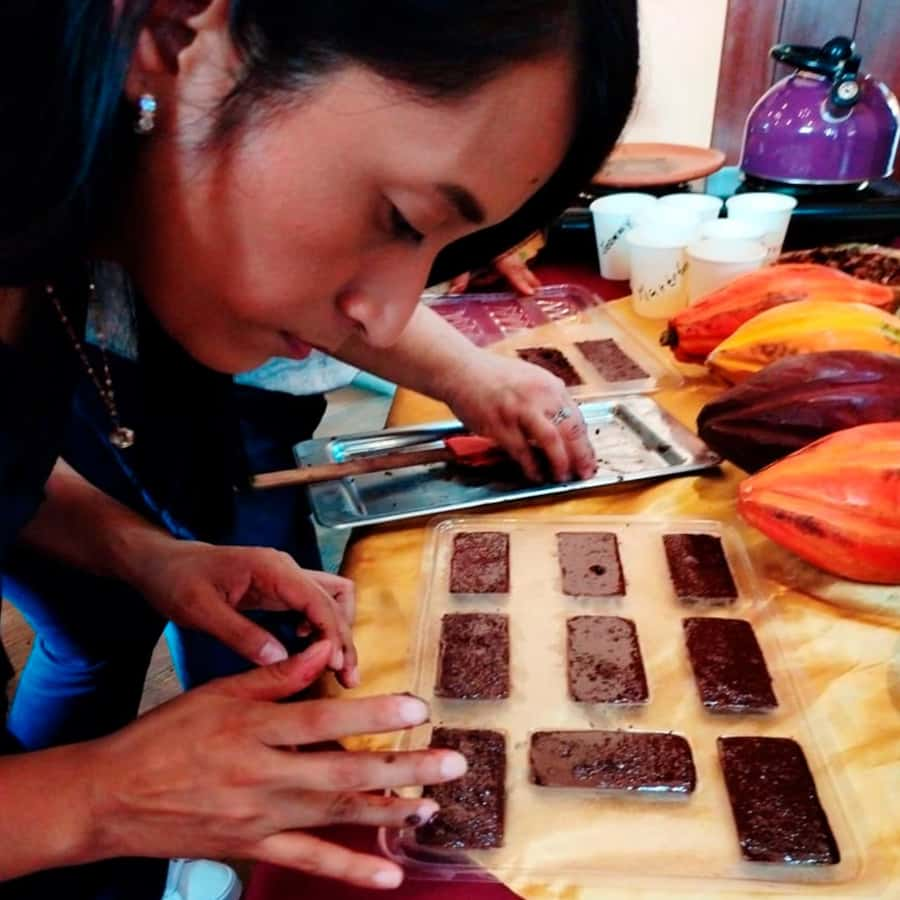
After shelling, you grind the cocoa and use it to make your chocolate. The final step is forming a bar that you take home.
This is the part that gives the $32 fee its practical value. You are paying for more than samples and a talk. The price includes materials, tastings, and your own handmade bar, so the experience produces a physical souvenir as well as a memory.
The bar also gives you a simple way to remember the stages. You can taste finished chocolate later, but you cannot recreate the moment of turning cocoa through each process unless you take part. The hands-on work makes the final product feel personal, even if its shape is not perfectly uniform.
Do not expect a large quantity of chocolate. The attraction is the process and the small handmade result. If you want a full tasting tour or a large box of finished confectionery, this may not be the right activity. If you want to understand how cocoa becomes chocolate, it offers a more satisfying format.
More Chocolate Tours around the world:
- Lindt Home of Chocolate Museum Entry Ticket
★ 4.7 · 9,329 reviews - Choco-Story Brussels: Chocolate Museum Entrance with Tasting
★ 4.3 · 4,883 reviews - Zurich: City Tour, Cruise, and Lindt Home of Chocolate Visit
★ 4.5 · 4,624 reviews - The Chocolatarium Chocolate Tour Experience in Edinburgh
★ 5.0 · 4,322 reviews
Tasting cocoa with all five senses
The tasting is spread across the different cocoa processes. You use sight, smell, touch, and taste as the ingredient changes, rather than waiting until the final bar.
That sensory approach helps you notice details that can disappear once sugar and other ingredients are added. Aroma is given special attention, fitting the focus on Guatemalan aroma cocoa.
The experience description promises a strong emotional response to the flavor, but you should read that as enthusiastic presentation rather than a guarantee that every palate will react the same way. Cocoa can be intense, especially before it becomes a familiar sweet chocolate flavor.
This is a good activity for anyone curious about the difference between cocoa as a raw ingredient and chocolate as a finished food. It is less suited to someone who only wants quick dessert samples.
Spanish instruction and the guides
The official language is Spanish. That is an important point to consider before booking, especially if no one in your group speaks Spanish.
At the same time, the language barrier does not automatically rule out the class. Ingrid has patiently helped a family who did not speak Spanish, using interaction and translation support. Andrea has also guided the full process, from sorting and roasting to shelling, grinding, and forming the bars, while written information and Google Translate helped a couple with limited Spanish.
Bea is another guide associated with the activity and is known for expanding explanations when needed. The practical lesson here is simple: bring a phone with translation access if you need it, and expect the class to work best when you are willing to ask questions through gestures, translation, or short phrases.
You should not book this expecting guaranteed English instruction. You can, however, prepare in advance and make the activity workable for a mixed-language family or couple.
Why the private-group format matters
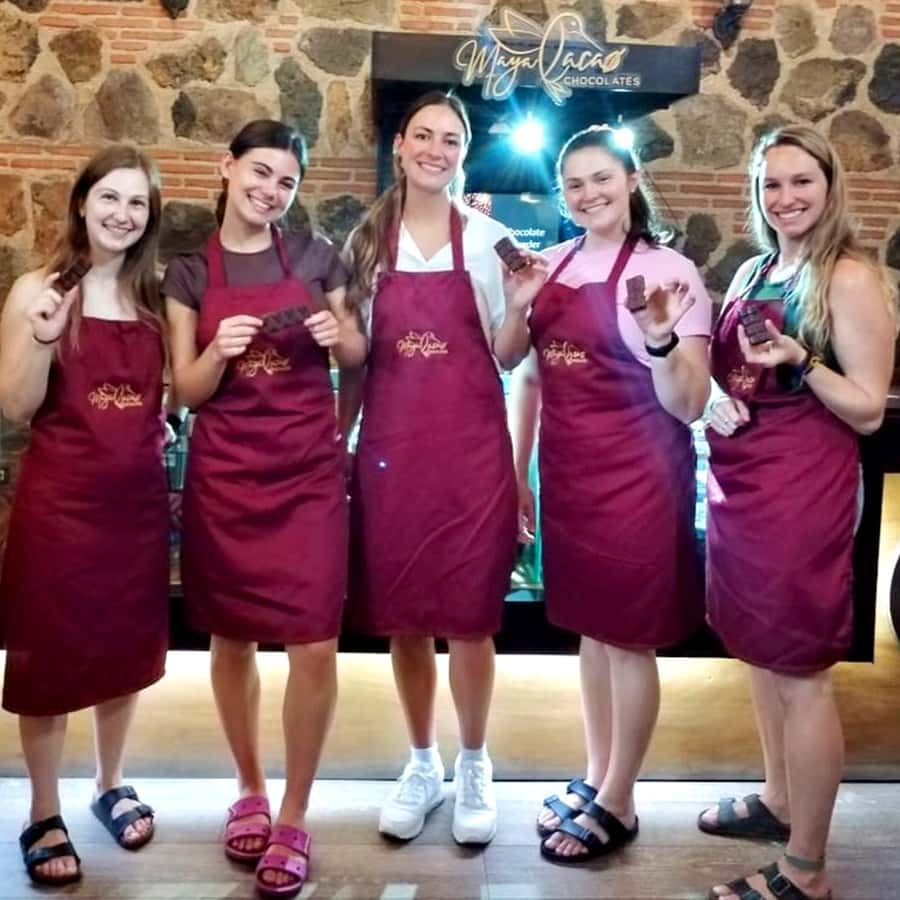
This is a private group experience, rather than a large shared class. That can make a real difference during a hands-on workshop.
You have more space to ask for an explanation, repeat a step, or adjust the pace for your group. It also makes the class appealing for families, couples, and small groups who want to work together instead of being folded into a large demonstration.
The private format does not mean every detail can be customized. The listed workshop remains about 1.5 hours, Spanish is the stated language, and the same cocoa-making steps form the core of the activity. Think of private as a more personal group arrangement, not a completely bespoke cooking lesson.
Wheelchair access is listed, which is useful for guests who need an accessible activity. Since specific details about door widths, seating, or restroom access are not provided, you may want to confirm any individual needs before arrival.
Measuring the $32 value
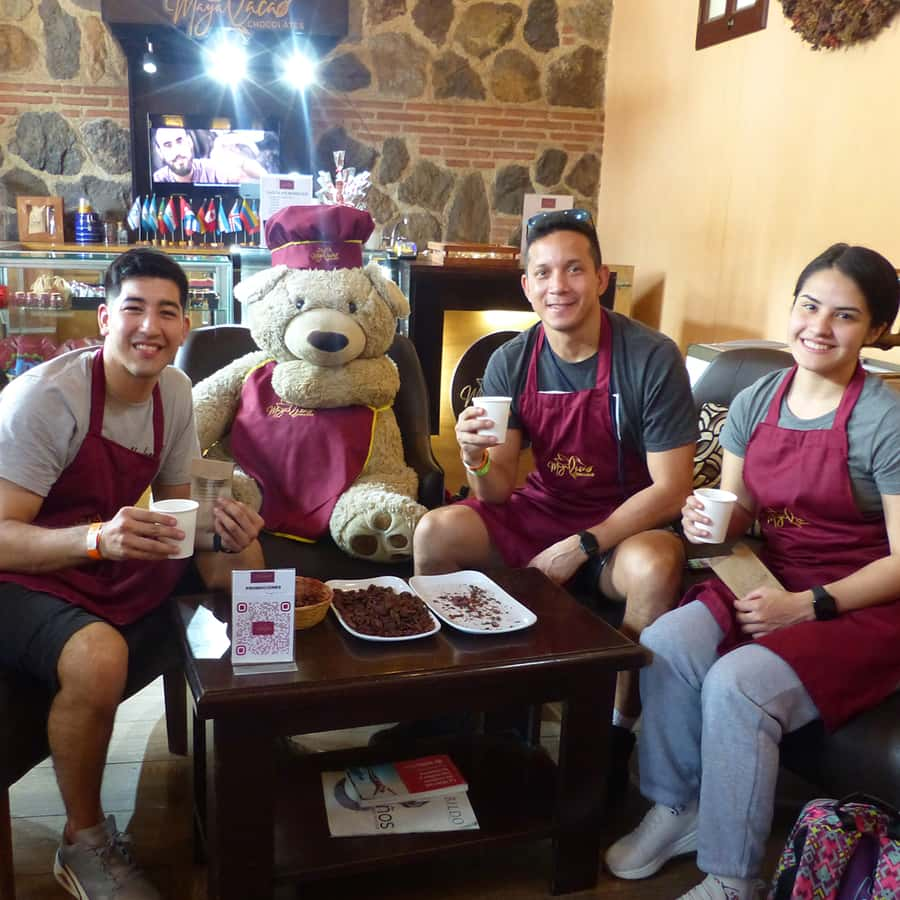
At $32 per person, the workshop sits in the affordable range for a guided food activity, especially because the fee includes materials, tastings, and a chocolate bar made by you.
The value comes from the combination of three things:
- You learn about Maya-era cocoa traditions.
- You taste cocoa through several stages.
- You make and take home a finished bar.
If you only count the chocolate, the price may seem high compared with buying a bar in a shop. If you count the instruction, ingredient handling, tasting, and time with a private group, the cost makes more sense.
The experience also includes a 5% discount throughout the store. That is a useful extra if you plan to buy more chocolate, but it should not be the reason you book. The workshop itself is the main purchase.
I would consider it good value for people who enjoy food activities and want a souvenir tied to something they actually did. It is less valuable for visitors who prefer a free sample, a quick shop visit, or a long formal cultural tour.
Who should book this Antigua activity?
I would recommend it most strongly to:
- Families with children aged seven or older.
- Couples looking for a short, shared activity.
- First-time visitors curious about Guatemalan cocoa.
- Chocolate fans who want to understand the making process.
- Small private groups that prefer personal instruction.
- People who like edible souvenirs with a story attached.
The age limit is firm in the supplied information, so families with younger children need another plan for that part of the day.
The class also works well for visitors who have already spent time seeing Antigua’s churches, streets, and central sights. It adds a food-focused activity without taking up a full day.
You may want to skip it if you need English instruction, dislike strong or unsweetened cocoa flavors, or want advanced chocolate-making techniques. The class is introductory and sensory, not a professional course.
Booking, timing, and practical details
You can cancel up to 24 hours in advance for a full refund, and the reserve-now, pay-later option lets you hold a place without paying immediately. Those terms are helpful when your Antigua schedule is still changing.
Check the available starting time for your chosen date. The activity is listed as valid for one day, so availability matters more than a fixed daily departure schedule.
Wear something suitable for a food workshop, although no specific clothing requirement is given. Arrive at the mustard-colored house on 6a Avenida Norte, and look for the teddy bear at the door. If directions seem unclear, use the exact address rather than searching only for the business name.
The workshop is in Spanish, so prepare translation support if needed. A phone, written notes, and a willingness to follow visual demonstrations can help you keep up with the process.
What I like most about Maya Cacao Chocolates
The best feature is the clear start-to-finish sequence. You do not just hear that chocolate comes from cocoa beans. You sort, roast, shell, grind, and shape the product yourself.
I also like the cultural opening. Learning about cocoa in Maya life gives the activity a Guatemalan identity, instead of making it feel like a generic chocolate class that could take place anywhere.
The guides add another strength. Andrea, Ingrid, and Bea have each been noted for explaining the process carefully, helping with translation, or expanding on details when needed. That matters in a short class, where a rushed instructor could turn the experience into a checklist.
The final bar is another practical touch. It may be small, but it gives you something to carry home and share. The best souvenir is often the one that reminds you how it was made.
What to keep in mind before you go
The language issue is the main limitation. Spanish speakers will have the easiest time, while other visitors should plan to use translation assistance. The activity can still work across languages, but it will require some effort from you.
The directions may also take a little care. The meeting point is central, yet one person found the arrival instructions unclear. Use 6a Avenida Norte 6 and the mustard-colored house as your main reference points.
Finally, keep your expectations matched to the length. This is a 1.5-hour workshop, not a full-day farm visit, factory tour, or advanced pastry course. Its strength is a compact, personal introduction to cocoa with plenty of participation.
Should you book this cocoa workshop?
Book it if you want a short, active food experience in Antigua and like the idea of making your own souvenir. The $32 price is reasonable because it covers tastings, supplies, instruction, and your finished bar, while the private format gives your group a more personal session.
I would especially choose it for families with older children, couples, and anyone who wants a stronger connection to Guatemalan cocoa than a shop purchase can provide. Spanish speakers will get the most from the explanations, but prepared non-Spanish speakers can take part with translation help.
Skip it if you need a confirmed English-speaking guide, have children under seven, or want a large amount of finished chocolate. For everyone else, Maya Cacao Chocolates offers a focused and enjoyable way to understand cocoa by working with it from bean to bar.
FAQ
Where does the chocolate workshop take place?
It takes place at 6a Avenida Norte 6 in Antigua Guatemala, one block from Parque Central. The meeting point is a mustard-colored house with a teddy bear at the door.
How long does the workshop last?
The workshop lasts about 1.5 hours.
What is included in the price?
The price includes materials, tastings, and the chocolate bar you make during the activity.
Is the workshop offered in English?
The stated language is Spanish. Translation support and written information may help non-Spanish speakers participate.
Are children allowed to join?
Children under seven are not suitable for this activity. Children aged seven and older can take part.
Is the activity wheelchair accessible?
Yes, the activity is listed as wheelchair accessible. Specific access details are not provided, so contact the provider if you need information about particular requirements.
Freshly tempered around the world
- Zurich Open-top Tour and Chocolate and Cheese Countryside★ 3.5 · 11 reviews
- Zurich: Chocolate Tasting and Walking Tour with a Local★ 4.2 · 13 reviews
- Lindt Chocolate Museum with Cruise Transfer from Zurich★ 4.6 · 7 reviews
- Zagreb: Lake Bled and Ljubljana Day Tour with Chocolate Gift★ 5.0 · 26 reviews
- York: Introduction to Chocolate Making Experience★ 4.9 · 10 reviews
- Zaandijk-Near Zaanse Schans Chocolate making demo & tasting★ 4.8 · 13 reviews
- Private Wine and Chocolate Tasting Experience★ 4.4 · 3 reviews
- Yarra Valley: Wine and Chocolate tasting tour.★ 5.0 · 5 reviews
More Chocolate Making Workshops to compare.
Vienna: Chocolate Workshop in Chocolate Museum w/ Tasting
Read our review →
Brussels: Belgian Chocolate Making Workshop with Tastings
Read our review →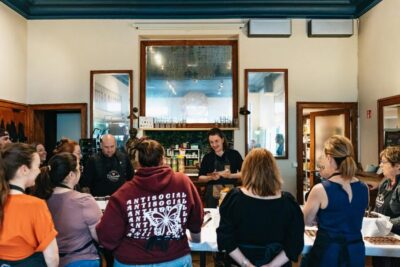
Brussels: 2.5-Hour Belgian Chocolate Making Workshop
Read our review →
Bruges: Belgian Praline and Mendiants Chocolate Workshop
Read our review →
1.5h Belgian Chocolate Workshop in Brussels (bean to bar)
Read our review →
Paris: 45-minute Chocolate Making Workshop at Choco-Story
Read our review →
York: Chocolate Bar Making Workshop at York Cocoa Works
Read our review →Chocolate lists with this tour