
Review · CHOCOLATE MAKING WORKSHOPS
Chocolate Workshop in Cusco with Premium Organic Cacao
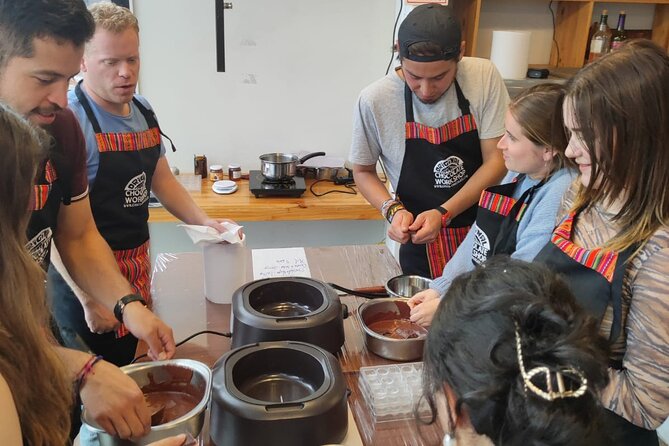
Cusco’s best chocolate experience may be the one that lets you eat your homework. At this hands-on workshop, you’ll make about 21 pralines and 10 mendiants with organic Chuncho cacao from the Sacred Valley, then pack the finished sweets in a personalized box.
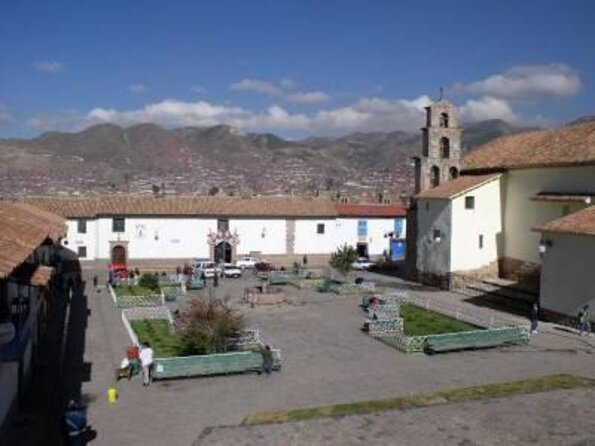
I like two things here: the class gives you plenty to take home, and the setting looks out over Cusco, often with sunset arriving during the 5 p.m. session. The instructors, including David, Abelardo, Randy, and Titch, are described as warm, funny, and patient. The main consideration is that this is a chocolate-making class, not a full cacao-bean-to-bar demonstration.
Key points at a glance
- Sacred Valley cacao: Work with 100% organic, artisanal Chuncho cacao, a prized local variety from the Cusco region.
- A generous finished box: Make around 21 pralines and 10 mendiants, with enough chocolate to share or save for later.
- Local flavors: Choose from homemade jams, organic nuts, dried fruits, coconut, and other toppings.
- A sunset setting: The 5 p.m. start can line up with evening light over Cusco.
- More than candy making: Learn to prepare hot chocolate and ganache, along with the basic steps behind the bonbons.
- Small-group instruction: The class has a maximum of 15 people, with personal help from the instructor.
What the Cusco chocolate workshop is really like
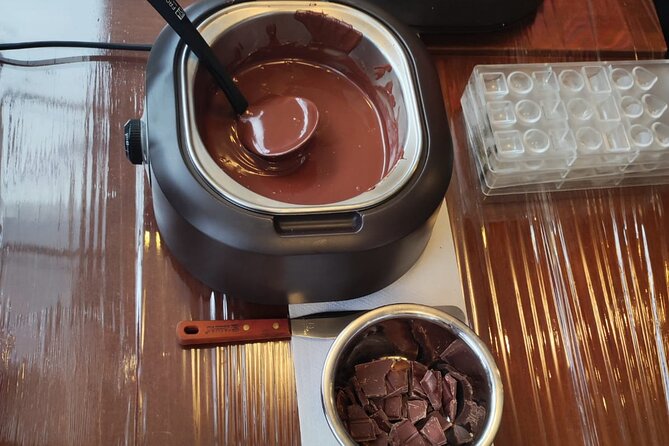
This is a relaxed evening activity in central Cusco, held at C. Pasñapakana 133. You return to the same meeting point at the end, so the logistics are refreshingly simple.
The workshop lasts about two and a half hours. That gives you enough time to hear about chocolate, work with the ingredients, make your pieces, prepare a hot drink, and collect your finished box without feeling rushed. The class is available for adults and children 12 and older, making it a useful choice for couples, families with older children, and solo visitors looking for something social.
The tone is casual rather than formal. David is often praised for his humor and clear explanations, while Abelardo brings Belgian training and an engaging manner to the lesson. Randy, Titch, Damaso, Avi, and Erika have also led or assisted sessions. The exact instructor can vary, but the pattern is clear: expect a guide who works directly with the group rather than simply demonstrating from a distance.
That personal attention matters. Chocolate can look easy until you are trying to fill, top, and finish several pieces at once. Having someone nearby to show you the next step makes this a better choice than a simple tasting.
More Chocolate Making Workshops in the world:
- Vienna: Chocolate Workshop in Chocolate Museum w/ Tasting
★ 4.5 · 1,802 reviews - Brussels: Belgian Chocolate Making Workshop with Tastings
★ 4.7 · 1,629 reviews - Brussels: 2.5-Hour Belgian Chocolate Making Workshop
★ 4.8 · 933 reviews
Starting with cacao and Cusco’s chocolate story
Before the practical work begins, you learn about the place of chocolate in the region and its connection to local culture. The class uses 100% organic Chuncho cacao from the Sacred Valley of the Incas, an area known for high-quality cacao production.
This introduction gives the workshop a useful sense of place. You are not making generic sweets with ingredients chosen at random. The main ingredient comes from the area around Cusco, and the toppings include local products such as homemade jams and regional nuts.
Still, keep your expectations clear. One visitor specifically noted that the class does not involve processing cacao beans. You will not roast, crack, grind, and turn raw beans into chocolate from scratch. Instead, the workshop begins with prepared chocolate and focuses on shaping, filling, decorating, and tasting.
For most people, that is a fair trade. You get more time to make attractive, edible results, and less time watching a technical production process. If your main interest is the full farm-to-bar chain, this may feel limited. If you want to make sweets and understand how the finished chocolate is handled, it fits well.
Making Belgian-style pralines and mendiants
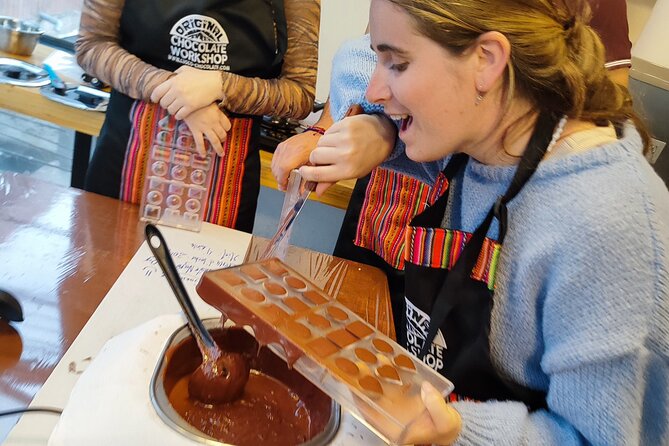
The central activity is making your own pralines and mendiants in the Belgian style. You work with the chocolate, add fillings and toppings, and follow the instructor’s guidance as the pieces take shape.
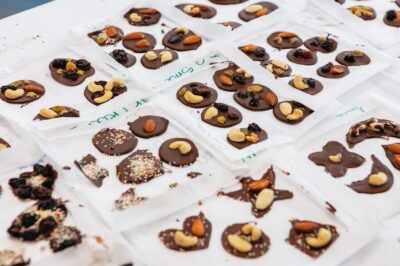
You make around 21 pralines, which are filled chocolates, plus about 10 mendiants. Mendiants are small chocolate discs finished with toppings such as nuts or dried fruit. That is a generous amount for a two-and-a-half-hour class, especially at the $45 price.
The selection of fillings is one of the strongest parts of the experience. You can choose from homemade local jams and a broad range of organic nuts, along with toppings such as coconut flakes and dried fruits. This lets you make a mixed box rather than repeating one flavor.
I like that the ingredient choices connect the class to Peru without forcing every piece into a novelty flavor. You still get the familiar pleasure of good chocolate, but the local jams and regional ingredients give your box a Cusco identity.
The work is practical and interactive. You are not simply watching an instructor produce perfect bonbons. You handle the ingredients and make the decisions about toppings. That also means your finished pieces may look handmade rather than shop-perfect. For many people, that is part of the fun. The point is not a flawless professional display. It is the satisfaction of opening the box later and knowing you made it.
Learning ganache and preparing hot chocolate
The workshop also teaches you how to make ganache. This is the smooth chocolate filling used in many truffles and bonbons, and learning the basic method gives the lesson more substance than a simple decoration class.
You also prepare your own hot chocolate during the session. The remaining chocolate can be used in the drink, and the class shows you how to turn it into a warm, finished beverage.
This part works especially well in the evening. After walking around Cusco’s steep streets or adjusting to the altitude, a hot chocolate gives you a slower finish to the day. It also adds variety to the class. You are not eating the same type of chocolate for two and a half hours.
The hot chocolate has been singled out as a highlight, and the instructors make the process part of the lesson rather than handing you a prepared cup. That small detail matters because it keeps the workshop active from start to finish.
More Chocolate Tours around the world:
- Lindt Home of Chocolate Museum Entry Ticket
★ 4.7 · 9,329 reviews - Choco-Story Brussels: Chocolate Museum Entrance with Tasting
★ 4.3 · 4,883 reviews - Zurich: City Tour, Cruise, and Lindt Home of Chocolate Visit
★ 4.5 · 4,624 reviews - The Chocolatarium Chocolate Tour Experience in Edinburgh
★ 5.0 · 4,322 reviews
The view over Cusco at sunset
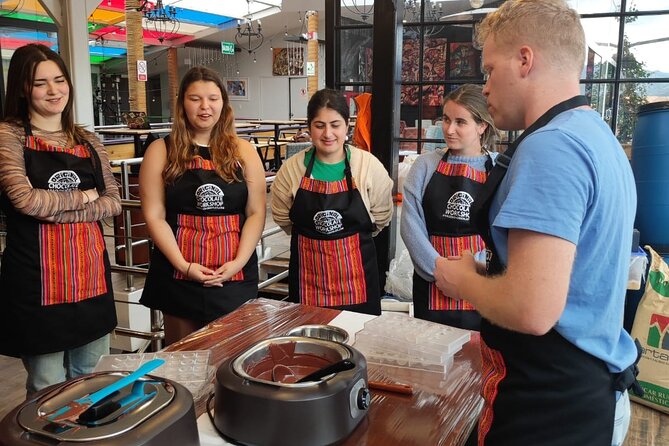
The setting is more than a backdrop. The workshop location offers views over Cusco, and the 5 p.m. start often places the class near sunset and into the city’s evening lights.
The view is a major reason to choose this particular activity instead of making chocolate anywhere else. You get a calm indoor project while the city changes outside. Several people have found the walk to the venue and the view from the building memorable, and the evening timing makes the experience feel like part of a night out rather than a daytime stop between museums.
The view can also shape the pace of the class. You may want to pause near the end to look out over the city, take photos, or simply enjoy the change in light. The activity is not presented as a separate sightseeing stop, so treat the panorama as a valuable bonus rather than a formal viewing platform.
If you are choosing between start times, the 5 p.m. session is the one to consider for sunset. The supplied details identify 5 p.m. as the start time, and several sessions have been described as combining chocolate making with an evening view.
How much chocolate do you take home?
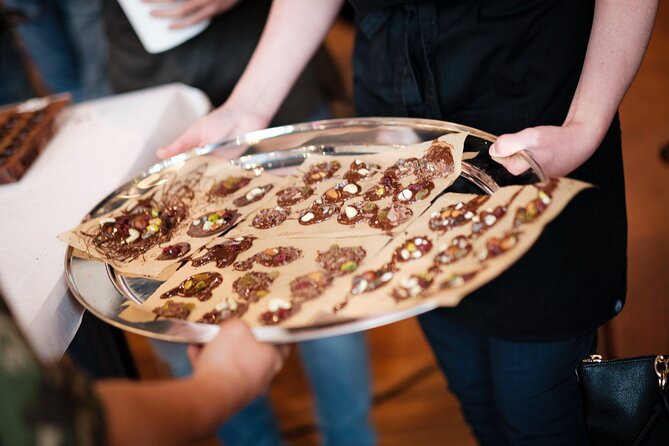
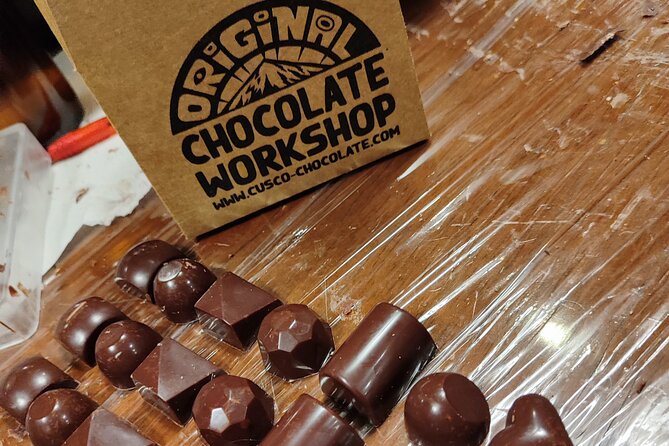
You receive a personalized box for your creations at the end. With around 21 pralines and 10 mendiants, this is not a token sample. You should have enough to share with family or friends, assuming you do not eat too many before leaving.
The box also solves a practical problem. Chocolate can be an awkward souvenir if you buy it early in a trip and carry it around for days. Here, you make it near the end of your day and take it with you immediately.
The sweets are also more personal than a standard packaged bar. You selected the toppings and fillings, prepared the pieces, and watched them come together. That makes the box a pleasant gift, even if the shapes are not perfectly uniform.
The amount of chocolate helps explain the $45 price. You are paying for instruction, ingredients, equipment, the hot chocolate, the setting, and a substantial edible souvenir. It is not the cheapest way to taste Peruvian chocolate, but it is reasonable if you value a guided activity and want to make something yourself.
Group size, timing, and practical details
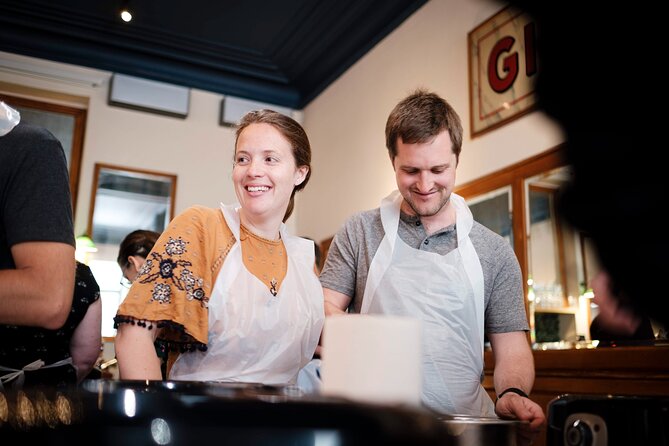
The maximum group size is 15 people. That is large enough to create a lively class but small enough for an instructor to move around and offer help. The strongest sessions appear to come from the interaction between the group and the guide, so a shared class suits you if you enjoy conversation and a bit of friendly mess.
Solo visitors can fit in well. One session had only a few participants, which allowed for a more personal class, but group sizes can vary. Couples and families also have a clear advantage here: you can compare your flavor choices, share the work, and leave with a mixed box.
The meeting point is C. Pasñapakana 133 in Cusco. The activity ends there too. It is near public transportation, and service animals are allowed. Confirmation is provided at booking.
The workshop is open to children aged 12 and older. Younger children are not included in the stated age range, so families should plan around that rule.
Because chocolate is sensitive to heat, you may want to keep your finished box out of direct sun after the class. The provided details do not specify special transport or storage instructions, so ask the instructor if you are carrying it onward or saving it for another day.
Who will enjoy this best?
I would choose this class for you if you want a low-key evening in Cusco with a clear activity, local ingredients, and something edible to take away. It suits a first or second night in the city because it gives you a gentle way to get oriented while enjoying a view.
It is also a good option during acclimatization. The workshop keeps you indoors, requires no long drive, and gives you a seated activity with plenty of interaction. It does not replace a rest day if you feel unwell, but it is less demanding than a major archaeological site or high-altitude excursion.
Couples will appreciate the sunset atmosphere. Families with children 12 and older get an activity that is both creative and easy to understand. Solo visitors can join a group without needing to arrange a private experience.
You may want to skip it if you have little interest in sweets, need a strictly cacao-bean production tour, or prefer a quiet tasting with no hands-on work. You should also allow room in your evening schedule, since two and a half hours is long enough to compete with dinner plans.
Booking and cancellation advice
This experience is commonly booked about 18 days ahead, and it is recommended by 99 percent of people who rated it, with a 4.9 score from 75 reviews. Those numbers suggest it is wise to reserve before arrival if the 5 p.m. timing matters to you.
You can cancel for a full refund up to 24 hours before the local start time. Changes or cancellations within 24 hours are not accepted for a refund. The class also requires a minimum number of participants. If that minimum is not reached and the activity is canceled, you are offered another date or experience, or a full refund.
Should you book this chocolate class?
Yes, if you want an enjoyable Cusco evening that combines local cacao, practical instruction, sunset views, and a useful souvenir. The best reasons to book are the generous amount of chocolate, the choice of Peruvian fillings, and the instructors’ friendly, hands-on style.
Go in knowing what it is: a praline and mendiant workshop using prepared chocolate, not a complete cacao-bean processing lesson. At $45, the value is strongest when you take part fully, enjoy the hot chocolate, ask the instructor for Cusco tips, and leave with a box you made yourself.
FAQ
Where does the chocolate workshop take place?
The workshop takes place at C. Pasñapakana 133, Cusco 08000, Peru. The activity ends back at the same meeting point.
How long does the workshop last?
The experience lasts approximately two hours and 30 minutes.
What time does the workshop start?
The listed start time is 5:00 p.m. This timing may allow you to see Cusco at sunset during the class.
How much chocolate will I make?
You will make around 21 pralines and 10 mendiants, then receive a personalized box for taking your creations home.
Is the workshop suitable for children?
The workshop is available to adults and children aged 12 and older.
Can I cancel for a full refund?
Yes. You can cancel at least 24 hours before the local start time for a full refund. Cancellations or changes made less than 24 hours before the start time are not refunded or accepted.
Freshly tempered around the world
- Zurich Open-top Tour and Chocolate and Cheese Countryside★ 3.5 · 11 reviews
- Zurich: Chocolate Tasting and Walking Tour with a Local★ 4.2 · 13 reviews
- Lindt Chocolate Museum with Cruise Transfer from Zurich★ 4.6 · 7 reviews
- Zagreb: Lake Bled and Ljubljana Day Tour with Chocolate Gift★ 5.0 · 26 reviews
- Zaandijk-Near Zaanse Schans Chocolate making demo & tasting★ 4.8 · 13 reviews
- York: Introduction to Chocolate Making Experience★ 4.9 · 10 reviews
- Private Wine and Chocolate Tasting Experience★ 4.4 · 3 reviews
- Yarra Valley: Wine and Chocolate tasting tour.★ 5.0 · 5 reviews
More Chocolate Making Workshops to compare.
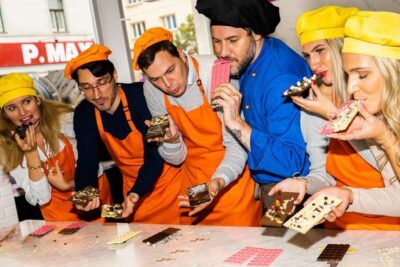
Vienna: Chocolate Workshop in Chocolate Museum w/ Tasting
Read our review →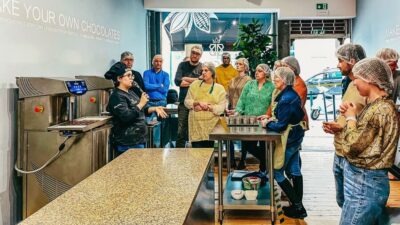
Brussels: Belgian Chocolate Making Workshop with Tastings
Read our review →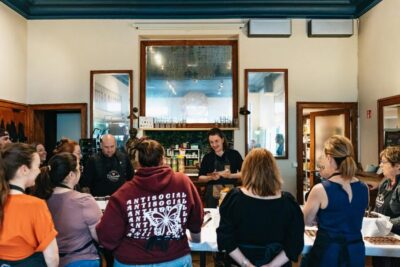
Brussels: 2.5-Hour Belgian Chocolate Making Workshop
Read our review →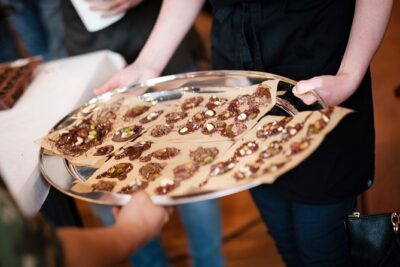
Bruges: Belgian Praline and Mendiants Chocolate Workshop
Read our review →
1.5h Belgian Chocolate Workshop in Brussels (bean to bar)
Read our review →
Paris: 45-minute Chocolate Making Workshop at Choco-Story
Read our review →
York: Chocolate Bar Making Workshop at York Cocoa Works
Read our review →Chocolate lists with this tour