
Review · CHOCOLATE MAKING WORKSHOPS
Bohol Chocolate Making and Farm Tour
Chocolate in Bohol begins as a fruit on a tree, not as a neat bar in a shop. This five-hour outing follows cacao from fresh fruit and harvested beans through fermentation, sun drying, roasting, and moulding your own chocolate to take home. It is a hands-on look at the work behind a sweet most of us rarely question.
I like the private pickup and drop-off choices from Panglao Island or Loboc, and I like that the chocolate-making is part of the visit rather than an afterthought. Yuna and driver JR handle the road portion, while Ryan guides the farm experience. The main consideration is the price: at $94 per person, this is best value for families or small private groups that want a full half-day activity, not a quick tasting.
Key points at a glance
- From cacao tree to chocolate bar: See growing, harvesting, fermenting, drying, roasting, and moulding in one guided visit.
- Make chocolate yourself: Use the provided equipment and take your finished chocolate home.
- Pickup from two Bohol bases: Choose Panglao Island or Loboc for both pickup and drop-off.
- A strong family activity: Children curious about sweets can see the full process and take part in making chocolate.
- Private five-hour format: You travel in a private vehicle and private group rather than joining a large shared bus.
- English-speaking team: Yuna, JR, and farm guide Ryan are named members of the operation.
Why the cacao process makes this Bohol outing worthwhile
The appeal here is simple: you get to see the steps that usually disappear before chocolate reaches a supermarket shelf. The farm visit explains how cacao trees grow, what the fresh chocolate fruit tastes like, and how the beans are handled after harvest.
That sequence gives the activity more substance than a basic sweets stop. You are not only eating chocolate. You are learning why the bean needs fermentation, why it is dried in the sun, and how roasting changes it before it can be moulded into a treat.
I especially like the fresh fruit stage. Cacao pods are not the same thing as finished chocolate, and tasting the fruit helps you understand that the familiar flavour develops later. The tour may also include fresh tropical fruit tasting, which gives the farm visit a wider sense of place without turning it into a long list of unrelated stops.
The educational side should suit children who ask how things are made. The experience has a clear story, a practical activity, and a sweet reward at the end. Parents should still remember that the tour lasts five hours, so it is a proper half-day outing rather than a short stop squeezed between other attractions.
More Cacao Farm Tours in the world:
- Lahaina: Maui Ku’ia Estate Guided Cacao Farm Tour and Tasting
★ 5.0 · 1,103 reviews - Award Winning Farm Tour: Coffee, Chocolate and Unique Gifts
★ 5.0 · 484 reviews - Lahaina: Maui Ku’ia Estate Guided Cacao Farm Tour & Tasting
★ 4.8 · 137 reviews
Starting from Panglao Island or Loboc
You have two pickup choices: Panglao Island or Loboc. The same two locations are available for drop-off, which keeps the day easy to plan if your accommodation is based in one of those areas.
Private transportation matters here. You do not need to arrange a separate ride to the farm or work out how to return after making chocolate. Yuna is the named tour guide for the road portion, and JR is the named driver. A family booking also praised the vehicle as comfortable, a useful detail when you are carrying children or spending several hours on the outing.
The exact pickup time depends on availability, so check the starting options before you pay. Since the duration is five hours, leave enough room in your Bohol schedule for the full activity, transport, and any delays on the road. I would not place a tightly timed evening booking immediately afterward.
The private-group setup is one of the clearest reasons to consider this tour. You can share the experience with your own party instead of adapting to a large group. That may help families, couples, and small groups who want the guide’s attention during the chocolate-making portion.
Entering the Bohol Chocolate Farm
The farm visit is guided by Ryan, who explains the process in English. The tour covers cacao trees first, then follows the bean through the stages needed to turn it into chocolate.
You can expect the explanation to include:
- How cacao trees grow
- The taste of fresh chocolate fruit
- Harvesting the cacao
- Fermenting the beans
- Sun drying the beans
- Roasting
- Moulding chocolate
This order is important. It turns the farm into a working lesson rather than a photo stop. You begin with the plant and finish with a product you can hold and eat.
The farm itself is the main attraction, so keep your expectations grounded. The supplied details do not promise a large museum, an elaborate visitor center, or a long menu of tastings. The value comes from seeing the process and having the chance to make chocolate, not from a polished theme-park presentation.
Ryan’s role also matters. A local farm guide can explain the stages in a direct, practical way, and the named guide received praise for being friendly and informative. That combination is useful for children, who may have very specific questions about pods, beans, drying, or roasting.
Fresh cacao fruit before the chocolate
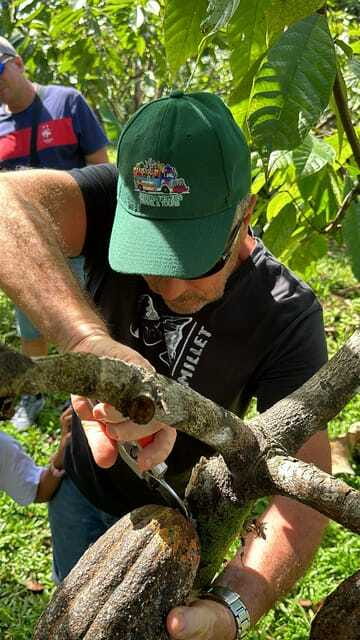
One of the most interesting parts is tasting the fresh chocolate fruit. This is a small detail, but it changes how you think about cacao. Before the bean is roasted and mixed into a sweet product, it is part of a tropical fruit with its own taste and texture.
The tour may also include fresh tropical fruit tasting. The word may is important here: treat this as a possible extra part of the farm visit, not a guaranteed tasting menu. The included snacks are confirmed, but the specific fruits and amount are not listed.
I would encourage you to pay attention at this stage instead of rushing toward the finished chocolate. The contrast between fresh cacao fruit and moulded chocolate is the lesson. You get to connect the plant, the bean, and the final sweet in a way a shop purchase cannot provide.
There is also a useful practical point for families. Children often know chocolate only as candy or dessert. Here, they can see that it begins with agriculture and several careful steps. That makes the outing educational without requiring a classroom.
More Chocolate Making Workshops in the world:
- Vienna: Chocolate Workshop in Chocolate Museum w/ Tasting
★ 4.5 · 1,802 reviews - Brussels: Belgian Chocolate Making Workshop with Tastings
★ 4.7 · 1,629 reviews - Brussels: 2.5-Hour Belgian Chocolate Making Workshop
★ 4.8 · 933 reviews - Belgian Chocolate Workshop in Bruges
★ 5.0 · 660 reviews
Fermentation, drying, and roasting explained
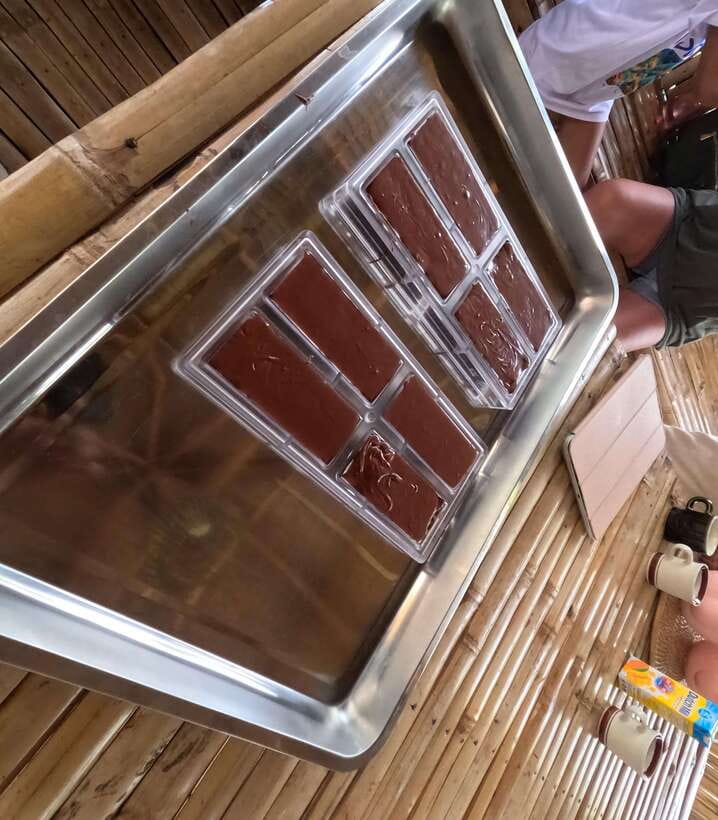
After harvesting, the cacao beans need more work. The tour explains fermentation and sun drying before moving on to roasting. These stages are easy to overlook, but they help explain why fresh cacao beans are not ready to eat as a finished chocolate product.
Fermentation is part of the change from raw bean to a form suitable for later processing. Sun drying reduces moisture and prepares the beans for roasting. The tour does not simply mention these words in passing. They form the middle of the tree-to-treats story.
Roasting is the point where the process begins to feel familiar to anyone who has handled coffee or toasted nuts. Heat changes the beans and prepares them for the next stage. You can watch the farm process move from field work toward kitchen craft.
The activity is described as involving cooking and sweets, but do not expect a full cooking class with a broad menu. The focus is cacao and chocolate. That narrow focus is a strength if you want a clear subject, but a drawback if you are hoping for a general Bohol food tour.
Making chocolate with the provided equipment
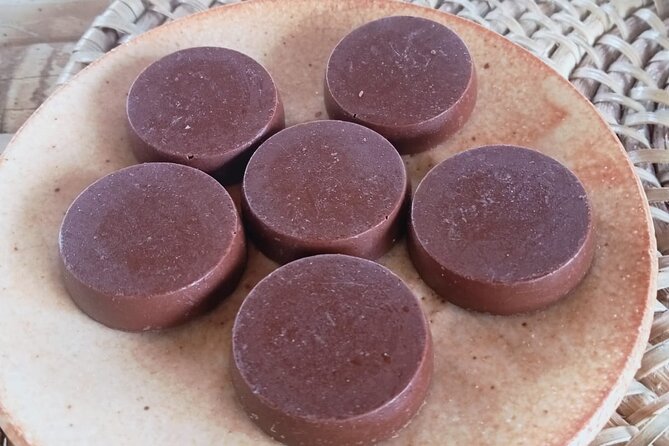
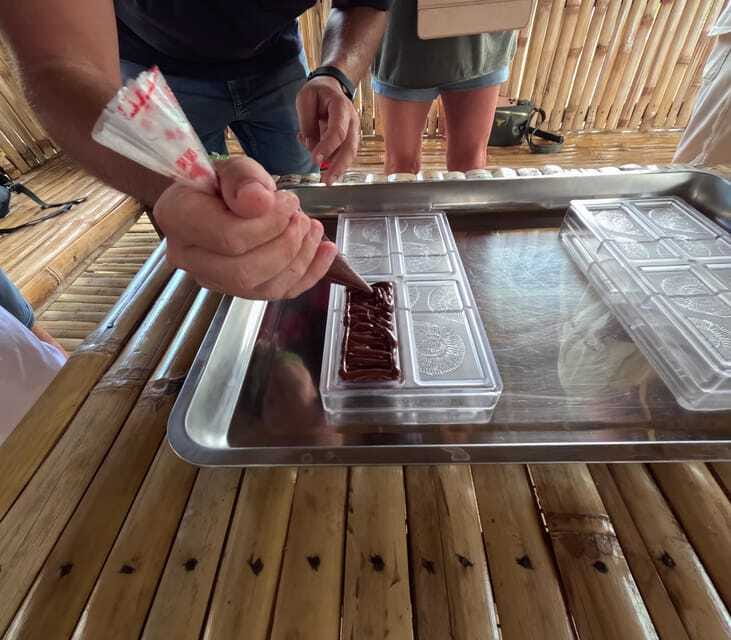
The hands-on section lets you use the equipment supplied for chocolate making. You will mould your own chocolate and take it home, giving the day a physical result beyond photographs and a guide’s explanation.
This is where the tour earns much of its appeal. A demonstration can be pleasant, but making something yourself helps you remember the stages. You have seen the fruit, learned about the beans, and watched the process move toward chocolate. Then you take part in the final form.
The exact moulds, flavours, and quantity are not specified, so I would not book this expecting a particular design or a large box of finished sweets. Think of the take-home chocolate as a personal souvenir from the activity.
For children, the moulding stage is likely to be the most exciting part. Adults may appreciate the context more, especially after seeing how much work comes before the chocolate reaches the mould. The activity is recommended for children curious about chocolate making, though babies under one year are not suitable for the tour.
Snacks, timing, and the value of five hours
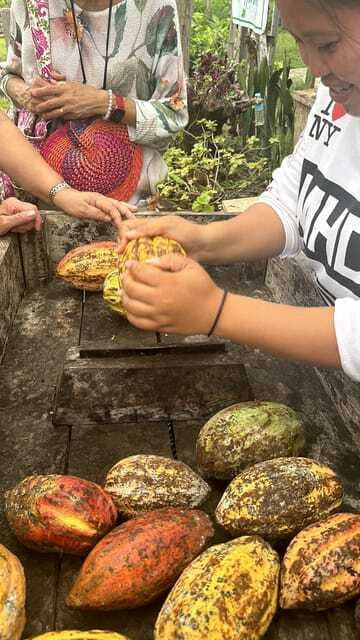
Snacks are included, along with admission to the Bohol Chocolate Farm and use of the chocolate-making equipment. Fresh tropical fruit may also be offered during the farm visit.
At $94 per person, the cost needs a clear look. You are paying for a private five-hour experience, private transportation, an English-speaking guide, farm entry, snacks, and the practical chocolate activity. For a family that would otherwise need to arrange transport and find a separate farm visit, that package can make sense.
The price is harder to justify if you only want a quick taste of chocolate. There are no promises here of a large meal, a long list of farm products, or multiple attractions. The value rests on the combination of transport, teaching, and making something yourself.
I would compare the price with your group size and plans. A private group can make the cost easier to accept because the vehicle and guide are arranged around your party. Solo visitors or people with a tight budget may find it expensive for a half-day activity, especially if chocolate making is not a main interest.
The tour’s 5.0 rating from two verified bookings is a positive signal, but it is still a small sample. The most useful practical details are the praised comfortable vehicle, the friendly service from Yuna and JR, and Ryan’s clear farm guidance. Those details suggest a well-organized experience, while the limited number of ratings means you should still judge it by the format and price.
Who should book this private farm experience
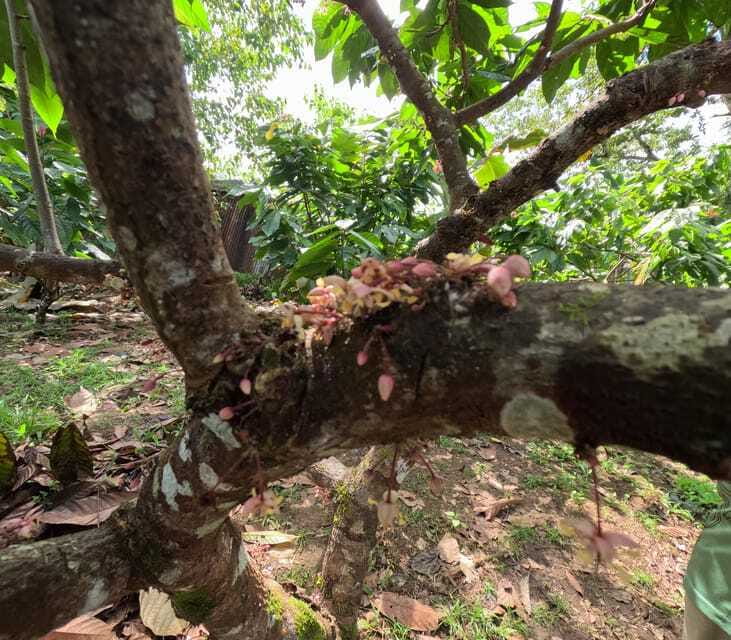
I would put this near the top of the list for families with children who are curious about food, plants, and making things. The activity gives children a simple story to follow and a finished treat to bring home.
It also suits couples or small groups who want something different from a standard sightseeing circuit. Bohol has plenty of scenic and cultural stops, but a farm-based food activity gives you a chance to focus on one local product from start to finish.
The tour is less suitable if you want a fast, flexible outing. Five hours is a meaningful block of your day, and the private transport does not change that. It is also not designed for babies under one year or people over 95 years.
The English language format is helpful for visitors who want the process explained without translation concerns. Since the group is private, you can ask questions at your own pace, though the available details do not promise specialized instruction for every age or skill level.
Booking details that affect your decision
You can cancel up to 24 hours before the activity for a full refund. You can also reserve now and pay later, which helps if you are still arranging your Bohol schedule.
Check starting-time availability before booking. The activity has two pickup points and two matching drop-off points, Panglao Island and Loboc. If you are staying elsewhere, the provided information does not confirm pickup from your location, so do not assume it is included.
The tour is led in English and operates as a private group. Equipment, snacks, admission, and private transportation are included. No separate lunch is listed, so plan your meals around the five-hour outing rather than treating the included snacks as a full meal.
Should you book the Bohol Chocolate Making and Farm Tour?
Book it if you want more than a tasting. The best part is the complete chain from cacao tree to handmade chocolate, supported by private transport and a small-group setting. Families should find the mix of farm learning, fresh fruit, cooking, and sweets especially appealing.
Think twice if $94 feels high for a single food activity or if you only have time for a short stop. The experience is most worthwhile when you care about how chocolate is made and want to take part yourself.
For a half-day Bohol plan with a clear theme, named guides, hotel-area pickup choices, and a chocolate souvenir, I would consider this a sensible booking. Just allow the full five hours, confirm your pickup location, and treat the tropical fruit tasting as possible rather than guaranteed.
FAQ
Where does the Bohol Chocolate Making and Farm Tour take place?
The activity takes place at Bohol Chocolate Farm in the Visayas region of the Philippines.
How long does the tour last?
The tour lasts five hours.
Where can I be picked up?
Pickup is available from Panglao Island or Loboc.
Where can I be dropped off?
Drop-off is available at Panglao Island or Loboc.
Is transportation included?
Yes. Private transportation is included.
Is the tour private?
Yes. The activity operates as a private group.
What language does the guide speak?
The live tour guide speaks English.
What will I learn about cacao?
You will learn about growing cacao trees, tasting fresh chocolate fruit, harvesting, fermentation, sun drying, roasting, and moulding chocolate.
Can I make chocolate during the activity?
Yes. Chocolate-making equipment is provided, and you will mould your own chocolate to take home.
Are snacks included?
Yes. Snacks are included, and the farm tour may also include fresh tropical fruit tasting.
How much does the tour cost?
The listed price is $94 per person.
Can I cancel for a refund?
Yes. You can cancel up to 24 hours in advance for a full refund.
Can I reserve now and pay later?
Yes. The reserve-now, pay-later option is available.
Who is not suited for this activity?
Babies under one year and people over 95 years are listed as unsuitable for the activity.
Freshly tempered around the world
- Zurich Open-top Tour and Chocolate and Cheese Countryside★ 3.5 · 11 reviews
- Lindt Chocolate Museum with Cruise Transfer from Zurich★ 4.6 · 7 reviews
- Zurich: Chocolate Tasting and Walking Tour with a Local★ 4.2 · 13 reviews
- Zagreb: Lake Bled and Ljubljana Day Tour with Chocolate Gift★ 5.0 · 26 reviews
- York: Introduction to Chocolate Making Experience★ 4.9 · 10 reviews
- Zaandijk-Near Zaanse Schans Chocolate making demo & tasting★ 4.8 · 13 reviews
- Private Wine and Chocolate Tasting Experience★ 4.4 · 3 reviews
- Yarra Valley: Wine and Chocolate tasting tour.★ 5.0 · 5 reviews
More Chocolate Making Workshops to compare.
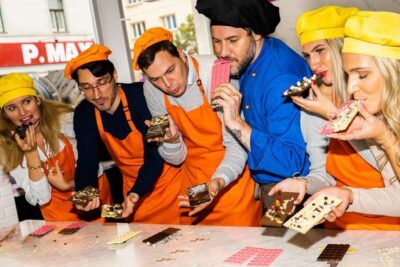
Vienna: Chocolate Workshop in Chocolate Museum w/ Tasting
Read our review →
Brussels: Belgian Chocolate Making Workshop with Tastings
Read our review →
Brussels: 2.5-Hour Belgian Chocolate Making Workshop
Read our review →
Bruges: Belgian Praline and Mendiants Chocolate Workshop
Read our review →
1.5h Belgian Chocolate Workshop in Brussels (bean to bar)
Read our review →
Paris: 45-minute Chocolate Making Workshop at Choco-Story
Read our review →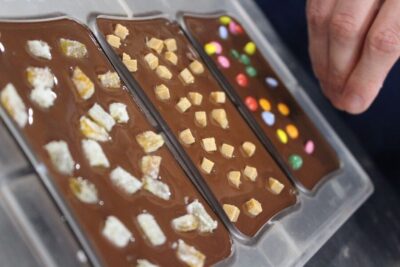
York: Chocolate Bar Making Workshop at York Cocoa Works
Read our review →Chocolate lists with this tour