
Review · GERMANY
Dresden: Guided Walking Tour and Chocolate Museum Ticket
Dresden’s past comes in big, dramatic chapters: medieval hardship, Renaissance ambition, Baroque splendor, wartime destruction, and peaceful revolution. This tour connects those chapters on foot, then adds a sweet final stop at the Dresden Chocolate Museum. I like the compact route and the way it pairs major sights with a quirky local subject. I also like that the museum ticket remains flexible for the day. The main drawback is that the guide speaks German only, and you visit the museum by yourself.
The strongest part is the guide’s lively delivery. Several recent bookings describe the tour as witty, personal, and easy to follow, with one guide praised for her love of Dresden and another for explaining a lot in a short time. Pay close attention to the timing: if you choose the 4:00 PM walk, you need to visit the chocolate museum first.
Key points to know before booking

- Dresden’s grandest sights fit into 90 minutes: The route includes Dresden Castle, Brühl’s Terrace, the Procession of Princes, Stallhof, Dresden Cathedral, Taschenbergpalais, Augustus Bridge, Frauenkirche, the Semperoper, and the Zwinger area.
- The guide is German-speaking: This is best for German speakers or anyone comfortable following a historical walking tour in German.
- The chocolate museum visit is self-guided: Your guide does not accompany you, but you may enter at any time on the day of the walking tour.
- The museum adds a local twist: You’ll see chocolate molds by Anton Reiche, learn about Dresden’s former chocolate factories, and taste German milk chocolate.
- The $18 price is reasonable: You get a live walking tour, museum admission, and tasting in one package.
- The meeting point is easy to miss: Go to the basement of the QF Passage and look for the seating area at Dresden Information.
Why this Dresden combination works
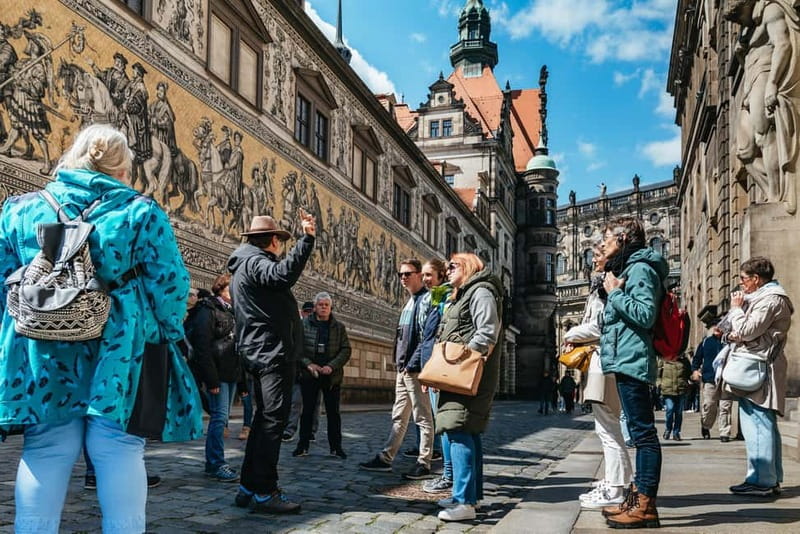
Dresden is a city that can feel like a picture book at first glance. The Old Town has grand churches, palace buildings, river views, and ornate Baroque architecture packed into a walkable center. Without context, though, the buildings can blur together.
This tour gives you a short historical framework before you visit the chocolate museum. You move through the Middle Ages, Renaissance, and Baroque period, then hear about the darker years of the 20th century, the Peaceful Revolution of 1989, and the reunification of East and West Germany.
That range is the real value. You are not simply ticking off Frauenkirche and the Semperoper. You are hearing how Dresden changed from a medieval settlement into a royal center, how its rulers shaped the city, and how its modern identity was affected by division and reunification.
At $18 per person, the package is fairly priced for a 90-minute live tour plus museum admission and tasting. If you already plan to visit the museum, the combined ticket saves you from arranging two separate activities. If chocolate is not your thing, the walking tour still works on its own, but part of the package’s appeal will be lost.
More Chocolate Museums in the world:
- Lindt Home of Chocolate Museum Entry Ticket
★ 4.7 · 9,329 reviews - Choco-Story Brussels: Chocolate Museum Entrance with Tasting
★ 4.3 · 4,883 reviews - Cologne: Chocolate Museum Entrance Ticket
★ 4.4 · 2,790 reviews
Starting beneath the QF Passage
The meeting point is in the basement of the QF Passage, in the seating area of Dresden Information. Give yourself a few minutes to find it, especially if you are coming from the street and have not used the passage before.
The exact meeting instructions are supplied in German, so look for Dresden Information rather than assuming the group gathers outside Frauenkirche. Starting here places you close to the heart of the Old Town and makes the route efficient from the first step.
The experience lasts about 1.5 hours. That is long enough to cover the main sights without turning into a tiring half-day walk. It is also short enough to fit around a museum visit, lunch, or an evening concert.
The tour is wheelchair accessible, though the route passes through a historic center with old buildings and public spaces. If you use a wheelchair, confirm any specific needs when booking, but the activity is marked as accessible.
Dresden Castle and the first chapter of the city

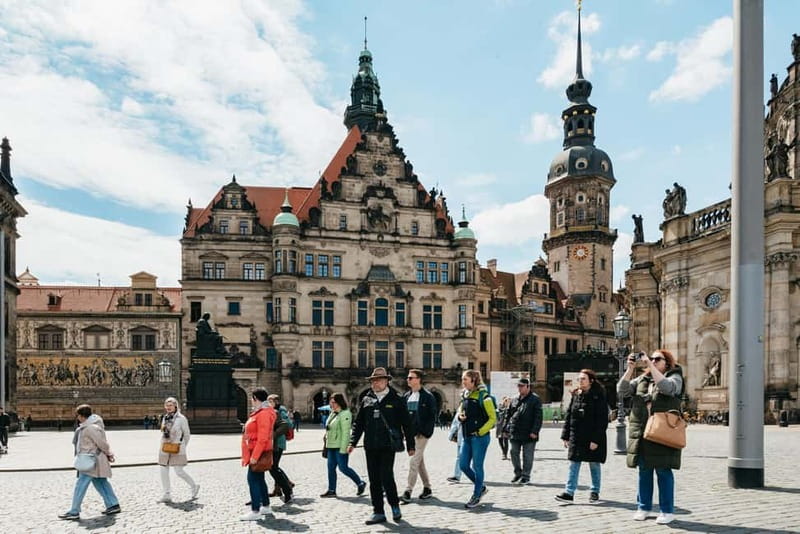
The walk begins at Dresden Castle, one of the city’s key royal landmarks. This is a useful starting point because it introduces the power behind Dresden’s transformation.
From here, the guide places the city in its older setting. You hear about the Middle Ages, including the difficult conditions of the period, before moving toward the Renaissance and the growing energy of a more ambitious Dresden.
The guide’s role matters here. A building such as the castle can look like a grand façade unless someone explains how it fits into the city’s political story. The tour’s German-speaking guides have been praised for being prepared, lively, and good at packing information into a short route.
You should expect a brisk pace. Ninety minutes does not allow long interior visits or extended stops at every building. Think of this part as a guided orientation, with time to look, listen, and take a few photographs rather than a full castle tour.
Brühl’s Terrace and the city’s riverfront view
From the castle area, the route continues to Brühl’s Terrace. This elevated stretch along the Elbe is one of Dresden’s best-known viewpoints and gives the walk a welcome change of pace.
Here, you can look beyond the dense Old Town and understand the city’s setting along the river. The terrace also helps explain why Dresden became such an important royal and cultural center. The architecture is impressive, but the open view gives you a sense of the city as a whole.
This is one of the places where a guide can save you time. You receive the main historical points without having to stop and research every statue, palace, or church on your own. The tour does not promise a long photo break, so keep your camera ready as you walk.
More Chocolate Walking Tours in the world:
- Brussels: Historical Walking Tour with Chocolate & Waffle Tasting
★ 5.0 · 1,165 reviews - Brussels Walking and Tasting Tour (Beers,Chocolates&Fries/Waffle)
★ 5.0 · 929 reviews - Brussels Chocolate Walking Tour and Workshop
★ 4.5 · 885 reviews - Chocolate Flavors Walking Tour of Geneva
★ 4.9 · 670 reviews
The Procession of Princes and Stallhof
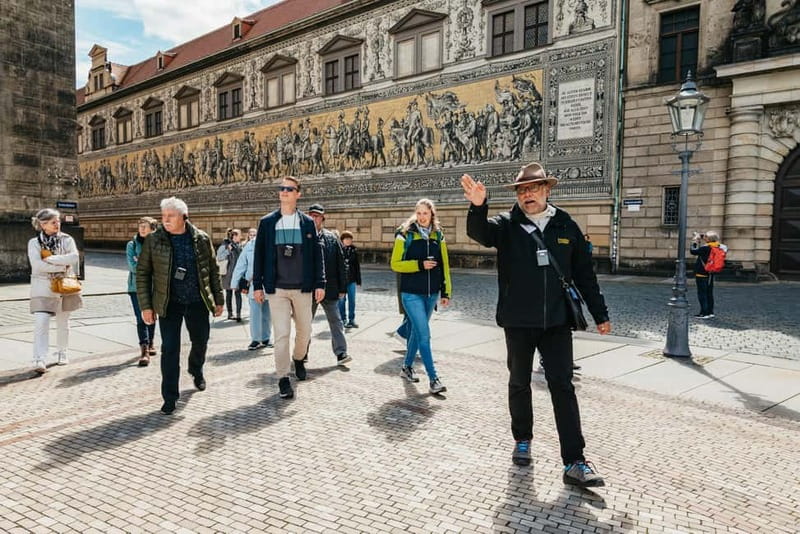
The Procession of Princes is one of Dresden’s most memorable public artworks. The long mural shows rulers of Saxony in a grand procession, making it a natural place to discuss the city’s political and artistic ambitions.
The nearby Stallhof adds another layer. Its name connects to the former royal court and the horses and ceremonies associated with palace life. Together, these stops show how Dresden’s rulers used art and architecture to project status.
I like this section because it is more than a list of royal names. The mural and courtyard give you something concrete to look at while the guide explains the historical setting. The story becomes easier to follow when it is tied to a wall, a courtyard, or a palace entrance.
The drawback is that a short walking tour can only skim the details. If you want every ruler identified or every artistic feature explained, you will need to return later on your own.
Dresden Cathedral, Taschenbergpalais, and Augustus Bridge
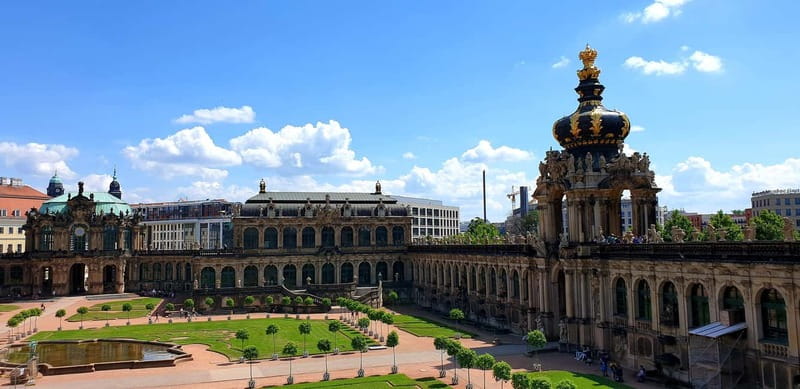
The route then reaches Dresden Cathedral, another major Old Town landmark. Its position near the royal buildings shows how closely religion, court life, and government were linked in the historic center.
Next comes Taschenbergpalais, a palace building that adds to the sense of concentrated royal power. This part of the walk is especially useful for first-time visitors because several major buildings sit close together, yet each has a different role in the city’s story.
The route also includes Augustus Bridge. From the bridge, you get another perspective on Dresden and its riverfront setting. The changing views help break up the architecture-heavy middle of the walk.
You should not expect entry into every building. The experience is a guided exterior walk, and the value comes from seeing the landmarks in sequence while the guide explains how they relate to one another.
Frauenkirche, the Semperoper, and Baroque Dresden
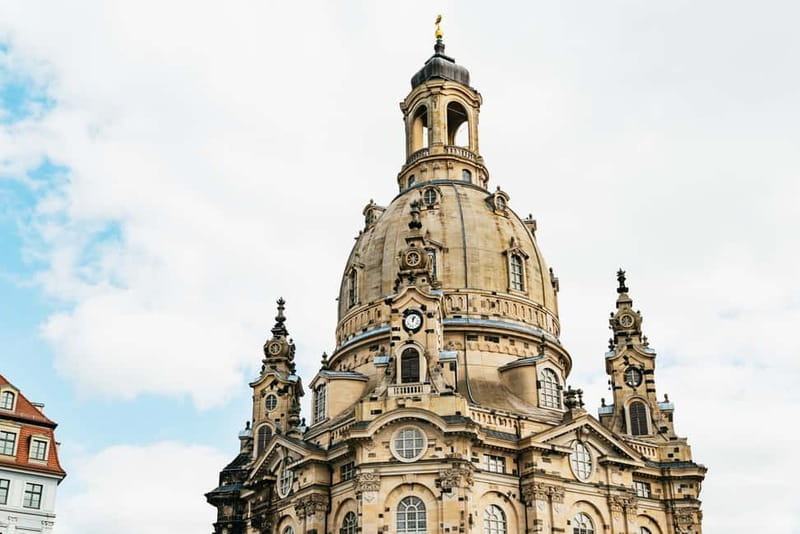
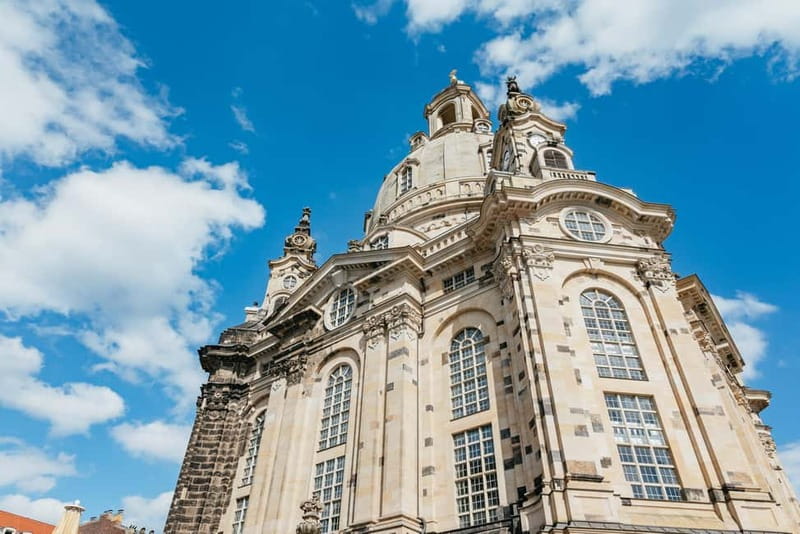
Frauenkirche is the tour’s emotional and visual center. The church is one of Dresden’s best-known symbols, and its history connects the city’s Baroque grandeur with the destruction and rebuilding that shaped modern Dresden.
The Semperoper adds another famous sight, with its strong link to Dresden’s cultural life. The nearby Zwinger is also part of the city’s Baroque identity and is included among the views along the route.
These sights are impressive even without a guide, but the historical framing improves the visit. You can better understand the difference between a medieval city, a Renaissance court, and the grand Baroque capital that Dresden’s rulers wanted to create.
The tour ends near Frauenkirche. That is convenient if you want to continue exploring the Old Town afterward, stop for a meal, enter a church, or make your way to another attraction. It also means you finish in one of the city’s most central areas rather than at an out-of-the-way endpoint.
The Peaceful Revolution and reunification
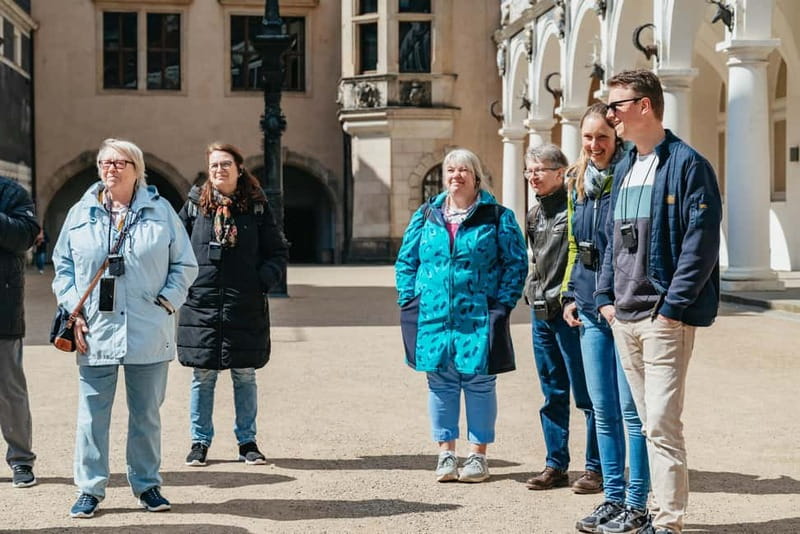
A useful feature of the route is its attention to Dresden’s recent past. The tour includes background on the Peaceful Revolution of 1989 and the reunification of East and West Germany.
This keeps the experience from becoming a parade of old stones. Dresden’s story did not end in the Baroque period. The city also lived through the division of Germany and the political changes that led to reunification.
You may find this part particularly helpful if you know Dresden mainly for its palace buildings and churches. It adds a modern layer to the visit and shows why the city’s identity cannot be understood through architecture alone.
The amount of time devoted to this subject will depend on the guide and the group. The tour covers a lot in 90 minutes, so expect an introduction rather than a full account of East German history.
Entering the Chocolate Museum on your own
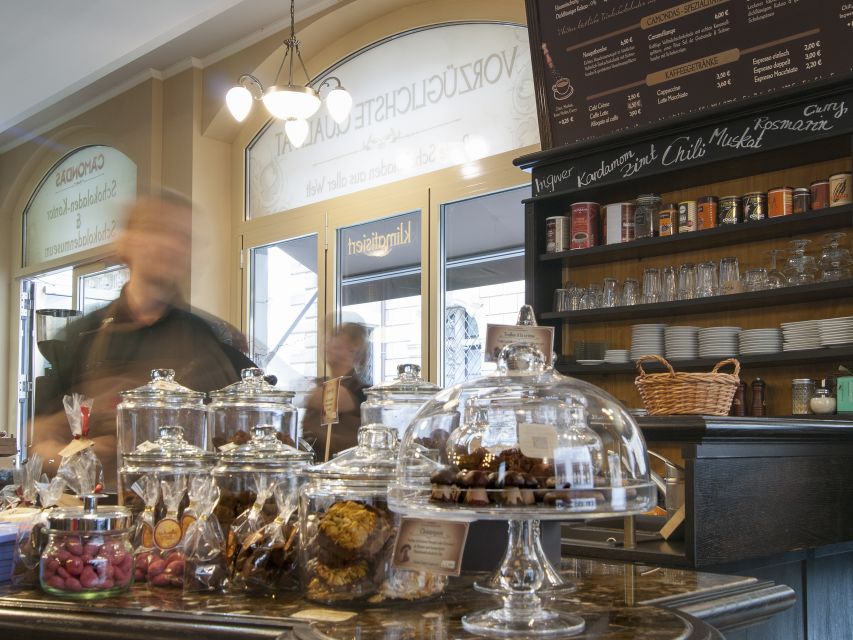
The Chocolate Museum is a separate, self-guided part of the experience. Your voucher allows entry at any time during the museum’s opening hours on the day of your walking tour. The museum is open daily from 11:00 AM to 6:00 PM, though you should check for special closing times before you go.
This flexible arrangement is convenient. You can visit before the walk, afterward, or at another point in the day. You do not have to rush away from a historical site because the group is waiting for you.
It also creates the package’s main planning trap. The guide does not accompany you through the museum. If you expect one continuous guided activity, adjust your expectations. The walking tour and museum visit are two linked parts, not one group experience.
If you book the 4:00 PM walking tour, visit the museum first. Waiting until afterward may not work because the museum closes at 6:00 PM. For an earlier tour, you have more freedom to choose the order.
Dresden’s old chocolate trade and Anton Reiche’s molds
The museum explores Dresden’s former reputation as Germany’s capital of chocolate. You learn about the city’s many chocolate factories in the 19th century and the long process that turns cocoa beans into finished chocolate.
One unusual highlight is the collection of chocolate molds by Anton Reiche. The museum presents one of the world’s largest collections of these molds, giving you a look at the tools once used to shape chocolate into bars, figures, and other forms.
You also learn about the origins of milk chocolate, which is said to have been invented in Dresden. The museum examines the ingredients that affect chocolate quality and the practical steps between cocoa bean and confection.
This makes the museum more interesting than a simple tasting room. It connects a familiar food to industrial history, design, trade, and local identity.
Tasting German milk chocolate
The tasting is a small but welcome finish. After seeing the molds and learning how chocolate was made, you can sample some of Germany’s finest milk chocolate and consider how it compares with the first chocolate bars.
The tasting adds value to the ticket, especially if you enjoy food-focused stops. It also gives families and younger visitors something immediate to look forward to after the historical walking portion.
Keep your expectations measured. The information provided promises chocolate tasting, not a workshop or a full meal. You are visiting a museum with a tasting component, not taking a chocolate-making class.
What the German-language format means
The guide language is German only. This is the most important booking decision.
If you speak German, the format suits you well. The strongest praise focuses on the guides’ enthusiasm, humor, personal style, and ability to explain the city clearly in a short time. Those qualities matter because the route covers several centuries quickly.
If you do not speak German, you may still enjoy the views, but you will miss much of the tour’s value. The activity is built around spoken historical explanation, not simply following a marked route.
The museum portion is self-guided, so you can take your time there. Still, the main walking experience depends on understanding German.
Timing, flexibility, and value at $18
The best time to book depends on how you want to use your day. An earlier walking tour leaves the afternoon open for the chocolate museum and other sights. A later tour can work well if you visit the museum first and want a short historical walk toward the evening.
You select the walking tour time when booking. The chocolate museum ticket is more flexible and can be used at any point that day during opening hours.
The free cancellation window extends to 24 hours before the activity for a full refund. You can also reserve now and pay later, which helps if your Dresden schedule is still changing.
At $18, the package gives you three clear benefits: a live guide, admission to the museum, and chocolate tasting. I consider that good value for a first visit, particularly if you want a quick introduction rather than a full-day history tour.
Who should book this Dresden walk
I would recommend this activity to German-speaking visitors who want a concise introduction to the Old Town. It also suits anyone who likes combining architecture with food history and prefers a flexible museum visit instead of a fixed group schedule.
Families may appreciate the chocolate museum and tasting, while history-minded visitors will like the references to the Middle Ages, Renaissance, Baroque period, 1989 revolution, and reunification.
I would choose something else if you want an English-language guide, extensive time inside the major buildings, or a guide-led museum visit. The activity is short and efficient, not exhaustive.
FAQ
Where does the walking tour meet?
Meet in the basement of the QF Passage, in the seating area of Dresden Information.
How long does the activity last?
The walking tour lasts 1.5 hours. The chocolate museum visit is self-guided and can take place separately on the same day.
What language is the walking tour in?
The live tour guide speaks German.
Is the chocolate museum visit guided?
No. You visit the museum independently, and the walking tour guide does not accompany you.
When can I visit the chocolate museum?
You can use your voucher at any time on the day of the walking tour. The museum is open daily from 11:00 AM to 6:00 PM, except for possible special closing times.
What happens if I choose the 4:00 PM walking tour?
You should visit the chocolate museum before the walking tour because the museum closes at 6:00 PM.
Is the activity wheelchair accessible?
Yes, the activity is listed as wheelchair accessible.
Should you book this Dresden experience?
Book it if you want a short, good-value introduction to Dresden in German, with the added pleasure of a chocolate museum and tasting. The route covers the city’s essential Old Town sights, while the museum offers an unusual look at Dresden’s confectionery past.
Before booking, make two checks. Confirm that German works for you, and plan the museum around its 11:00 AM to 6:00 PM hours. If those details fit your day, the $18 price makes this a practical way to pair Dresden’s grand architecture with one of its sweeter stories.
Freshly tempered around the world
- Zurich Open-top Tour and Chocolate and Cheese Countryside★ 3.5 · 11 reviews
- Zurich: Chocolate Tasting and Walking Tour with a Local★ 4.2 · 13 reviews
- Lindt Chocolate Museum with Cruise Transfer from Zurich★ 4.6 · 7 reviews
- Zagreb: Lake Bled and Ljubljana Day Tour with Chocolate Gift★ 5.0 · 26 reviews
- York: Introduction to Chocolate Making Experience★ 4.9 · 10 reviews
- Zaandijk-Near Zaanse Schans Chocolate making demo & tasting★ 4.8 · 13 reviews
- Private Wine and Chocolate Tasting Experience★ 4.4 · 3 reviews
- Yarra Valley: Wine and Chocolate tasting tour.★ 5.0 · 5 reviews
More Germany Chocolate Tours to compare.

Düsseldorf: Chocolatier Workshop & Chocolate Tasting
Read our review →
Skip-the-Line Chocolate Museum & Old Town Guided Tour
Read our review →
Explore the Säntis Panorama (2502 m) and Appenzell incl. Swiss Chocolatier
Read our review →Chocolate lists with this tour