Review · FRANCE
Croissants and pains au chocolat with a pastry chef in Paris
Making a proper croissant is not a quick stir-and-bake job. It is a patient dance of dough, butter, folding, resting, shaping, and heat. This small Paris class with pastry chef Joannie lets you work through that process, then eat the results while they are fresh.
I like the maximum group of six, which gives you real time at the counter instead of watching from the back. I also like the practical follow-up: Joannie sends the recipe and tips afterward, so this is more than a pastry breakfast. The main drawback is the price, $126.98 per person, which may feel high if you mainly want to eat a croissant rather than learn to make one.
Key points
- Hands-on pastry work: Make croissants and pains au chocolat through the full process, including lamination and fermentation.
- Small Paris setting: Classes take place in Joannie’s home near 115 Boulevard Voltaire, with no more than six people.
- Fresh pastries to eat and take away: Enjoy what you bake with a hot drink, and leave with additional pastries to snack on later.
- Useful instruction at home: The recipe and practical tips are sent after class.
- More than baking: Joannie discusses Paris food, suggests patisseries and restaurants, and adds a surprise pastry.
- Important restrictions: The class is not recommended for gluten-free or lactose-free diets, children under 10, or anyone allergic to cats or uneasy around them.
Why this Paris pastry class feels different
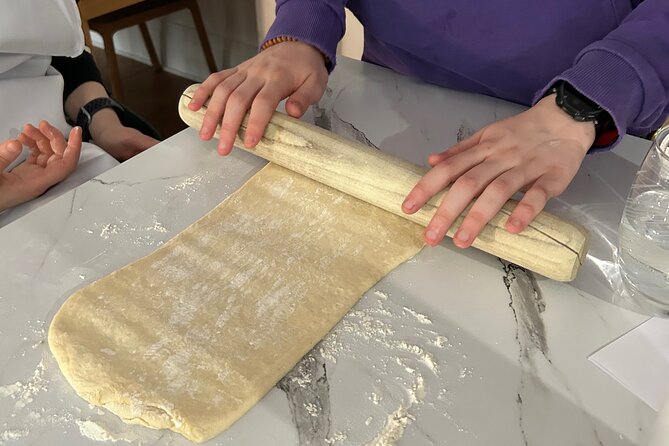
Many food activities in Paris are built around tasting. This one asks you to get your hands into the flour and butter. You learn why croissant dough needs careful handling, how butter is folded into the dough, and how the final shape affects the baked pastry.
The setting is part of the appeal. The class takes place in Joannie’s home in an old Parisian building, near Boulevard Voltaire in the 11th arrondissement. That gives the morning a personal feel rather than the polished, commercial tone of a large cooking school.
You should expect a warm, informal environment. Joannie welcomes participants into her home, teaches the steps patiently, and leaves room for questions. A friendly cat is also part of the household, so this detail matters if you have allergies or simply prefer not to be around animals.
The format suits people who want a slower break from museums, monuments, and packed sightseeing days. You still learn a real French skill, but the pace is relaxed and social.
More Pastry and Chocolate Tours in France
- Paris French Sweets Tasting Tour with Pastries and Chocolates
★ 4.5 · 947 reviews - Saint-Germain: Gourmet Chocolate & Pastry Walking Food Tour
★ 4.8 · 495 reviews - Paris Chocolate, Macaron & Pastry Food Tour: 10 Gourmet Tastings
★ 5.0 · 339 reviews
From flour to laminated dough
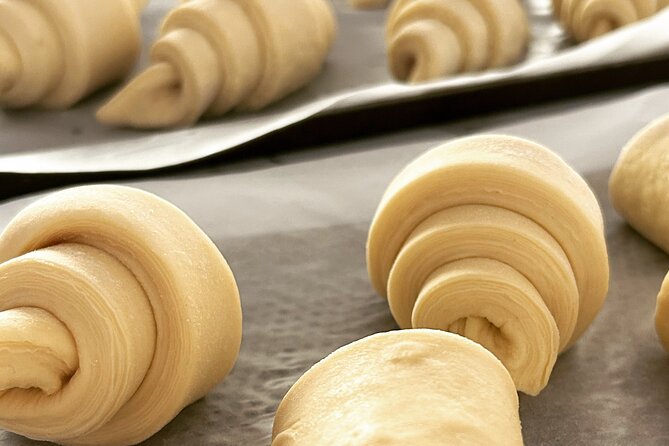
The class covers the pastry process from beginning to end. You work with the dough, learn how butter is incorporated, and practice lamination. This is the technical heart of croissant making, since repeated folding creates the thin layers that puff in the oven.
Fermentation is also part of the lesson. That matters because a croissant is not just bread dough wrapped around butter. Timing, temperature, and handling all affect the texture. Joannie’s teaching approach uses dough at different stages so you can see how the process changes over time.
That staged approach is useful in a short class. Traditional croissant preparation can take two or three days when resting and fermentation are handled at home. A two-and-a-half-hour session cannot wait through every stage, so prepared dough at different points allows you to see the complete method without skipping the important explanations.
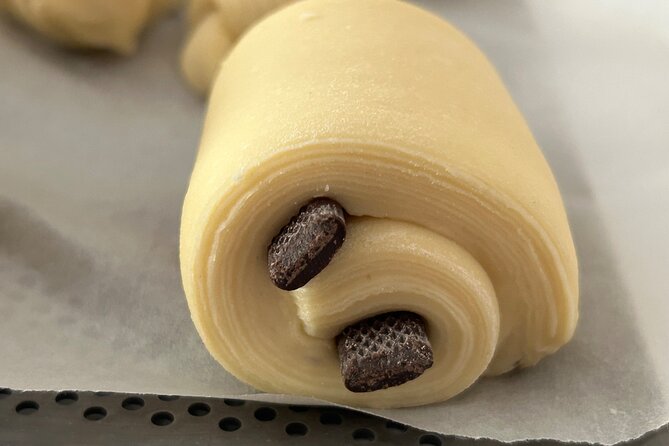
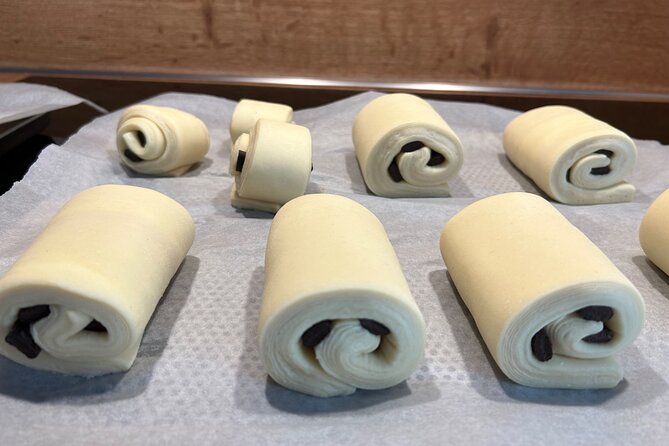
You then shape the dough into croissants and pains au chocolat. The chocolate-filled pastry gives you a second form to practice, and it helps show how the same laminated dough can be handled in different ways.
This is not a demonstration where you sit with a coffee and watch a chef do all the work. The small group means each person can take part. You will need to follow instructions carefully, but beginners are welcome, and the class is designed to make a complicated process manageable.
What happens during the two and a half hours
The exact order may vary with the dough stages, but the experience moves through the main parts of pastry production.
You begin with an introduction to the ingredients and dough. Joannie explains how the basic mixture is made and what to look for as the dough develops. This is a useful moment to ask questions about flour, butter, yeast, and the signs of dough that is ready for the next step.
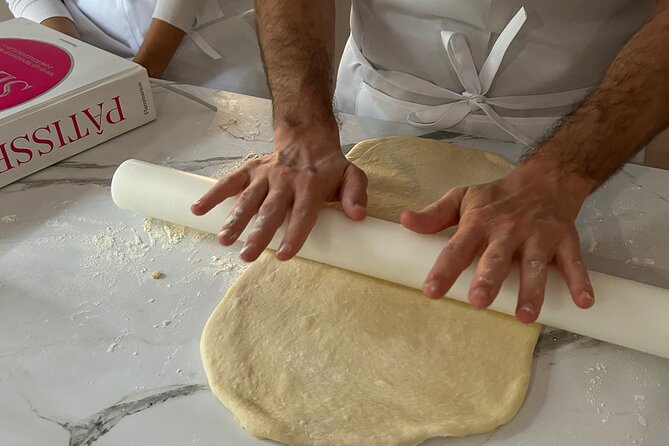
Next comes lamination. You learn to fold butter into the dough and roll it without losing the layers. This is where a good teacher matters. The dough must be rolled and folded with care, and you will get more from the experience if you watch how Joannie handles pressure, thickness, and shape.
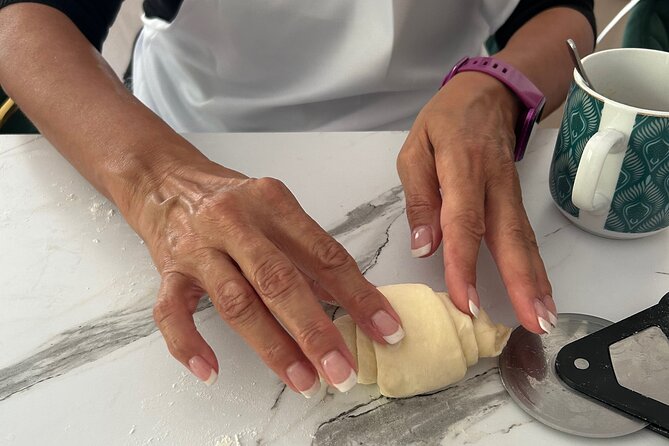
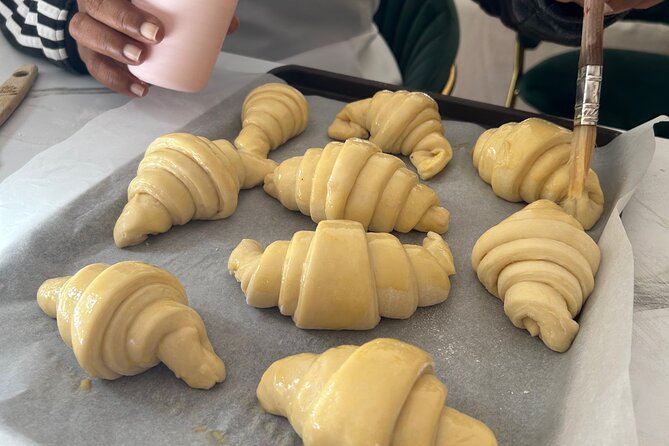
The dough is then cut and shaped. Croissants require a curved form, while pains au chocolat are shaped around chocolate. You will see how small differences in cutting and rolling affect the final result.
After shaping, the pastries are prepared for baking. Joannie explains fermentation and the final steps before the pastries go into the oven. The class then finishes with the best part: tasting the freshly baked results.
You also enjoy croissants and pains au chocolat with a hot beverage, along with a surprise French pastry made by Joannie. Water and small treats such as madeleines may also be available, though one participant noted that tea or coffee was not offered on their particular visit. If a hot drink matters to you, it is sensible to confirm what is planned when booking or arriving.
The payoff: warm pastries and something to take home
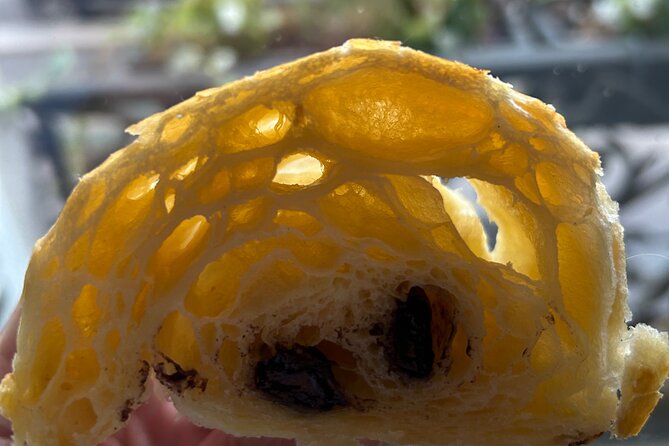
The baked pastries are not just a sample at the end. You get to eat what you make and take some away for later. Several families found this especially useful, since the pastries became breakfast or snacks during the rest of their Paris stay.
One practical tip is to book this near the start of your trip if you want to enjoy the pastries over several days. You may leave with enough baked goods to make a generous breakfast or snack, depending on the group and how the pastries are divided.
The take-home portion can vary. A participant in a group of five felt that the pastries could have been divided more evenly, with individual bags rather than three shared bags. That is a minor logistical point, but it is worth keeping in mind if you are booking as a larger family or group.
The bigger value is the skill. A fresh pastry disappears quickly. A recipe, notes on technique, and a clear understanding of the process can be used again at home. You will still need patience and practice, but the class gives you a better starting point than a recipe alone.
More Pastry and Chocolate Tours in Paris
- Paris Pastry Tour – Croissants, Macarons & Iconic French Desserts
★ 5.0 · 232 reviews - Saint-Germain The Original Chocolate Tasting Tour with Pastries and Macaron
★ 4.5 · 215 reviews - Paris: Montmartre Chocolate & Pastries Tour with 8+ Tastings
★ 4.7 · 131 reviews - Paris: Pastries and Chocolate Walking Food Tour
★ 4.8 · 57 reviews
Joannie’s teaching style and local Paris advice
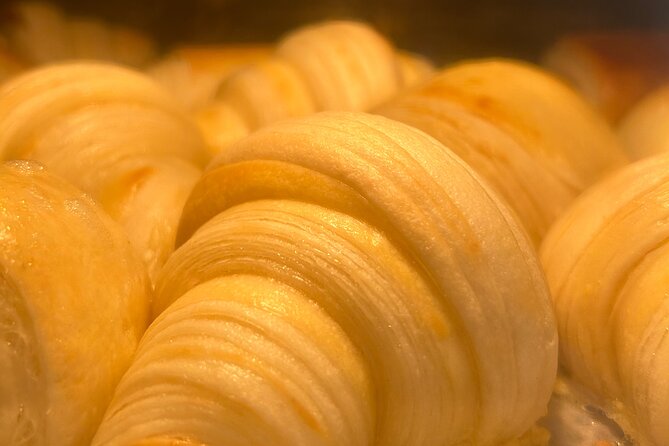
Joannie is the main reason this experience feels personal. She explains each stage, answers questions, and keeps the class moving without rushing people through the tricky parts.
She also talks about your Paris plans and recommends local patisseries and restaurants. That can be particularly helpful if this is your first visit or if you want food suggestions beyond the most famous addresses. The advice is part of the appeal, but the pastry instruction remains the main event.
The class is available in English, French, and Italian. English-speaking visitors should be able to follow the instruction without needing a translator. The small group also makes it easier to ask for a step to be repeated or clarified.
The social side is pleasant without being forced. You work alongside other participants, share the kitchen, and taste the results together. Some people have even made new friends during the session. If you prefer a private class with only your own party, check the booking arrangement, since the standard format can include other people up to the six-person limit.
Is $126.98 a fair price?
At $126.98 per person, this is not a cheap way to eat breakfast in Paris. You can buy excellent croissants and pains au chocolat from a bakery for a few euros each.
The price makes more sense if you value the full experience:
- You get about two and a half hours of instruction.
- You work in a very small group, with no more than six participants.
- You learn a technique that can be repeated at home.
- You eat the pastries made during the class.
- You can take additional pastries with you.
- You receive the recipe and tips afterward.
- You get personal Paris food suggestions from the chef.
I would compare it with the cost of a cooking workshop, not with the price of a bakery breakfast. If you are looking for a souvenir that is useful rather than decorative, the class offers good value. If you simply want to taste classic French pastry, spend the money at several excellent bakeries instead.
The strongest value is for families, couples, and food-focused visitors who enjoy learning by doing. It is also a good choice for a repeat visitor who has already seen the major sights and wants a more local-feeling activity.
Who should book, and who should skip it
This class suits adults, older children, teens, and families who can follow detailed instructions. The official minimum age is 10, and that is a sensible guideline for a hands-on lesson involving dough, butter, waiting, and careful shaping.
Teenagers in particular can enjoy the balance of practical work and food. Parents also get something to do together rather than simply arranging another activity for the children to watch.
You should book it if you want:
- A small and personal class
- A real introduction to French pastry technique
- Fresh pastries during and after the session
- A relaxed activity away from major tourist sights
- A recipe you can use at home
- Restaurant and patisserie suggestions from a local chef
You may want to skip it if you have a strict gluten-free or lactose-free diet. The experience is not recommended for either. It is also not suitable if you are allergic to cats or afraid of them, since Joannie has a cat in her home.
This is a class, not a polished bakery tour. You should be ready to work, listen, roll dough, and accept that your first homemade croissant may not look perfect. That is part of the fun, and Joannie’s instruction helps make the process less intimidating.
Getting there and planning your day
The meeting point is 115 Boulevard Voltaire, Paris 75011, and the location is near public transportation. The activity ends back at the same meeting point.
Allow the full two hours and thirty minutes rather than planning a tight connection afterward. Baking classes can run at the pace of the dough and the group, and you will want time to collect your pastries without hurrying off.
Think about what comes next. If you plan a major museum visit or a long walking route, remember that you may be carrying baked goods. A morning booking can work well because the pastries become breakfast or snacks for the day. It can also be a pleasant pause in the middle of a sightseeing schedule.
Book ahead if your Paris dates are fixed. The experience is often reserved about 54 days in advance, which suggests that popular dates can disappear well before arrival.
Cancellation is flexible up to 24 hours before the start time, with a full refund. Changes or cancellations made less than 24 hours before the class are not accepted for a refund.
A realistic look at the small-group setting
A group of six is a strong size for this kind of activity. Everyone has a chance to work with the dough, see the shaping clearly, and ask questions. It also keeps the mood friendly rather than crowded.
The home setting brings charm, but it may not suit someone expecting a large professional kitchen. You are entering a personal space, so basic courtesy and attention to household rules matter. The cat is part of that setting, not an optional feature.
The informal atmosphere is also why the class feels different from a standard cooking school. You get a sense of how a pastry chef organizes a multistage recipe, handles different dough stages, and explains technique in a practical way.
Should you book Croissants and pains au chocolat with a pastry chef in Paris?
I would book this if you want to make something, not just photograph or taste something. The small class, patient instruction, fresh pastries, and follow-up recipe create a useful souvenir of Paris.
At $126.98, the price requires a clear interest in baking. It is harder to justify for someone who only wants a quick pastry snack, especially since bakery prices are far lower. But for families with older children, couples, and food lovers, the chance to learn croissant technique in Joannie’s home is a memorable use of a morning.
Book early, especially if you need a particular date. Choose it near the start of your stay if you want pastries for later breakfasts, and avoid it if you have dietary restrictions involving gluten or dairy. For the right person, this is less a meal than a skill you can carry home.
FAQ
Where does the croissant class take place?
The class starts and ends at 115 Boulevard Voltaire, 75011 Paris, France. The meeting point is near public transportation.
How long does the experience last?
The class lasts approximately two hours and thirty minutes.
How many people can join the class?
The maximum group size is six participants.
Is the class available in English?
Yes. The activity is available in English, French, and Italian.
Is the class suitable for children?
The activity is not available for children under 10 years old.
Can I join if I am gluten-free or lactose-free?
The class is not recommended for people following gluten-free or lactose-free diets.
What is the cancellation policy?
You can cancel at least 24 hours before the start time for a full refund. Cancellations or changes made less than 24 hours before the start time are not accepted.
Freshly tempered around Paris
- Private Wine and Chocolate Tasting Experience★ 4.4 · 3 reviews
- Paris Sweet & Chocolate Family Treasure Hunt★ 5.0 · 37 reviews
- Molded Bonbons Chocolate making class in Paris (collective)★ 4.5 · 20 reviews
- Private Wine and Chocolate Tasting in Paris★ 4.5 · 4 reviews
- Pure Chocolate Tour in Paris★ 5.0 · 20 reviews
- Expert-Led Sweet Secrets of Paris Pastry & Chocolate Marathon★ 5.0 · 3 reviews
- Paris Small-Group Montmartre Chocolate & Pastry Walking Tour★ 5.0 · 15 reviews
- Private Dark Chocolate Tasting Tour in Paris★ 5.0 · 4 reviews
More France Chocolate Tours to compare.
Paris: Entrance Ticket to the Chocolate Museum
Read our review →
Paris French Sweets Tasting Tour with Pastries and Chocolates
Read our review →
A Morning in Paris Food Tour: Croissants, Baguettes & Chocolate
Read our review →
Saint-Germain: Gourmet Chocolate & Pastry Walking Food Tour
Read our review →
Paris: 45-minute Chocolate Making Workshop at Choco-Story
Read our review →
Paris Chocolate, Macaron & Pastry Food Tour: 10 Gourmet Tastings
Read our review →
Passy-Grigny: Chocolate and Champagne Tasting Tour
Read our review →