Review · MEXICO
Bean to Bar Chocolate Workshop in Puerto Vallarta
The best part of this Puerto Vallarta activity is that you do not simply taste chocolate. You follow the cacao bean from its origins through Mexican history, then roast, shell, season, and turn it into your own chocolate bars. The workshop links food to the Olmec, Maya, Aztec, and Spanish periods in a way that is easy to grasp.
I like the hands-on format, especially the chance to make chocolate with your own mix of spices and toppings. I also like the small group size and the instructors, including Rodrigo, known as Rod, Elias, Martin, and Zoar, who keep the lesson lively for both adults and children.
The main consideration is comfort. The workshop area has air conditioning during the activity, but Puerto Vallarta can be hot and humid, and the room uses counter-height stools. Transportation is not included, so you must make your own way to the Centro location.
Key points to know before booking
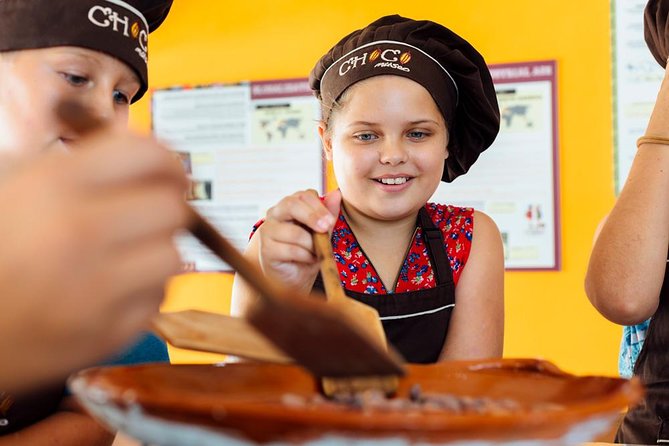
- You make chocolate to take home: Choose your own toppings and flavors rather than receiving only a preselected tasting.
- The lesson reaches back centuries: You learn how cacao was used by the Olmecs, Maya, and Aztecs, then see how it changed over time.
- Several drinks and samples are part of the class: Activities can include roasting beans, making tea from cocoa shells, and preparing hot chocolate.
- Small groups make participation easier: The advertised maximum is eight people, which gives you a better chance to ask questions and work directly with the instructor.
- Children age five and older can join: The teaching style is built to hold young attention, though the stools and warm room are worth considering.
- Plan your own arrival: ChocoMuseo is at Josefa Ortiz de Domínguez 128 in Centro, near public transportation, and the activity ends at the same place.
From cacao bean to Mexican chocolate
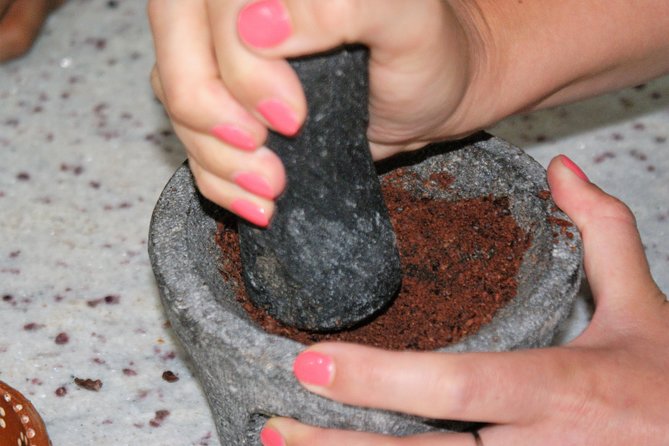
This workshop works because it begins with the ingredient itself. Instead of treating chocolate as a finished sweet, the guide explains where cacao grows and what happens before it reaches a shop shelf.
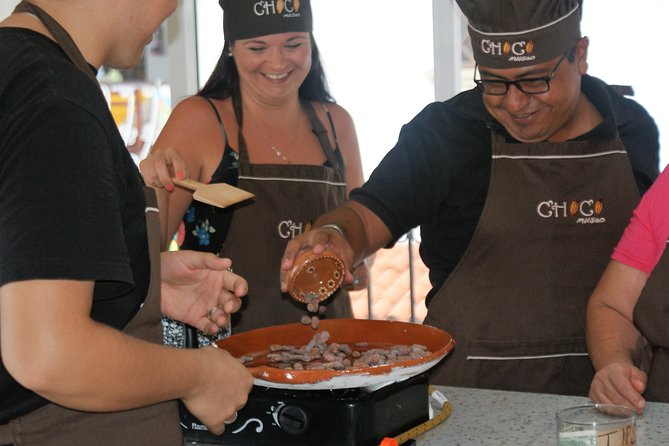
You can expect an introduction to the cocoa bean, its cultivation, and the basic steps that turn it into chocolate. The process becomes much clearer when you handle the ingredients yourself. You may roast cacao beans, remove their shells, prepare tea from those shells, and taste hot chocolate made from the bean.
That sequence gives the class a useful rhythm. First comes the explanation, then the tasting, then the practical work. You are not asked to sit through two hours of lecture.
The tastings also show that chocolate has not always meant the smooth, sweet bar familiar today. The workshop traces the changes in cacao drinks and chocolate products through time. One session included several drinks that showed how cacao developed into the form most people now associate with chocolate.
A small practical tip: arrive early enough to try the samples in the shop below before class, if time allows. The shop offers samples, and they give you a quick introduction to the flavors before the formal workshop begins.
More Chocolate Making Workshops in Mexico
- Chocolate Workshop
★ 5.0 · 92 reviews - Make Your Own Chocolate with Oaxacan Tradition Private Class
★ 5.0 · 45 reviews - Puerto Vallarta: Bean to Bar Chocolate Workshop
★ 4.9 · 41 reviews
Why the Olmec, Maya, and Aztec story matters
The cultural section is more than a few names added to a food lesson. Cacao has a long place in Mexican life, and the guide explains how the Olmecs, Maya, and Aztecs used it before European contact.
You learn how cacao was grown and prepared, and how its use changed as it moved through different periods. The class also addresses Spanish and European influence, helping you see why modern chocolate is so different from earlier cacao drinks.
This context gives the tasting some purpose. You are not only sampling different flavors. You are comparing stages in a long food tradition. For families, this can be a good way to connect history with something children can smell, taste, and make.
The guides are a major part of this section. Rodrigo, or Rod, is repeatedly praised for his humor, patience, and ability to include everyone. Elias is described as taking the group on a chronological journey through cacao. Martin brings a clear, organized approach, while Zoar is warm and enthusiastic.
The exact instructor depends on the date of your class, so you should not book expecting one particular person. The important point is that the workshop uses a real teacher rather than leaving you to read museum panels on your own.
Roasting, shelling, tasting, and making drinks
The class gets more interesting once you begin working with cacao. You may roast the beans, shell them, and use the shells for cocoa tea. This is simple work, but it helps you understand how much preparation sits behind the finished product.
You also prepare different hot cocoa drinks. These tastings are useful because they show how cacao can be handled in more than one way. One drink may taste familiar, while another gives you a better sense of the bean before it has been softened and sweetened.
The workshop is not presented as a professional chocolatier course. You will not leave with technical pastry training or a full production method for opening a chocolate business. What you get is a clear introduction with enough practical work to make the lesson memorable.
Bring a little patience between tastings. One participant suggested having water available to cleanse the palate between chocolates. If you are sensitive to strong or sweet flavors, water would help you notice the differences more clearly.
Making your own chocolate bars
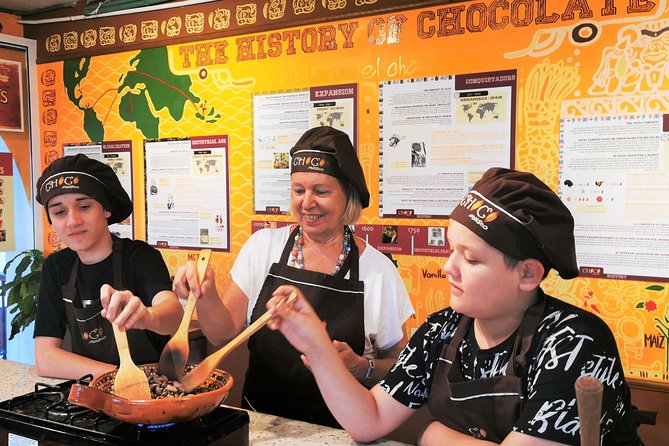
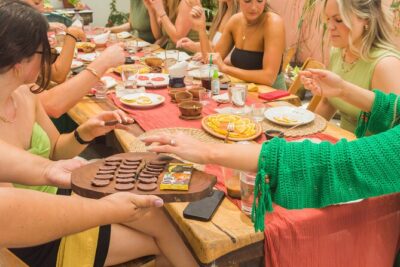
The final hands-on section is the payoff. You make chocolate molds and select toppings or flavor combinations for your own bars. The freedom to choose your additions makes this more personal than a standard tasting.
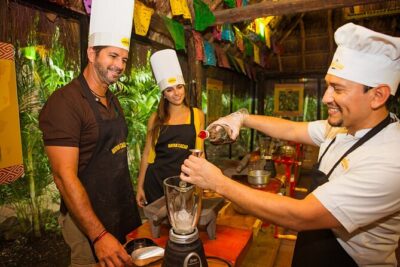
Children tend to enjoy this part because it turns the lesson into a creative task. Adults get the same benefit, especially if you like experimenting with unusual combinations. The class supplies cocoa beans, chocolate, and toppings, along with an apron and hat for the workshop.
You should expect to take your finished chocolate with you. Depending on the timing and handling of the chocolate, you may need to treat it carefully in Puerto Vallarta’s warm weather. The supplied information does not specify packaging or storage instructions, so ask the instructor before leaving if you plan to carry it around for the rest of the day.
The making process also gives the history lesson a satisfying ending. You begin with cacao as a crop and cultural ingredient, then finish with something you created yourself. That connection is the reason this works better than a simple shop tasting.
More Bean-to-Bar Chocolate Tours in Mexico:
- Artisanal Chocolate Bean to Bar Workshop in Cancún
★ 5.0 · 4 reviews - 1.5h Belgian Chocolate Workshop in Brussels (bean to bar)
★ 4.5 · 462 reviews - Bean to Bar Chocolate Workshop in Barcelona
★ 5.0 · 172 reviews - Project Chocolat Bean to Bar Experience from Hotel Chocolat
★ 4.5 · 107 reviews
Two hours at ChocoMuseo in Centro
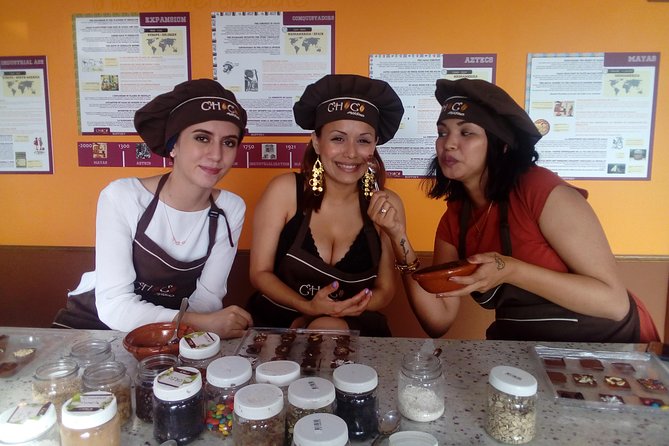
The activity lasts about two hours and begins and ends at ChocoMuseo Puerto Vallarta, at Josefa Ortiz de Domínguez 128 in Centro. You are responsible for getting there. Transportation to and from the museum is not part of the price.
The location is near public transportation, which helps if you are staying outside the central area. A mobile ticket is accepted, and the workshop is offered in English.
The group is advertised at a maximum of eight people. That is a useful size for a practical class. You can see the demonstrations, ask questions, and get a reasonable amount of space for making chocolate. A small group also makes it easier for the instructor to keep children involved without losing the adults.
The two-hour length feels well matched to the subject. A shorter session would rush the history and tasting. A much longer one could become repetitive, especially if you are not especially interested in chocolate production.
The museum shop is downstairs, while the class area is upstairs. You may find samples in the shop, and the sales staff are described as low-pressure. That matters if you want to browse without feeling pushed to buy something after class.
Is the $62.90 price fair?
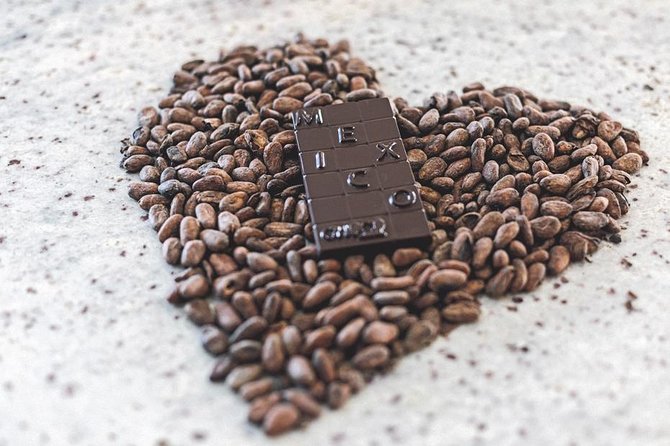
At $62.90 per person, this is not a bargain snack stop. You are paying for a guided cultural lesson, several tastings, ingredients, equipment, instruction, and chocolate you make yourself.
I think the value is reasonable if you treat it as a two-hour activity rather than a box of sweets. The price includes the guide inside the museum, cocoa beans, chocolate, toppings, an apron, and a hat. It also gives you an activity that works across age groups, which can save a family from booking separate activities for children and adults.
The value is weaker if you only want to eat chocolate. Puerto Vallarta has plenty of places to buy sweets for less money. This workshop makes sense when you want to understand the ingredient and take part in the process.
A customary tip of 15 to 20 percent may be given to the teacher if you enjoyed the class. It is not included in the listed price, so budget for it only if you feel the instruction earned it.
The experience is booked about 20 days ahead on average. That suggests planning ahead is sensible, particularly if you have fixed vacation dates or want a certain time of day. Confirmation arrives at booking, and cancellation is free up to 24 hours before the start time. Cancellations made within 24 hours are not refunded.
A good family activity, with a few physical details
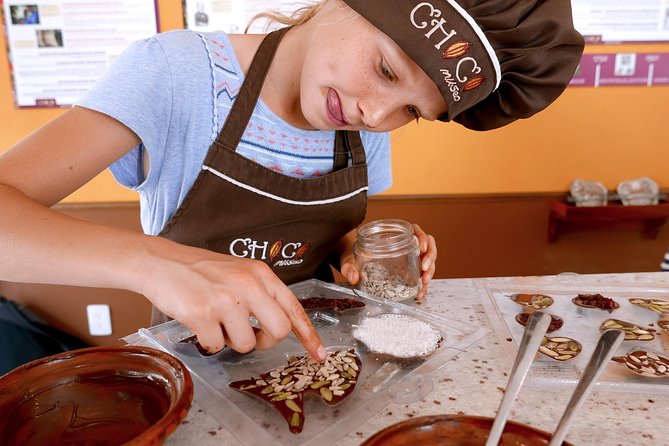
Children age five and older are welcome. The class has worked well for five-year-olds, nine-year-olds, and teenagers because it mixes short explanations with tasting and making. A guide such as Rod can keep the pace moving while still answering questions.
I would choose this for a family that wants something educational without making the children sit through a formal museum tour. The food gives them a reason to pay attention. Parents who enjoy cultural context will get more from the history than children may, but the practical work gives everyone a shared activity.
The room uses counter-height stools, so seating may not suit every person. The class area is upstairs, and there are stairs with handrails. One family successfully attended with a 91-year-old person using a walker and an adult with several disabilities, but you should contact the provider directly if your group needs specific arrangements.
Service animals are allowed. Most people can participate, but the supplied information does not promise full step-free access or specialized assistance. Ask before booking if stairs, high stools, heat, or standing work could be a concern.
Puerto Vallarta’s heat is another point to consider. One person left before the class because the room was uncomfortable before the air conditioning had been turned on. The provider says the air conditioning is turned on one hour before the workshop and remains on during the activity. Still, if you are sensitive to heat, confirm conditions when you arrive and dress lightly.
What the instructors do best
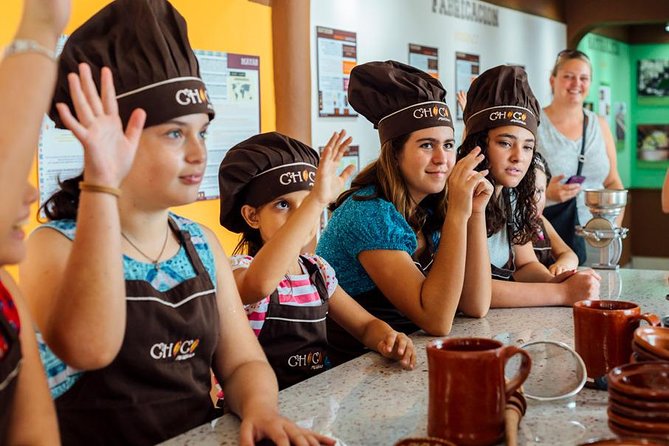
The strongest part of this class is the teaching. A good chocolate workshop can become a list of facts, but the instructors here use humor, samples, and questions to keep the lesson moving.
Rodrigo is often described as funny, patient, polite, and attentive. He has handled mixed groups with adults, young children, and energetic kids while keeping the class on schedule. That makes him a particularly good fit for families.
Elias has a clear chronological approach. His presentation connects cacao to social, cultural, and political changes, which gives the class more substance than a basic food demonstration.
Martin is organized and clear, with a strong grasp of the chocolate-making process. Zoar is enthusiastic and caring, and has taught groups that included older adults and people with disabilities.
Names and teaching styles may vary by schedule, but the common thread is direct instruction. You are shown what to do, given ingredients to handle, and encouraged to make your own choices.
Who should book this workshop?
I would recommend it to:
- Families with children age five and older
- Couples looking for a two-hour indoor activity
- Anyone curious about Mexican food traditions
- People who prefer making something to simply watching a demonstration
- Chocolate fans who want to compare cacao drinks and products
- Visitors staying in or near Puerto Vallarta Centro
I would think twice if you dislike sweet foods, cannot manage stairs or counter-height seating, or want a quiet tasting with no group participation. This is a social, hands-on class. You will be tasting, listening, handling ingredients, and making a mess of sorts.
It also may not satisfy an advanced chocolate maker. The class is aimed at general visitors, not professional training. Its strength is accessible teaching, not technical depth.
Should you book the Bean to Bar workshop?
Yes, if you want more than a quick chocolate sample. At $62.90, the price is easiest to justify when you value the combination of Mexican history, guided tasting, practical work, and custom chocolate to take home.
Book it for a family afternoon, a rainy-day plan, or a break from Puerto Vallarta’s outdoor heat. Arrive early for shop samples, allow time to reach the Centro meeting point, and ask about seating or air conditioning if comfort is important to you.
Skip it if your main goal is simply buying chocolate cheaply. For everyone else, this is a friendly, well-paced introduction to cacao that leaves you with both a better understanding of Mexican food culture and a few bars shaped by your own taste.
FAQ
Where does the Bean to Bar Chocolate Workshop take place?
It takes place at ChocoMuseo Puerto Vallarta, Josefa Ortiz de Domínguez 128, Centro, Puerto Vallarta, Jalisco, Mexico.
How long does the workshop last?
The activity lasts about two hours. It begins and ends at ChocoMuseo Puerto Vallarta.
What is included in the price?
The workshop includes a museum guide, cocoa beans, chocolate, toppings, an apron, and a hat for use during the class.
Is transportation included?
No. You must arrange your own transportation to and from the museum. The location is near public transportation.
Can children join the workshop?
Yes. The activity is open to children age five and older.
Is the workshop offered in English?
Yes. The workshop is offered in English, and a mobile ticket is available.
What is the cancellation policy?
You can cancel for a full refund up to 24 hours before the start time. Cancellations or changes made within 24 hours are not refunded or accepted.
Freshly tempered around Mexico
- Tulum: Chocolate & Honey Sanctuary Experience with Lunch★ 4.2 · 34 reviews
- Tulum: Chocolate & Honey Sanctuary Experience with Cenote★ 3.5 · 6 reviews
- Cultural Adventure: Artisanal Chocolates, Coffee and Doll Making★ 5.0 · 2 reviews
- Tarot Reading with Coffee & Chocolate or Smoothie★ 5.0 · 17 reviews
- Sayulita Magical Town Tour: Local food, and chocolate.★ 5.0 · 18 reviews
- Chocolate Macarons Workshop in Puerto Vallarta★ 5.0 · 5 reviews
- Private Make Your Own Chocolate Experience in Puerto Vallarta★ 5.0 · 8 reviews
- Amazing Walk through the Zapotec Mountains with Hot Chocolate★ 5.0 · 4 reviews
More Mexico Chocolate Tours to compare.
Finca 18 Puerto Vallarta Tequila Tour + Chocolate Pairing
Read our review →

San Jose del Cabo Art Walk, Beer Tasting &Chocolate Demonstration
Read our review →