
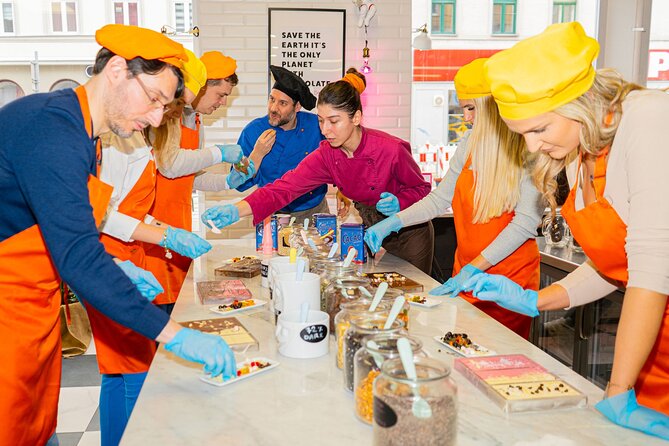
Review · CHOCOLATE MAKING WORKSHOPS
Chocolate workshop in Chocolate Museum Vienna “BO-YO”
Making chocolate at BO-YO is less a pastry-school lesson than a hands-on chocolate craft session. You learn the basic idea behind tempering, fill three molds with prepared chocolate, decorate them, and make Xocolatl, an old Aztec and Mayan-style drink with chili, vanilla, and cinnamon. I like the friendly instruction and the fact that you leave with actual treats, not just a demonstration. I also like that the class works well for families and gives you something to do beyond sightseeing.
The main drawback is simple: you are not making chocolate from cacao beans. The chocolate is already melted, and the museum is a small display area rather than a major cultural attraction. At $56.72 per person, the value depends on wanting a cheerful, guided activity, especially with children, more than wanting serious chocolate training.
Key points to know before booking
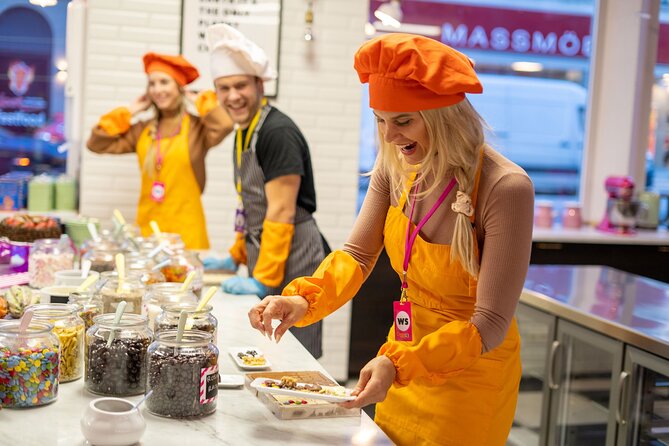
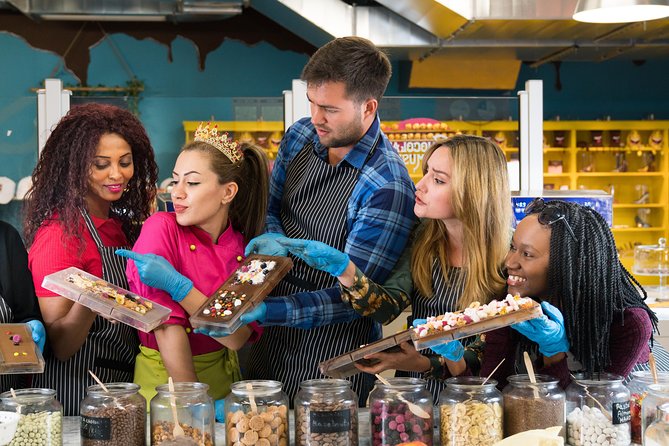
- Three chocolate bars: Fill molds and decorate each bar with the available toppings.
- Xocolatl tasting: Make a hot or cold Aztec-style chocolate drink with chili, vanilla, and cinnamon.
- Beginner-friendly format: Staff provide the equipment, ingredients, recipes, and help from start to finish.
- Small museum area included: Admission is part of the price, but the displays are brief and modest.
- Good for families: Children from about age three can attend, with an adult ticket required for children under ten.
- Allow about 75 to 90 minutes: The advertised class lasts about one hour and 15 minutes, though the full visit can take longer.
Filling molds instead of making chocolate from beans
The title chocolatier sounds grand, but this is a relaxed introduction for beginners. You do not need cooking experience, and you will not be expected to roast cacao, grind nibs, or create chocolate from bean to bar. That distinction matters if you are comparing this activity with a serious confectionery class.
The chocolate is prepared before you begin. Your work is to help with the process, fill molds, and add decorations. For a child, this is exactly the appeal. You get to handle the chocolate, make choices, and see a finished bar take shape without a long technical lesson or difficult equipment.
The instructor starts with a short introduction to chocolate and its history. You then hear about the basic theory behind making good chocolate, including the role of tempering. The explanations are designed for a general audience, so I would expect a useful primer rather than a detailed professional lesson.
That balance makes the activity easy to join. You can arrive with no baking experience and still follow along. The staff provide cookware, ingredients, recipes, and assistance throughout the session.
More Chocolate Making Workshops in the world:
- Vienna: Chocolate Workshop in Chocolate Museum w/ Tasting
★ 4.5 · 1,802 reviews - Brussels: Belgian Chocolate Making Workshop with Tastings
★ 4.7 · 1,629 reviews - Brussels: 2.5-Hour Belgian Chocolate Making Workshop
★ 4.8 · 933 reviews
What happens during the 75-minute workshop
The class begins with an introduction to chocolate and the steps you will follow. This opening gives the activity some context instead of sending you straight to a mold. You learn where chocolate came from and why the preparation method matters.
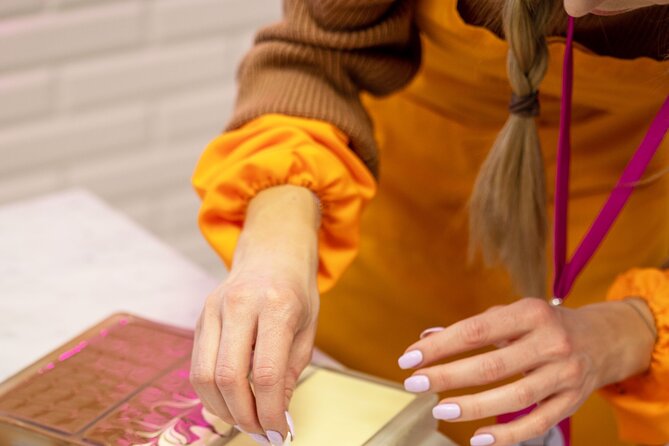
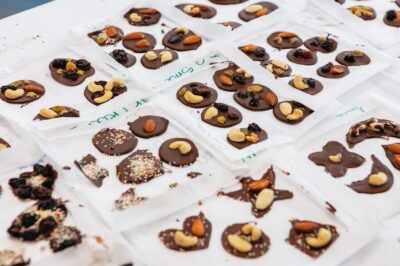
Next comes the chocolate work. The class demonstrates tempering, then lets you work with melted chocolate. You fill the molds and decorate three bars according to your preferences. The range of toppings is not endless, so do not expect a professional chocolatier’s full pantry of nuts, spices, salt, and freeze-dried fruit.
Available choices have included milk chocolate, dark chocolate, a very dark option, white chocolate, and colored chocolate. One useful tip is to be cautious with the darkest chocolate if you dislike bitterness. The dark chocolate nearest the milk option is likely to be an easier choice for most children and many adults.
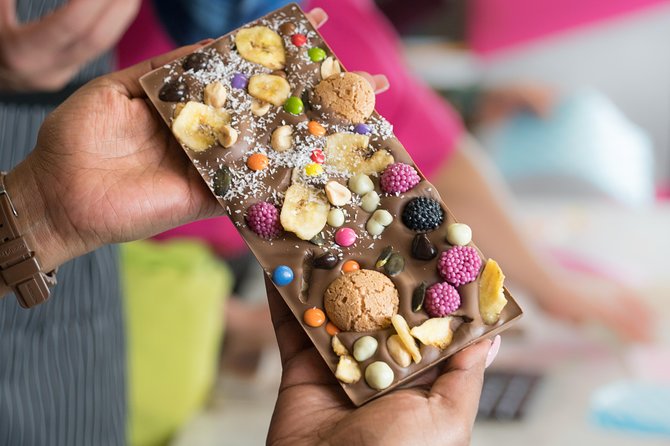
You then add toppings. This is the most creative part of the class, though the selection can feel limited for adults who want unusual combinations. Children tend to have an easier time enjoying the simple choices, including sweet decorations such as marshmallows.
The bars are the main take-home item. They are placed in a paper bag, so you should not expect boutique packaging or a polished gift box. If you are taking them on a long journey, handle them carefully and keep in mind that chocolate can soften.
Making Xocolatl with chili and cinnamon
The second food activity is Xocolatl, an ancient Aztec and Mayan hot chocolate recipe. It is served hot or cold and combines chocolate with chili, vanilla, and cinnamon.
This part gives the class more character than simply pouring chocolate into molds. You get to consider how chocolate was prepared before modern European styles became common. The drink is described as spicy, sweet, and full-bodied, though the final taste will depend on how it is prepared during your session.
Some sessions use cocoa, milk, sugar, and powdered milk. That means this is not a bean-to-cup tasting or a high-end drinking chocolate service. Still, making the drink yourself gives you a chance to adjust the balance and try a flavor combination that many children may not know.
I would give the Xocolatl extra attention. The bars are a straightforward craft, while the drink offers the more unusual food experience. On a chilly day, a warm cup also makes the workshop feel more satisfying.
The small chocolate museum downstairs
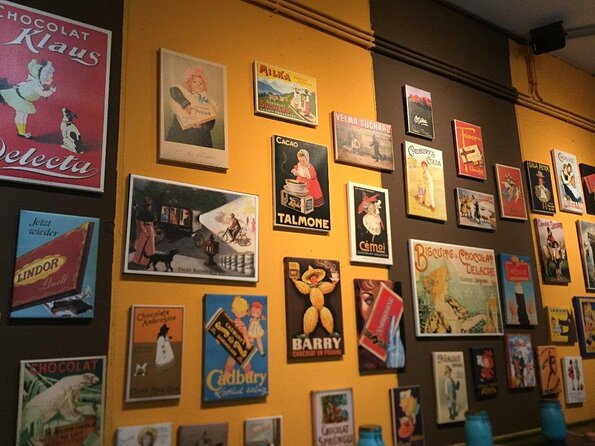
Museum admission is included, but keep your expectations modest. The museum is a compact area with a few chocolate-related displays, information panels, and places for photos. It is not a large museum with extensive historical rooms or a major collection.
I see the museum as a short add-on before or after the workshop. It can give younger children a few minutes of extra entertainment, and it helps explain why the class includes a brief history of chocolate. Adults who are seeking a serious cultural attraction may find it too small.
The premises also include a shop and demonstration kitchen. This makes the space feel more like a chocolate workshop with exhibits than a traditional museum. That is not a problem if you book it for the class, but it is worth knowing before you pay mainly for the museum visit.
Food and drinks from outside the museum are not allowed. If a baby becomes unsettled, the instructions ask you to step outside briefly until the child calms down.
More Chocolate Museums in the world:
- Lindt Home of Chocolate Museum Entry Ticket
★ 4.7 · 9,329 reviews - Choco-Story Brussels: Chocolate Museum Entrance with Tasting
★ 4.3 · 4,883 reviews - Cologne: Chocolate Museum Entrance Ticket
★ 4.4 · 2,790 reviews - Brussels: Chocolate Museum Visit with Workshop
★ 4.6 · 1,474 reviews
Why families tend to get the most from it
This is a strong choice for a family looking for a short, indoor activity. Children can take part rather than simply watch, and the class does not demand previous cooking ability. The mix of history, chocolate handling, decorations, and hot chocolate keeps the pace varied.
The minimum age is listed as three to five, so very young children may attend, but their ability to follow the process will vary. Children under ten must be accompanied by an adult, and that adult also needs a ticket. This is not a drop-off activity.
Older children and teenagers can enjoy the creative side, while adults may appreciate the relaxed pace and the chance to make something together. It also works for birthdays and other celebrations. The activity feels more like a social outing than a formal lesson, which can be useful when your group has mixed ages.
Adults without children can enjoy it too, especially if you want a break from palaces, churches, and walking tours. Still, I would not choose it for advanced chocolate skills. The class is basic by design.
Group size, timing, and the feel of the room
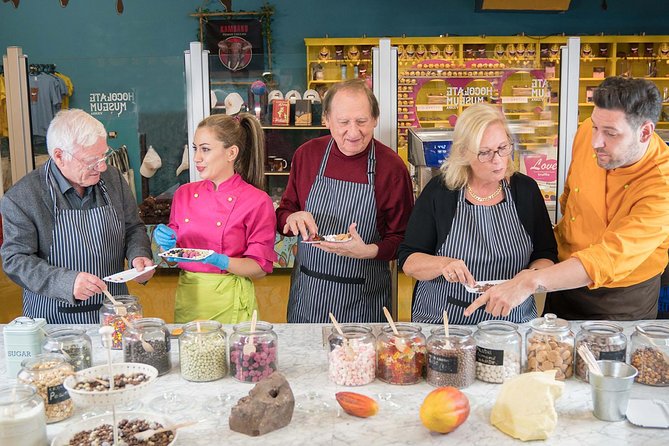
The maximum group size is 30 people. That is not a tiny class, and the workshop space may feel crowded when everyone is working at once. A full session can reduce the amount of individual attention you receive, particularly when several children need help at the same time.
The quality of the session depends partly on the instructor leading it. The most successful classes have a friendly, patient guide who explains each step clearly and keeps the mood light. Some sessions may feel rushed if the guide is trying to move a large group through the process quickly.
Plan on about one hour and 15 minutes for the advertised activity. Allow closer to 90 minutes if you want time for the displays, photographs, settling children, and collecting your chocolate. The workshop ends back at the starting point.
The meeting address is Schönbrunner Str. 99, 1050 Vienna, near public transportation. Check the address carefully before leaving, as locating the building can take longer than expected. The building is described as pink and on a corner, but street numbering in the area can be confusing.
Is $56.72 a fair price?
At $56.72 per person, this is not a cheap way to buy three chocolate bars and a cup of hot chocolate. The price makes more sense when you count the instructor, ingredients, equipment, museum entry, and the value of a structured family activity in Vienna.
I would compare it with the price of a casual meal or another paid indoor attraction. If you have children who need a break from sightseeing, the class can justify the cost because it fills roughly an hour and gives everyone something to do. If you are an adult seeking advanced technique, the same price may feel high for filling prepared molds.
It is also worth checking the direct price with Chocolate Experience GmbH before booking through a third-party seller. A booking comparison found the third-party price about 25 percent higher than the venue’s direct price. Prices can change, but checking both options is a sensible step.
The experience includes free cancellation when you cancel at least 24 hours before the start time. Cancellations within 24 hours are not refunded, and changes inside that window are not accepted. Confirmation is issued at booking, and the activity is offered in English with a mobile ticket.
What to bring and how to plan the visit
Wear clothes you do not mind getting a little messy. The supplied information does not promise protective clothing, and chocolate work is easier when you are not worried about every spot or splash.
Arrive on time. One session ended badly for a family that arrived 30 minutes late after struggling to find the address. With only 75 minutes on the schedule, a late arrival can mean missing most of the teaching, and the activity may not be able to admit you once the group has started.
Do not bring outside food or drinks into the museum. If you are visiting with a baby, be ready to step outside if the child starts crying.
The completed bars are placed in a simple paper bag rather than a sealed wrapper. For a short walk or a same-day treat, that is fine. For a warm-weather journey or a long train ride, you may want to plan how you will protect them, though no special transport packaging is promised.
Who should book this chocolate activity?
I would book BO-YO for families with children, birthday groups, and anyone who wants a light, social break from standard Vienna sightseeing. It is especially useful on a rainy day or during a stopover when you want a planned activity that does not take half a day.
I would also recommend it to beginners who want a gentle introduction to tempering and chocolate decoration. You will leave with three bars and a basic understanding of how chocolate is handled.
I would hesitate if your main goal is bean-to-bar production, advanced pastry technique, extensive tasting, or a substantial museum. You will not make chocolate from cacao beans, and the topping choices may feel narrow. The museum portion is brief, and the hot chocolate may be made with powdered ingredients rather than from a complex scratch recipe.
Should you book the BO-YO workshop?
Book it if you want a family-friendly activity with a real edible result. The friendly teaching, three decorated bars, and Xocolatl make it more engaging than a simple museum visit, and the class is easy for beginners.
Skip it if you want a serious chocolate course or expect a large museum. At this price, check the direct booking rate, arrive early, and treat the museum as a small bonus. With those expectations, BO-YO can be a pleasant and tasty hour in Vienna.
FAQ
Where does the chocolate workshop take place?
The workshop starts and ends at Schönbrunner Str. 99, 1050 Wien, Austria. The location is near public transportation.
How long does the experience last?
The advertised duration is approximately one hour and 15 minutes. Allow about 90 minutes if you also want time for the museum displays and photos.
Is the workshop offered in English?
Yes. The experience is offered in English.
What do I make during the workshop?
You make three chocolate bars, decorating them with the available toppings. You also make Xocolatl, an Aztec and Mayan-style hot chocolate with chili, vanilla, and cinnamon.
Is museum admission included?
Yes. Admission to the Chocolate Museum is included in the workshop price.
Do I need previous cooking experience?
No. The staff provide the cookware, ingredients, recipes, and assistance from beginning to end.
Can children attend?
Yes. The youngest children who can attend are listed as approximately three to five years old. Children under ten must be accompanied by an adult, and the accompanying adult needs a ticket.
Is this a bean-to-bar chocolate class?
No. The workshop does not produce chocolate from cacao beans. You work with chocolate that has already been prepared and melted.
What is the cancellation policy?
You can cancel for a full refund at least 24 hours before the local start time. Cancellations or changes made within 24 hours are not accepted for a refund.
Freshly tempered around the world
- Zurich Open-top Tour and Chocolate and Cheese Countryside★ 3.5 · 11 reviews
- Zurich: Chocolate Tasting and Walking Tour with a Local★ 4.2 · 13 reviews
- Lindt Chocolate Museum with Cruise Transfer from Zurich★ 4.6 · 7 reviews
- Zagreb: Lake Bled and Ljubljana Day Tour with Chocolate Gift★ 5.0 · 26 reviews
- York: Introduction to Chocolate Making Experience★ 4.9 · 10 reviews
- Zaandijk-Near Zaanse Schans Chocolate making demo & tasting★ 4.8 · 13 reviews
- Private Wine and Chocolate Tasting Experience★ 4.4 · 3 reviews
- Yarra Valley: Wine and Chocolate tasting tour.★ 5.0 · 5 reviews
More Chocolate Making Workshops to compare.
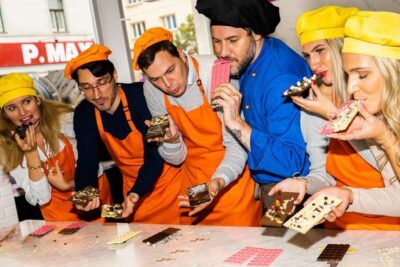
Vienna: Chocolate Workshop in Chocolate Museum w/ Tasting
Read our review →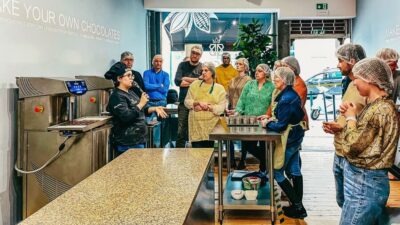
Brussels: Belgian Chocolate Making Workshop with Tastings
Read our review →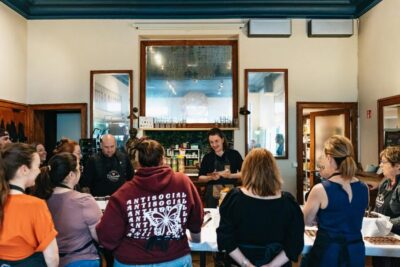
Brussels: 2.5-Hour Belgian Chocolate Making Workshop
Read our review →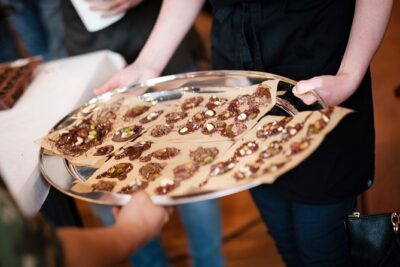
Bruges: Belgian Praline and Mendiants Chocolate Workshop
Read our review →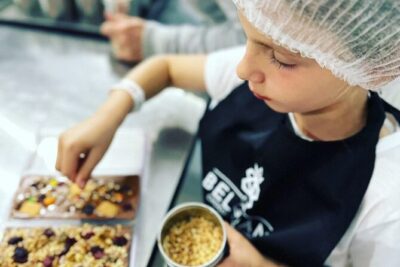
1.5h Belgian Chocolate Workshop in Brussels (bean to bar)
Read our review →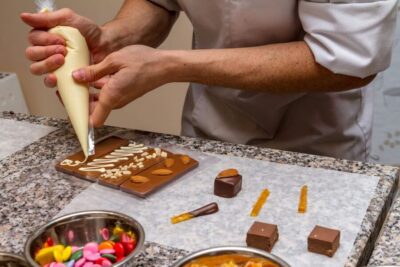
Paris: 45-minute Chocolate Making Workshop at Choco-Story
Read our review →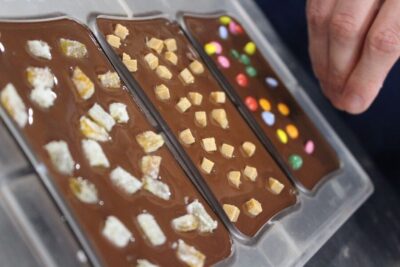
York: Chocolate Bar Making Workshop at York Cocoa Works
Read our review →Chocolate lists with this tour