Review · FRANCE
Paris Walk: Opera to Montmartre with Pastry & Chocolate
The best feature of this three-hour walk is its changing sense of place. You begin among grand boulevards and department stores near the Palais Garnier, pass through elegant 19th-century arcades, then ride the metro and climb into Montmartre’s narrow streets, artists’ squares, vineyards, and hilltop basilica. It feels less like a checklist of sights and more like a cross-section of Paris.
I like the mix of pastry and chocolate stops with serious city history, and I like that the guide handles the metro transfer so you can cover ground without spending the whole tour walking between neighborhoods. The main consideration is physical: cobbles, stairs, and uphill walking make this a poor choice for anyone with mobility limits.
Key points to know before booking
- The route links two very different Paris neighborhoods: Start at the Palais Garnier and finish at Sacré-Cœur after crossing from central Paris to Montmartre.
- The food tastings add real appeal: You sample pastries, chocolates, and macarons, with the exact treats depending on the day.
- The Galeries Lafayette rooftop is optional: Access is free when available, but it is not operated by or affiliated with this tour.
- Montmartre receives most of the walking time: Expect Moulin Rouge, the Wall of Love, Place du Tertre, La Maison Rose, and Sacré-Cœur.
- The guide shapes the experience: The strongest feedback centers on clear storytelling, local tips, patience, and adapting the route to personal interests.
- The tour costs $117 per person: That is a sizable price for three hours, but it includes a live English-speaking guide, metro ticket, tastings, photos from the guide, and a small surprise gift.
Starting under the Palais Garnier

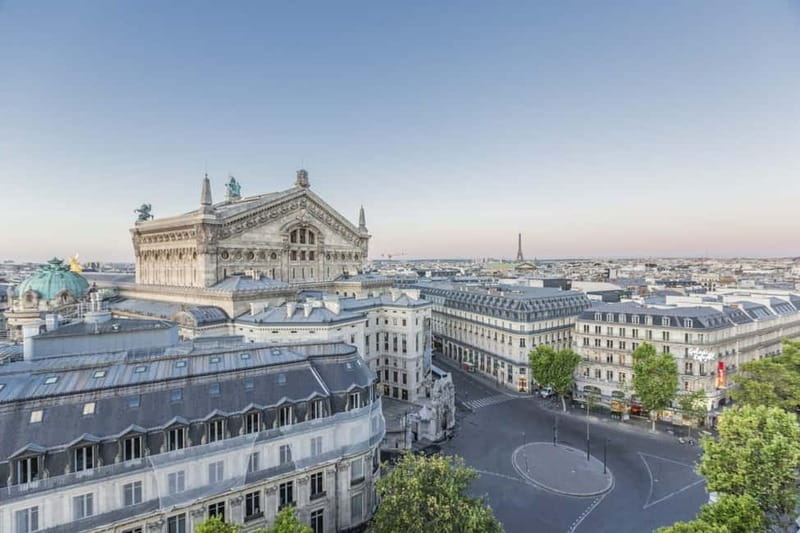
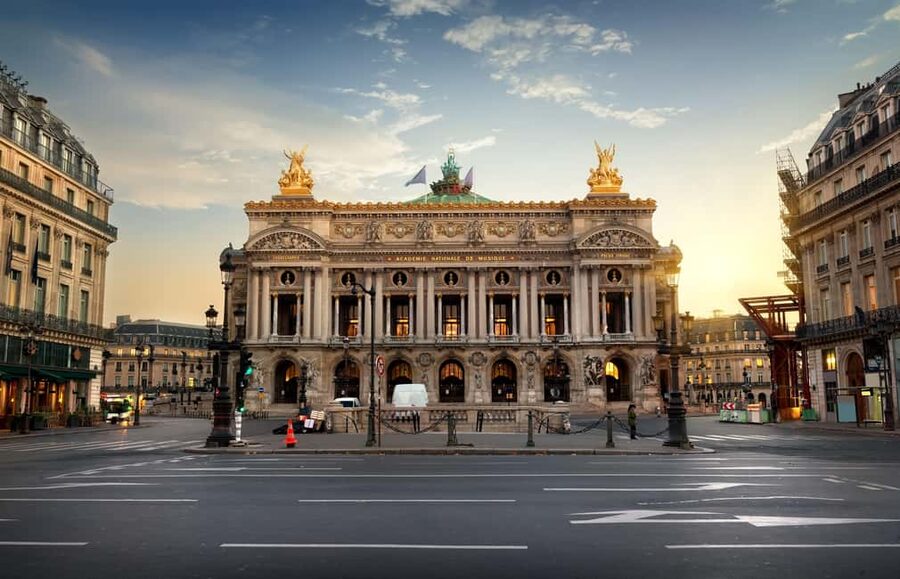
Meet your guide in front of the main staircase of the Palais Garnier, with the steps facing the opera square. The guide will be holding an umbrella, which gives you a useful visual marker in a busy part of Paris.
The Opéra area is a fitting place to begin. The Palais Garnier supplies the grand Paris of marble, ornament, and formal avenues, while the rest of the route gradually shifts toward smaller streets and neighborhood life. You will admire the exterior and use the opera house as a reference point before setting off.
The closest metro station is Opéra, served by Lines 3, 7, and 8, right outside the main entrance. Chaussée d’Antin, served by Lines 7 and 9, is about a three-minute walk away. Arrive ready to begin on foot, since the tour does not open with a long orientation or a slow café stop.
More Pastry and Chocolate Tours in France
- Paris French Sweets Tasting Tour with Pastries and Chocolates
★ 4.5 · 947 reviews - Saint-Germain: Gourmet Chocolate & Pastry Walking Food Tour
★ 4.8 · 495 reviews - Paris Chocolate, Macaron & Pastry Food Tour: 10 Gourmet Tastings
★ 5.0 · 339 reviews
Galeries Lafayette and the optional rooftop view
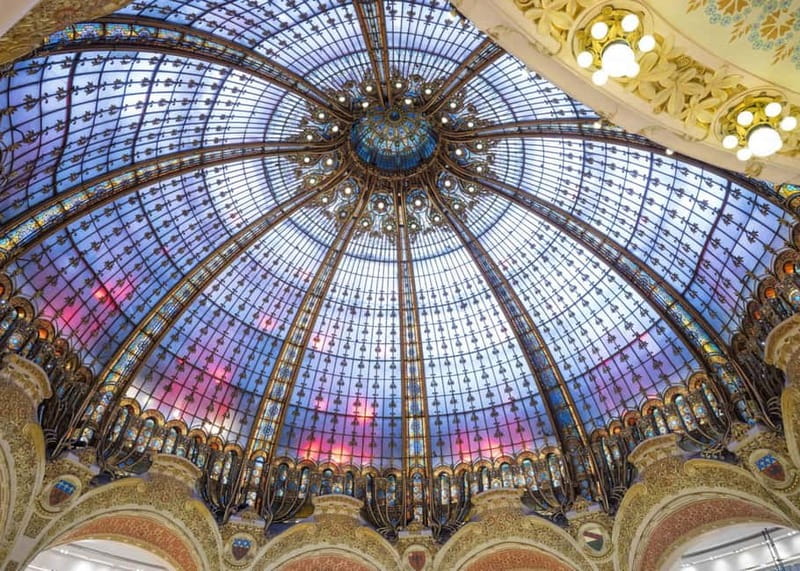
The first major pause is at Galeries Lafayette, where you have roughly 30 minutes for sightseeing, photographs, and a look at the famous coupole dome. The interior is a useful reminder that Paris shopping arcades and department stores can be attractions in their own right.
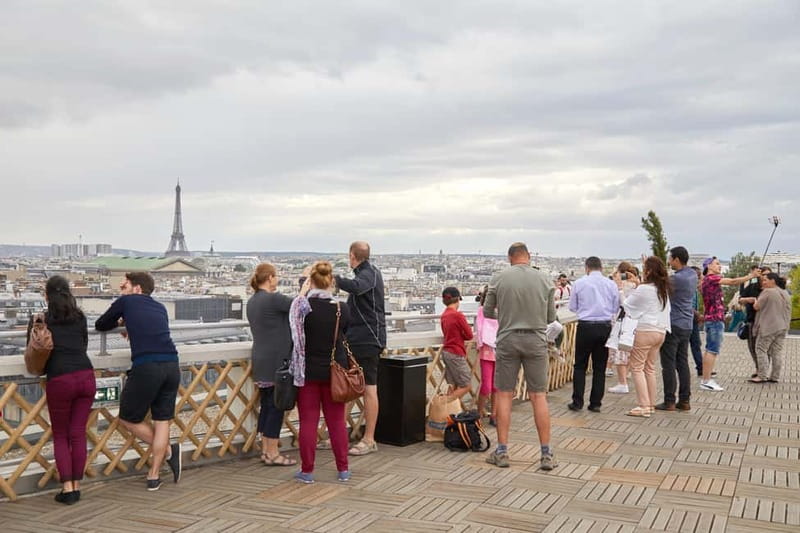
An optional free-access rooftop terrace may provide skyline views. This is one of the appealing extras, but it comes with a clear condition: access depends on store hours, crowd levels, and weather. The tour provider is not affiliated with Galeries Lafayette or Printemps, so you should treat the rooftop as a bonus rather than a guaranteed part of the experience.
That distinction matters. If the terrace is closed or too crowded, the tour still continues with the planned route. If it is open, you may get a broad view over central Paris without paying an additional admission fee.
The arcades of Passage Jouffroy and Passage Verdeau
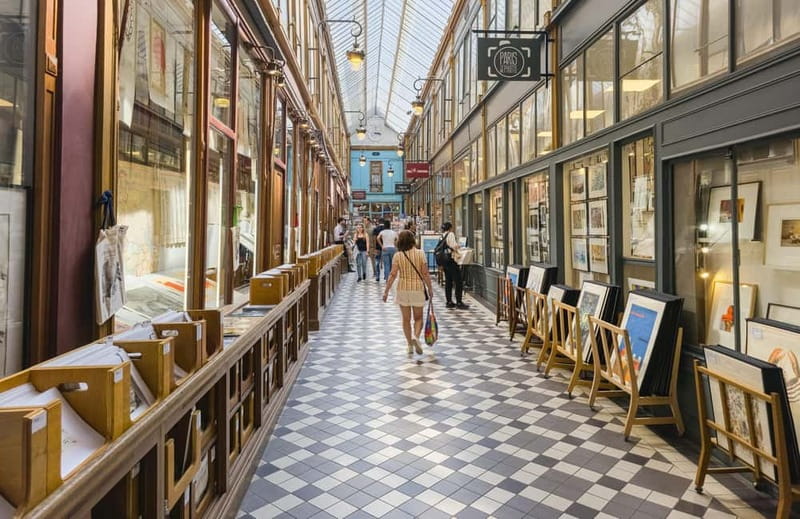
From the department store district, the walk turns toward Passage Jouffroy and Passage Verdeau. These covered passages offer a pleasant change from the large avenues outside.
Passage Jouffroy receives about 10 minutes for a break, photographs, and a visit. Passage Verdeau follows with another short stop and guided sightseeing. Their glass roofs, decorative details, and compact shopfronts create a more intimate setting than the broad streets around the opera house.
These passages are especially useful on a guided walk because they are easy to pass without noticing. You can enter, take a few photographs, and move on, but a guide gives the architecture a reason to matter. The stops are short, so do not expect a long browsing session or a chance to inspect every shop.
Notre-Dame-de-Lorette and the metro connection
The route next reaches Notre-Dame-de-Lorette, a neoclassical church that receives about 10 minutes. This is a quieter stop than the famous Montmartre landmarks, and that is part of its value.
The church gives you a look at a less obvious side of Paris architecture. The guide provides context and points out details you might miss if you were only moving between major attractions. Since the stop is brief, keep your camera and shoes ready rather than settling in for a long interior visit.
After the church, the group uses the metro for about 10 minutes. The included metro ticket saves you from handling a separate purchase and prevents the route from turning into a tiring cross-city walk. It also creates a clean break between the polished Opéra district and the more theatrical streets of Montmartre.
More Pastry and Chocolate Tours in Paris
- Paris Pastry Tour – Croissants, Macarons & Iconic French Desserts
★ 5.0 · 232 reviews - Saint-Germain The Original Chocolate Tasting Tour with Pastries and Macaron
★ 4.5 · 215 reviews - Paris: Montmartre Chocolate & Pastries Tour with 8+ Tastings
★ 4.7 · 131 reviews - Croissants and pains au chocolat with a pastry chef in Paris
★ 5.0 · 123 reviews
Moulin Rouge and the first taste of Montmartre
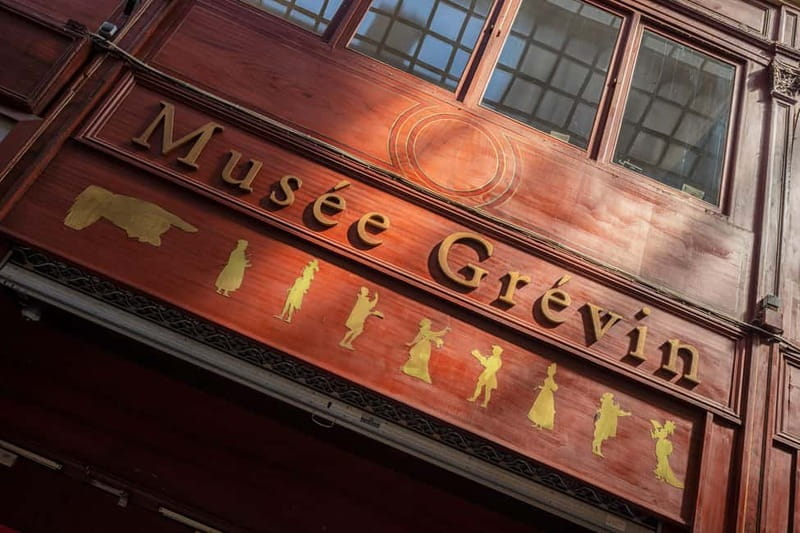
The metro brings you toward the Moulin Rouge, where you have about 15 minutes for photographs, sightseeing, and a guided look. The famous red windmill is a quick stop, but it anchors Montmartre’s connection with nightlife, performance, and the cabaret tradition.
You should think of this as an exterior visit rather than a show. The experience does not include a performance at the Moulin Rouge, and the schedule allows time to see the site rather than attend a production.
The route then reaches the Wall of Love for about 15 minutes. This public artwork is a natural photo stop, and the guide can explain its place in Montmartre’s romantic image. It is a lighter moment after the church and the formal buildings earlier in the walk.
Artists, old studios, and Montmartre’s village streets
Le Bateau-Lavoir follows with a 10-minute guided stop. The site is linked with Montmartre’s artistic past and helps explain why this hill became associated with painters and writers. The stop is short, but it adds meaning to the streets you are about to climb.
Next comes Moulin de la Galette, with approximately 15 minutes for photographs and explanation. The name recalls the old windmills that once marked this part of the hill. You will not be visiting a working mill as part of the tour, but the stop helps you read the neighborhood beyond its postcard appearance.
The route also includes Le Passe-Muraille, a sculpture based on a character who can walk through walls. It is an entertaining, unusual sight and a good example of how Montmartre mixes art with everyday streets. You have around 10 minutes here, enough for a photograph and a short explanation.
This section is where the walking becomes more demanding. Montmartre’s streets can be uneven, and the climb is real. The route is designed for people who can manage stairs and uphill sections without assistance. Comfortable footwear is not a small suggestion here. It affects how much attention you can give the guide and the views.
La Maison Rose and Place du Tertre
La Maison Rose receives a short photo stop of about 10 minutes. Its painted exterior is one of Montmartre’s most recognizable scenes, and the stop gives you time to frame the building without turning the visit into a long meal break.
Place du Tertre comes next, with about 10 minutes to walk and look around. This is the square most closely associated with Montmartre’s artists, and you may see local artists working in the area. The square can feel busy and commercial, but it remains an important part of the neighborhood’s public character.
I like that the tour reaches Place du Tertre after several less familiar stops. You have already seen the wall sculpture, old artistic sites, and small streets, so the square feels like part of a wider story rather than the only thing Montmartre has to offer.
The schedule is tight, though. Ten minutes is enough for an introduction and photographs, not for a leisurely portrait session or extended shopping. If you want to browse every stall, you may need to return on your own.
Sacré-Cœur and the final hilltop views
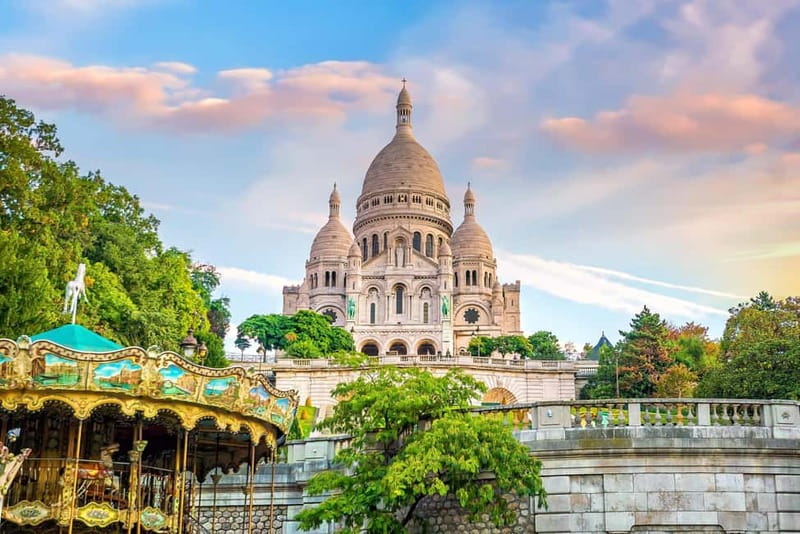
The Basilica of the Sacred Heart is the high point of the route, both literally and visually. The tour allows about 15 minutes for a guided visit and photographs, then finishes at the basilica.
Sacré-Cœur offers one of Paris’s most memorable elevated viewpoints, with the city spreading out below the hill. The basilica itself is also a major landmark, and the visit gives the tour a strong finish after the smaller streets and local sights.
The route also includes the Vigne du Clos Montmartre, the vineyard of Montmartre, with another 15-minute guided stop. This is one of the neighborhood’s more surprising features. You get a glimpse of a village-like tradition inside a capital city, rather than another grand monument.
Because the tour finishes at Sacré-Cœur, you are left in a useful part of Montmartre for continuing your day. The activity does not include a return transfer to the starting point, so plan your next move from the basilica rather than expecting to end back near the opera house.
What the guide adds to the walk
The guide is central to the value of this experience. The most praised qualities are clear explanations, a calm pace of storytelling, useful local tips, and an ability to adjust the tour to personal interests.
That last point matters on a route with many short stops. A good guide can decide when to explain architecture, when to point out a photograph, and when to let you enjoy a view without filling every second with facts. The strongest feedback describes guides who make the stories feel real instead of presenting a string of dates and names.
The experience is offered in English, with private or small-group options available. Group size can change how personal the explanations feel, so check the option you are booking if that difference matters to you.
The guide can also take photographs for you. That is a practical extra, especially at the Wall of Love, La Maison Rose, Place du Tertre, and Sacré-Cœur, where you may want a picture without relying on a stranger.
Pastries, chocolates, and the value of $117
At $117 per person, this is not a cheap orientation walk. You are paying for a guide-led route, a metro ticket, pastry and chocolate tastings, a surprise gift, photographs from the guide, and access to a carefully linked sequence of sights.
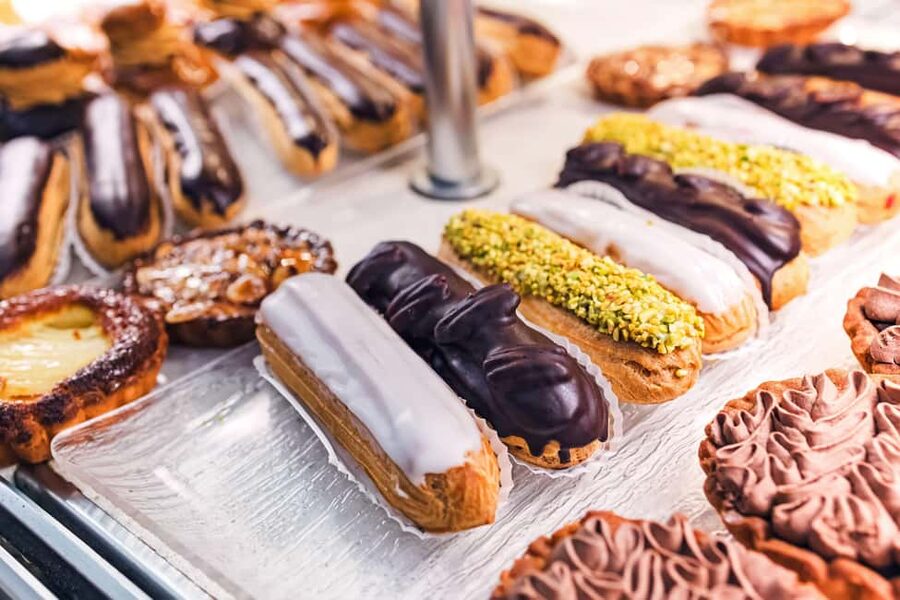
The food element is more than decoration. Pastry, chocolate, and macarons give the walk a series of small pauses, and they connect the neighborhoods to one of Paris’s most enjoyable everyday pleasures. The treats are described as award-winning, but the exact shops and tasting items are not specified, so you should not book expecting a fixed menu.
The price makes the most sense if you value structure and explanation. In three hours, you cover the Opéra district, two covered passages, a church, a metro transfer, and a long list of Montmartre locations. Organizing that route alone would take planning, and you would still miss much of the context.
If you prefer slow meals, independent wandering, or spending an hour inside one major attraction, the cost may feel high. This is a brisk sightseeing walk with tastings, not a relaxed food tour or a full interior tour of the Palais Garnier and Sacré-Cœur.
Who should book this experience?
I would recommend this tour to a first-time Paris visitor who wants a guided introduction to Montmartre but also wants more than the standard basilica photo. It suits anyone who likes city walks, short cultural stops, local stories, and small food samples.
It is also a good fit if you want help connecting neighborhoods that feel far apart on a map. The metro segment keeps the route efficient, while the guide gives you a clear thread from grand opera-house Paris to artists’ Montmartre.
You should think twice if you dislike hills, uneven paving, stairs, or a fixed pace. The tour is not suitable for people with mobility impairments. Bring water, sunglasses, a hat, and a camera, and wear shoes that can handle a climb.
The cancellation policy is forgiving: you can cancel up to 24 hours ahead for a full refund. You can also reserve now and pay later, which helps if your Paris schedule is still changing.
Should you book the Opéra to Montmartre walk?
Book it if you want a compact, story-led introduction to Montmartre with food tastings and a guide who can make the route feel personal. The combination of arcades, church architecture, metro travel, artistic landmarks, Sacré-Cœur, and the Montmartre vineyard gives you more range than a simple hilltop sightseeing walk.
Skip it if you want a slow meal, guaranteed rooftop access, or extensive time inside each attraction. At $117, the value depends on using the guide’s stories and the carefully planned route. For an active visitor who likes tasting, walking, and seeing many sides of Paris in one morning or afternoon, it is a strong choice.
FAQ
How long does the Paris walk last?
The tour lasts three hours.
Where does the tour begin?
It begins at the Palais Garnier. Meet in front of the main staircase, with the steps facing the opera square. Your guide will be holding an umbrella.
Where does the tour finish?
The tour finishes at the Basilica of the Sacred Heart of Paris, also known as Sacré-Cœur.
What language is the tour offered in?
The live tour guide speaks English.
Is the Galeries Lafayette rooftop visit guaranteed?
No. The rooftop stop is optional, free to access when available, and depends on store hours, crowd levels, and weather. The tour provider is not affiliated with or endorsed by Galeries Lafayette or Printemps.
Is transportation included?
Yes. A metro ticket is included for the approximately 10-minute subway section of the route.
Is the tour suitable for people with mobility impairments?
No. The walk includes cobbled streets, stairs, and uphill sections, and it is not suitable for people with mobility impairments. Comfortable shoes are recommended.
Freshly tempered around Paris
- Private Wine and Chocolate Tasting Experience★ 4.4 · 3 reviews
- Paris Sweet & Chocolate Family Treasure Hunt★ 5.0 · 37 reviews
- Molded Bonbons Chocolate making class in Paris (collective)★ 4.5 · 20 reviews
- Private Wine and Chocolate Tasting in Paris★ 4.5 · 4 reviews
- Pure Chocolate Tour in Paris★ 5.0 · 20 reviews
- Expert-Led Sweet Secrets of Paris Pastry & Chocolate Marathon★ 5.0 · 3 reviews
- Paris Small-Group Montmartre Chocolate & Pastry Walking Tour★ 5.0 · 15 reviews
- #1 Paris Chocolate and Pastry Food Tasting Tour★ 4.5 · 15 reviews
More France Chocolate Tours to compare.
Paris: Entrance Ticket to the Chocolate Museum
Read our review →
Paris French Sweets Tasting Tour with Pastries and Chocolates
Read our review →
A Morning in Paris Food Tour: Croissants, Baguettes & Chocolate
Read our review →
Saint-Germain: Gourmet Chocolate & Pastry Walking Food Tour
Read our review →
Paris: 45-minute Chocolate Making Workshop at Choco-Story
Read our review →
Paris Chocolate, Macaron & Pastry Food Tour: 10 Gourmet Tastings
Read our review →
Passy-Grigny: Chocolate and Champagne Tasting Tour
Read our review →