
Review · PORTUGAL
Porto Best of the Best Port Tasting with Artisan Chocolates
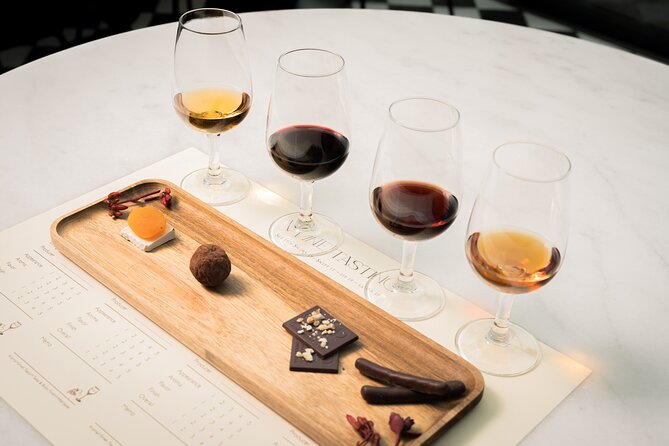
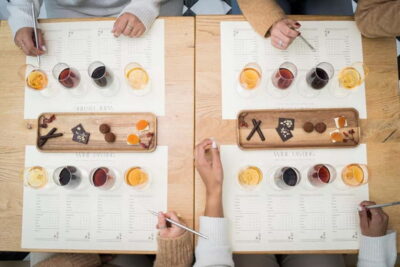
Port is at its best when you compare it, not when you sip one glass in isolation. This one-hour session lines up four styles from major houses, then matches each with chocolate, cheese, dried fruit, or tapas so you can see how sweetness, fruit, wood, and savory flavors work together.
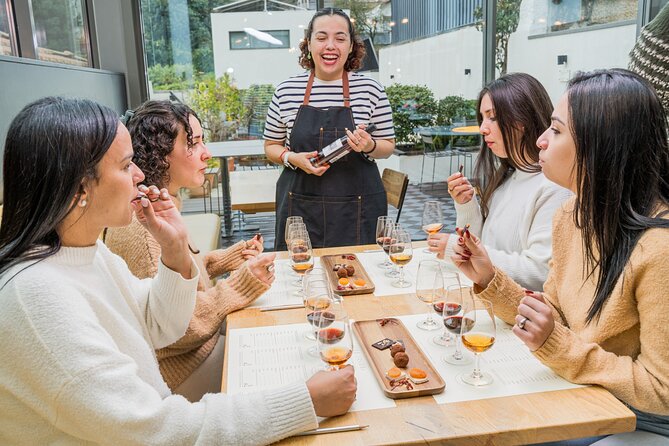
I like the small group of up to 16 because you have room to ask the sommelier questions. I also like the setting: a handsome Orangerie, or a garden when the weather cooperates. The main drawback is the short running time. Four 40ml pours give you a good introduction, but serious Port fans may want to stay afterward and buy more.
The current tasting brings together Sandeman Fine White, Graham’s Mature Reserve Tawny, Taylor’s Late Bottled Vintage, and Ferreira Dona Antonia White Port. Rita has been praised for making the subject easy to follow, while the relaxed format helps people chat without turning the session into a formal lecture.
Key points at a glance
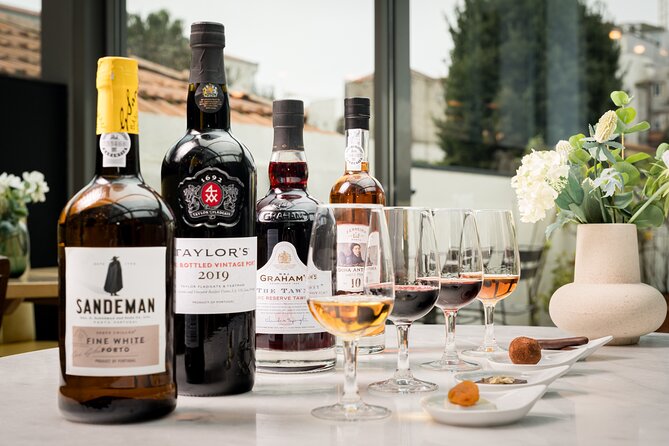
- Four different Port styles: Compare white, tawny, and late bottled vintage wines from Sandeman, Graham’s, Taylor’s, and Ferreira.
- Thoughtful food pairings: Try each 40ml pour with artisan chocolate, Brie, dried apricot, or a tapas-style bite.
- A one-hour introduction: The pace suits first-time Port drinkers, though it may feel brief to wine specialists.
- A calm setting: Taste in the Orangerie or, on a sunny day, in the garden at Canto de Luz.
- Small-group conversation: The maximum group size is 16, giving you a better chance to speak with the sommelier.
- Good central meeting point: The experience starts and ends at Canto de Luz, Rua do Almada 539, in Porto.
Four Ports, four different lessons
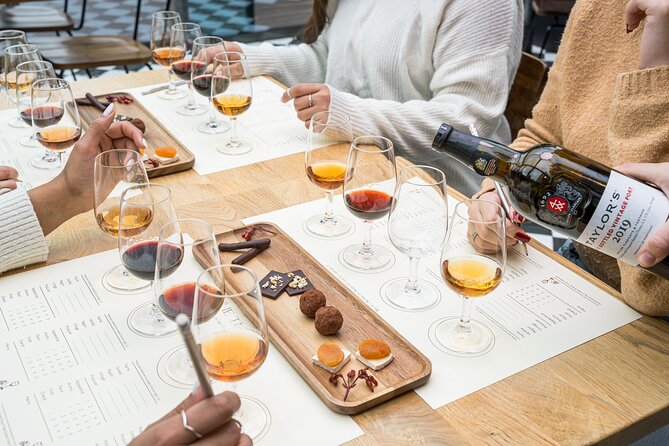
The tasting is built around comparison. That is the right approach for Port, since the category covers much more than the sweet red drink many people first picture.
You receive four tasting glasses, each containing 40ml. That is enough to judge the aroma, sweetness, texture, and finish without turning a one-hour lesson into a heavy drinking session. The pours are small, but the range is broad.
The exact selection can rotate around different houses and vintages. The current menu includes these four examples:
- Sandeman Fine White Port with Brie and dried apricot
- Graham’s Mature Reserve Tawny with Ecuador truffles and raspberry ganache
- Taylor’s Late Bottled Vintage with Ecuador almond dark chocolate
- Ferreira Dona Antonia White Port with Ecuador oranges and dark chocolate
This lineup gives you a useful mix of lighter and deeper flavors. You can compare two white Ports, then move to a mature tawny and a late bottled vintage. The food is not just decoration. It gives your palate a second way to notice what is happening in the glass.
More Chocolate Tours around the world:
- Lindt Home of Chocolate Museum Entry Ticket
★ 4.7 · 9,329 reviews - Choco-Story Brussels: Chocolate Museum Entrance with Tasting
★ 4.3 · 4,883 reviews - Zurich: City Tour, Cruise, and Lindt Home of Chocolate Visit
★ 4.5 · 4,624 reviews
Sandeman Fine White with Brie and apricot
The first pairing combines Sandeman Fine White Port with Brie cheese and dried apricot. White Port can be easy to overlook, especially if you arrive expecting only red styles. This opening glass helps show how Port can work as a lighter aperitif.
Brie brings soft, creamy texture, while dried apricot echoes the fruit character of the wine. Try a small sip before eating, then another after the cheese or fruit. You may find that the food changes your sense of sweetness and brings out different fruit notes.
This is a practical start for newcomers because it begins with familiar flavors. It also gives you a clear reminder that white Port is not simply a pale version of red Port. The pairing should appeal to you if you enjoy aperitif wines, soft cheese, or fruit-forward combinations.
Graham’s Mature Reserve Tawny with raspberry truffle
The Graham’s Mature Reserve Tawny arrives with Ecuador truffles filled with raspberry ganache. Here, the focus shifts toward age, darker fruit, and a smoother feel.
Tawny Port is aged in wood, and its character tends to move away from the fresh berry profile of younger wines. The raspberry filling creates a useful contrast. Taste the tawny on its own first, then try it with the truffle. The chocolate may make the wine seem rounder, while the raspberry can sharpen its fruit notes.
This is likely to be one of the most approachable pairings for anyone who already enjoys dessert wine. It is also a good point in the tasting to slow down and ask your sommelier about the difference between tawny and vintage styles. The session is designed for questions, and the group size should make that easier than it would be at a crowded bar.
Taylor’s Late Bottled Vintage with almond dark chocolate
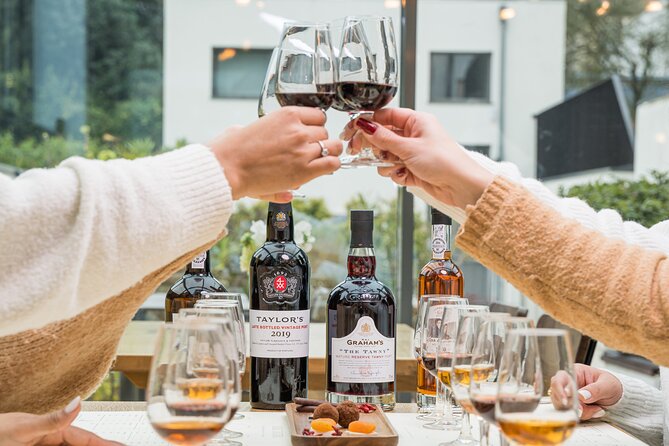
Taylor’s Late Bottled Vintage is paired with Ecuador almond dark chocolate. The pairing moves toward a more structured, chocolate-friendly style.
Late Bottled Vintage, often shortened to LBV, is a useful category for people who want to understand vintage-style Port without making a large commitment. The dark chocolate brings bitterness, while almond adds a nutty edge. Compare the wine and chocolate in both directions: taste the Port first, then let the chocolate linger before taking another sip.
This part of the lineup should interest you if you prefer dark chocolate over milk chocolate. It also gives the sommelier a natural opening to explain how Port houses use different styles, aging methods, and vintages.
Same cocoa, a different bite:
- The Chocolatarium Chocolate Tour Experience in Edinburgh
★ 5.0 · 4,322 reviews - Award-Winning Geneva Chocolate &Old Town Tour with Boat Ride (3h)
★ 5.0 · 3,721 reviews - Melbourne: Yarra Valley Wine, Gin, Whisky and Chocolate Tour
★ 5.0 · 3,667 reviews - 4×4 Dominican Adventure with Chocolate and Coffee Tasting
★ 5.0 · 2,920 reviews
Ferreira Dona Antonia White with orange chocolate
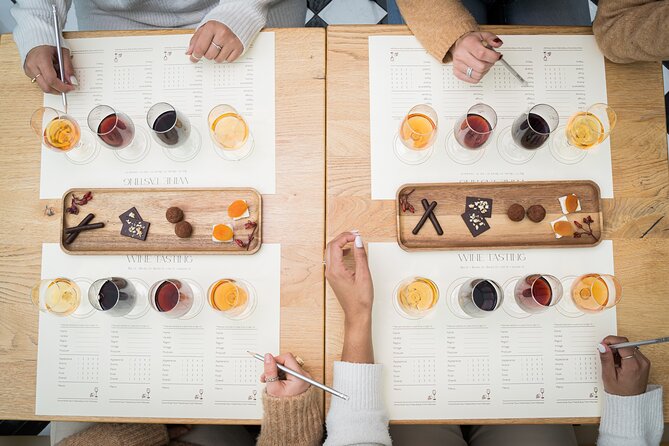
The final pairing returns to white Port, this time from Ferreira Dona Antonia, with orange and dark chocolate. Having two white Ports in the same session is useful because it lets you compare them directly rather than relying on memory.
The orange flavor should highlight citrus notes, while the dark chocolate adds a firm, slightly bitter counterpoint. If the two white Ports taste similar at first, take a small sip of each in turn. Then try the paired chocolate and repeat the comparison. Side-by-side tasting makes small differences easier to notice.
The current menu does not simply march from light to dark. It returns to white Port at the end, which makes the experience more of a comparison lesson than a fixed flight. Since the menu rotates, you should treat these pairings as the present selection rather than a permanent promise.
The Orangerie and garden setting
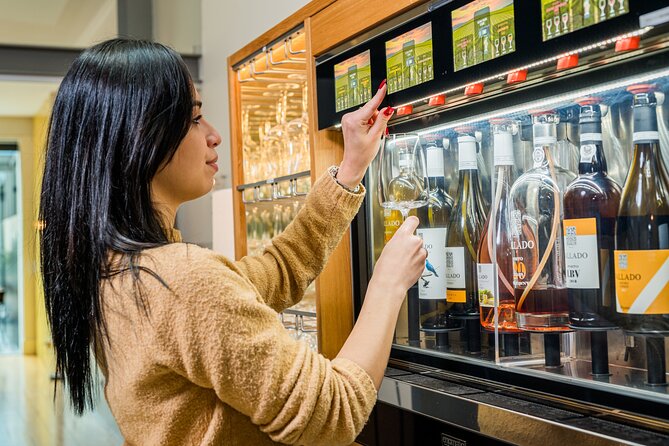
Canto de Luz hosts the tasting in its Orangerie, with the garden available on a sunny day. That setting matters because Port is a social drink. A quiet, attractive room makes it easier to pay attention to the guide and to talk with the people at your table.
The garden option depends on the weather, so do not book this expecting an outdoor tasting every time. Still, having two possible settings is a pleasant feature, particularly in Porto when the day is bright and mild.
The experience starts and ends at Rua do Almada 539, 4050-039 Porto. You do not need to manage a transfer between several tasting rooms or cross the river to reach a Port lodge. The fixed meeting point keeps the hour simple and works well if you are fitting the tasting between sightseeing plans.
What the sommelier adds
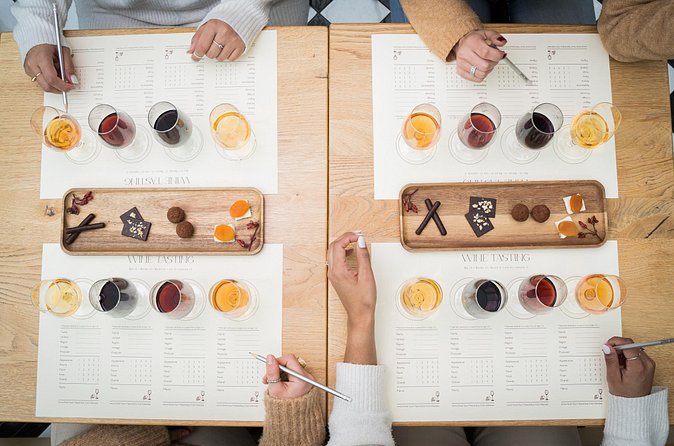
A Port tasting can easily become a list of brand names and sweetness levels. The guide is important because you need context: why Port matters to northern Portugal, how it shaped Porto’s identity, and how the main styles differ.
The sommelier explains the history of Port and its importance to the city. Rita has received especially warm praise for teaching the subject clearly, and the host is expected to encourage questions rather than simply pour the glasses.
You should ask about the order of the tasting, the reason for each food match, and the difference between the two white Ports. If you are new to Port, ask which style works best as an aperitif and which suits dessert. If you already know the basics, ask about the current vintages and how the houses differ.
The tone appears to be relaxed rather than academic. One particularly useful feature is the chance to meet people from other countries and share the table. That social side can make the hour feel less like a wine class and more like a friendly Porto activity.
Is $35.94 a fair price?
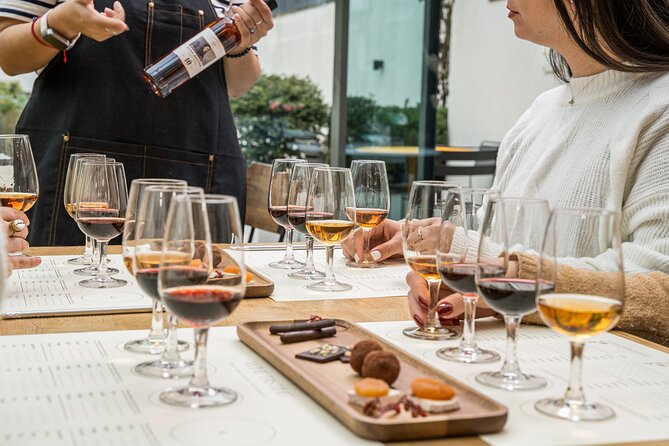
At $35.94 per person, you are paying for four Port pours, four food pairings, a guide, and the setting. The alcohol alone is not the whole value. You are also paying for a comparison that would be harder to arrange by ordering random glasses on your own.
The 40ml pours are tasting portions, not full glasses. That keeps the session controlled, but it also means you should not expect a long afternoon of drinking. The price makes the most sense if you want an introduction with explanation and pairings, rather than a large amount of wine.
The current menu uses well-known houses including Sandeman, Graham’s, Taylor’s, and Ferreira. That gives you recognizable reference points. The artisan chocolates from Ecuador add a premium touch, while the Brie, apricot, and tapas-style bites keep the food from becoming one-note.
After the formal tasting, you can stay for additional wines, Ports, or tapas at extra cost. This is useful if you find a favorite and want to continue. It also means you can keep the basic booking to one hour and decide afterward if you want to spend more.
Who should book this tasting?
I would point first-time Port drinkers here. The four-style format, food pairings, and sommelier explanation give you a firm starting point without requiring prior wine knowledge.
It also suits couples and solo visitors who prefer a small social activity over a large group tour. With a maximum of 16 people, the group is not private, but it is compact enough for questions and conversation.
Chocolate lovers have an obvious reason to book. The pairings are not identical sweets repeated four times. You get raspberry ganache, almond dark chocolate, orange with dark chocolate, plus cheese and fruit. That range lets you see how different ingredients change the wine.
You may want something else if you are seeking a full tour of Port production, a visit to several cellar buildings, or a longer tasting with many vintages. This activity stays in one location and concentrates on guided comparison.
All participants must be at least 18 to consume alcohol in Portugal. You may be asked to show proof of age, so bring identification. Service animals are allowed, public transportation is nearby, and most people can take part.
Timing, booking, and cancellation
The experience lasts about one hour and is often booked around 20 days ahead. If your Porto dates are fixed, booking early is sensible, especially since the group has a maximum of 16 people.
You receive confirmation at the time of booking, and the activity ends where it begins. Free cancellation is available if you cancel at least 24 hours before the local start time. Cancellations or changes made within 24 hours are not refunded or accepted.
The mobile ticket makes arrival straightforward. Plan to reach Canto de Luz on Rua do Almada 539 with enough time to find the entrance, since the tasting itself is short and the first pour sets the pace.
The final call
Book this Port tasting if you want a focused, social introduction to Porto’s signature wine, especially if chocolate and small food pairings sound better than a formal cellar tour. The strongest features are the four contrasting styles, the intimate group, and the chance to ask a sommelier questions.
Skip it if you already know exactly which Port houses and vintages you prefer and want a longer technical tasting. For most visitors, though, $35.94 buys a pleasant hour with enough range to sharpen your palate and help you choose what to order next in Porto.
FAQ
Where does the Port tasting take place?
It takes place at Canto de Luz, Rua do Almada 539, 4050-039 Porto, Portugal.
How long does the experience last?
The tasting lasts approximately one hour.
How many Ports are included?
Four tasting glasses of Port are included, with each pour measuring 40ml.
Which Port houses are included?
The current menu includes Sandeman, Graham’s, Taylor’s, and Ferreira Dona Antonia. The houses and vintages may rotate.
What food is paired with the Port?
The current pairings include Brie with dried apricot, raspberry ganache truffles, almond dark chocolate, and orange with dark chocolate. A tapas-style bite may be offered where appropriate.
Is the tasting held indoors or outdoors?
It takes place in the Orangerie, or in the garden on a sunny day.
How many people can join?
The activity has a maximum of 16 participants.
Can anyone under 18 take part?
Participants must be at least 18 to consume alcohol in Portugal. Proof of age may be requested.
Can I cancel for a refund?
Yes. You can receive a full refund if you cancel at least 24 hours before the experience start time. Cancellations within 24 hours are not refunded.
Freshly tempered around the world
- Zurich Open-top Tour and Chocolate and Cheese Countryside★ 3.5 · 11 reviews
- Zurich: Chocolate Tasting and Walking Tour with a Local★ 4.2 · 13 reviews
- Lindt Chocolate Museum with Cruise Transfer from Zurich★ 4.6 · 7 reviews
- Zagreb: Lake Bled and Ljubljana Day Tour with Chocolate Gift★ 5.0 · 26 reviews
- York: Introduction to Chocolate Making Experience★ 4.9 · 10 reviews
- Zaandijk-Near Zaanse Schans Chocolate making demo & tasting★ 4.8 · 13 reviews
- Private Wine and Chocolate Tasting Experience★ 4.4 · 3 reviews
- Yarra Valley: Wine and Chocolate tasting tour.★ 5.0 · 5 reviews
More Portugal Chocolate Tours to compare.
Porto: Cálem Cellar with Chocolate, Cheese, and Wine Tasting
Read our review →
Porto: Chocolate Museum – Unwrap the Secrets of Chocolate
Read our review →
Tavira Tuk Tuk Tour – Chocolate Tour – Tavira City & Chocolate
Read our review →
Porto: Chocolate Museum – Chocolate’s Delicious Journey + Tasting
Read our review →
Porto ‘Best of the Best’ Port Tasting and Artisan Chocolates
Read our review →
Chocolate lists with this tour