

Review · PORTUGAL
Porto: Chocolate Museum – Unwrap the Secrets of Chocolate
Porto’s Chocolate Story turns a familiar treat into a full historical tale. You’ll move from Mesoamerican cacao rituals to modern factory production, with raw cacao and chocolate samples along the way. I like the mix of cultural history and working machinery, plus the tasting stations that keep the museum from feeling like a wall of text.
I also like that you can visit at any time during opening hours on your selected date, rather than rushing to a fixed tour. The main drawbacks are that much of the information must be read or heard through the audio guide, and the factory viewing area can feel distant because production happens behind glass. Sunday is not the best day if seeing the factory in operation matters to you.
Key points
- The story covers 5,000 years of chocolate, from sacred Mesoamerican use to mass-market bars.
- The Vinte Vinte factory works behind glass, giving you a look at modern chocolate production without hands-on factory work.
- Tastings are built into the visit, including raw cacao, artisan chocolate, and 20|20 samples.
- The visit takes about 90 minutes, but the open daily hours let you choose your own arrival time.
- The museum mixes reading with interactive displays, though some visitors found the route and game systems less clear.
- The shop and café finish the visit, but chocolate prices can be high.
Porto’s chocolate story begins with cacao, not candy
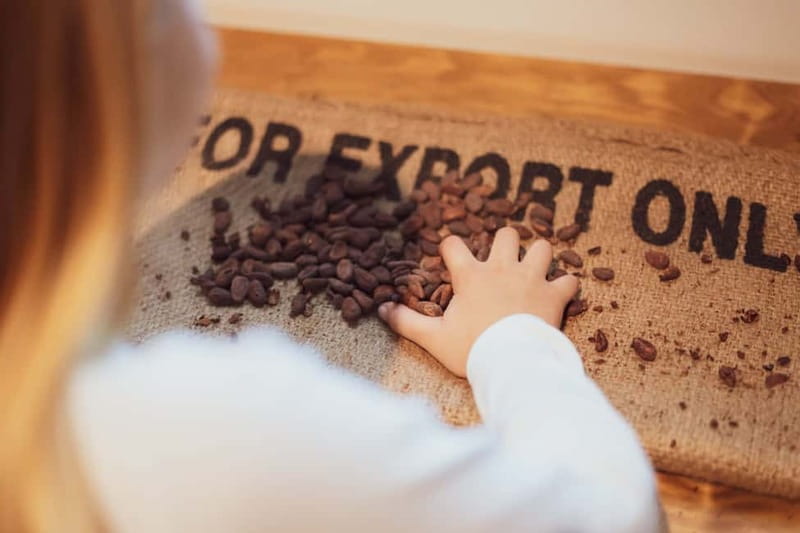
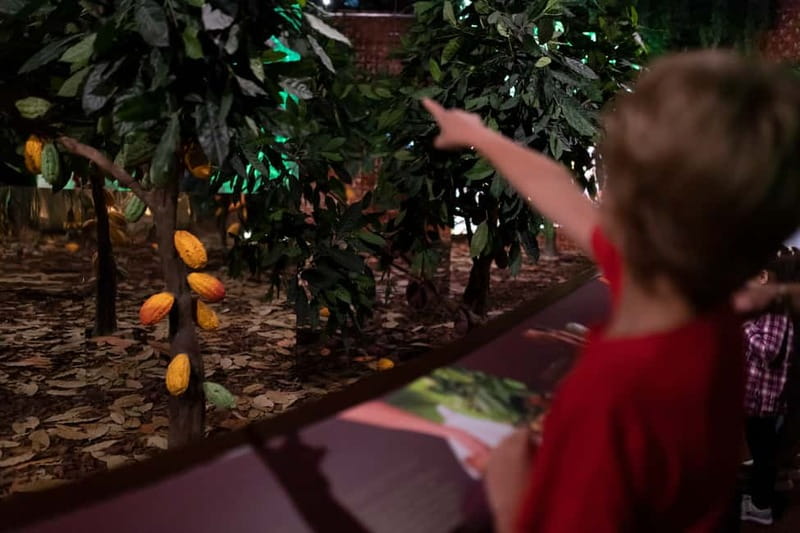
At The Chocolate Story, you do not start with a box of truffles. You start with cacao’s older role in society, especially its place in Mesoamerican rituals and ceremonies. That opening gives the visit a useful sense of scale: chocolate was not always a sweet snack, and its story began long before European factories and glossy packaging.
The exhibits trace chocolate across 5,000 years. You’ll see how cacao moved from the New World into European culture, then from royal circles into everyday shops and convenience stores. The focus is not only on taste. It also looks at chocolate’s cultural power, advertising, packaging, and changing methods of production.
I like this approach because it gives you context before the samples arrive. A tasting means more when you understand how raw cacao differs from a finished bar, and why chocolate became such a powerful commercial product.
Much of this section involves reading or listening. If you enjoy museum panels and want plenty of background, you’ll have a good time. If you prefer a fast, highly active attraction, the early galleries may feel a little slow.
More Chocolate Museums in the world:
- Lindt Home of Chocolate Museum Entry Ticket
★ 4.7 · 9,329 reviews - Choco-Story Brussels: Chocolate Museum Entrance with Tasting
★ 4.3 · 4,883 reviews - Cologne: Chocolate Museum Entrance Ticket
★ 4.4 · 2,790 reviews
Following the bean-to-bar process
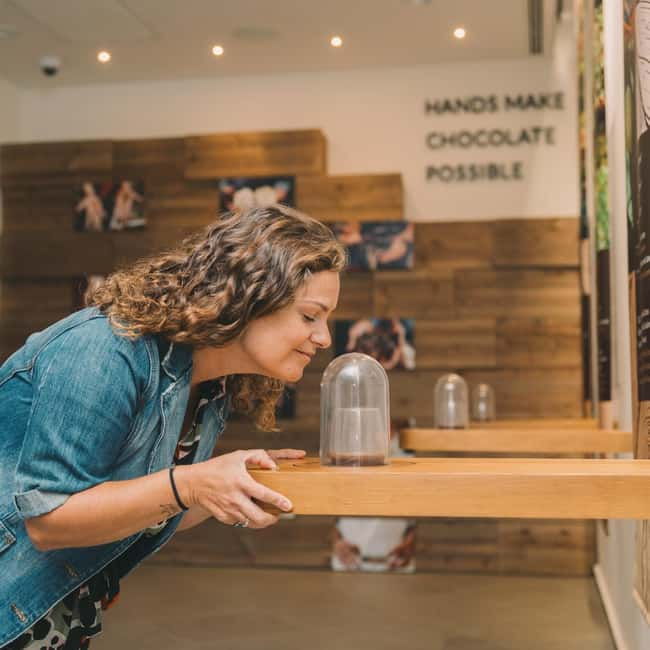
The core of the visit explains how chocolate moves from cacao bean to finished bar. You’ll learn about the stages of production and see how raw material is transformed into something smooth, sweet, and ready for sale.
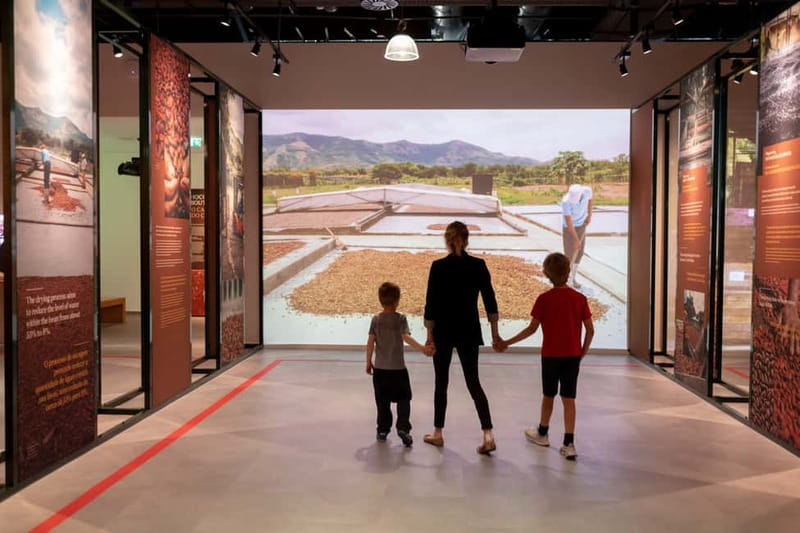
The experience uses displays, visual material, and interactive sections to make the process easier to follow. There are small bits of information throughout, so you can pick up facts in short bursts rather than read one long technical lesson.
One especially useful moment is the chance to taste 100 percent cacao. It gives you a sharp reminder that the bean itself is very different from the chocolate most people buy. You may also encounter raw cacao and other unusual flavors before reaching the sweeter artisan samples.
This is where the visit works well for families with older children. An 11-year-old should have enough reading ability and curiosity to follow the story, while younger children may be more interested in the samples and moving displays. A three-year-old can still enjoy parts of it, but the museum’s full value comes with the ability to read, listen, and follow a process.
The interactive sections add welcome variety, although the museum is not an amusement park. One chocolate game had scanning problems during a visit, and the route through the exhibits could be confusing at times. Staff helped resolve the game issue, but you should expect a museum with some interactive features, not a nonstop series of activities.
Seeing the Vinte Vinte chocolate factory
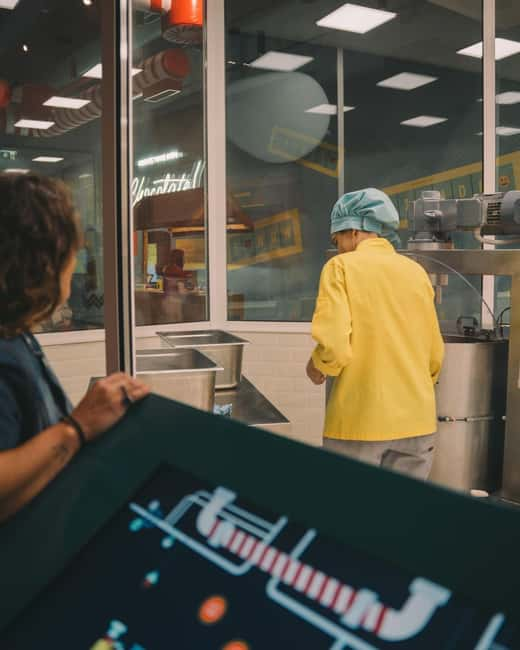
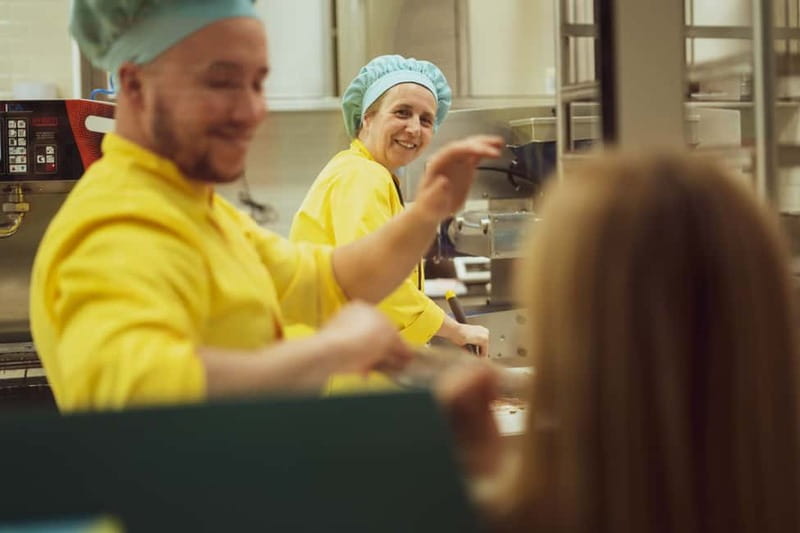
The working factory is the attraction’s biggest practical selling point. The Vinte Vinte facility lets you look into real chocolate production rather than viewing only models or historical displays.
Production takes place behind glass. That means you can watch the process, but you are not walking among the machines or handling ingredients yourself. One visitor found this part less educational than expected because the factory activity remained separated from the audience.
I think expectations matter here. If you want a behind-the-scenes factory tour with a staff member explaining each machine up close, this will feel limited. If you want to add a real production setting to a museum about chocolate, it gives the visit a useful connection to the modern industry.
The factory may not be operating every day. In particular, Sunday is a poor choice if seeing chocolate being made is your main reason for booking. Check the official website for current operating details and holiday changes before you go.
The factory section also helps explain the difference between small-batch artisan work and larger production methods. You see how the bean-to-bar idea shifts from a raw agricultural product to a branded food item, which ties neatly back to the museum’s sections on packaging and advertising.
Tasting raw cacao and 20|20 chocolate
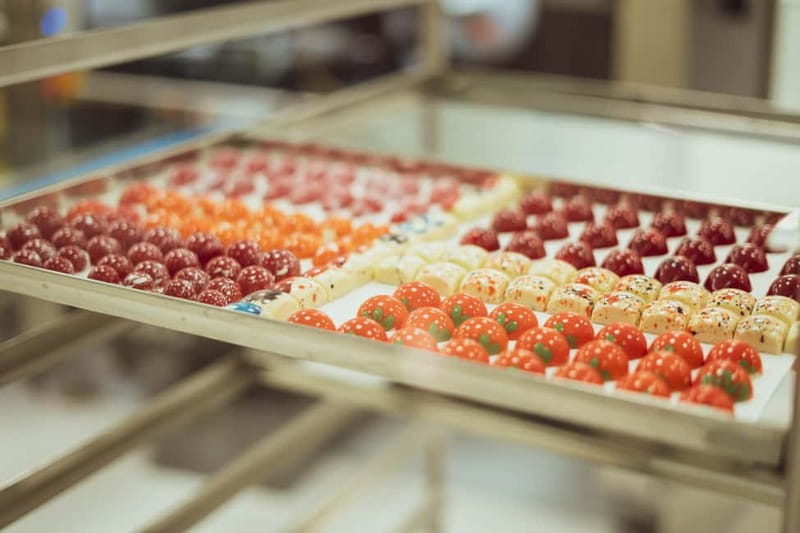
The tastings are one of the strongest parts of the experience. Your ticket includes samples from the museum’s 20|20 chocolate brand, and tasting points appear during the visit rather than being saved for one short stop at the end.
You may taste raw cacao, 100 percent cacao chocolate, artisan varieties, and other distinctive flavors. The samples are not simply free sweets. They let you compare bitterness, texture, sweetness, and the changes made during production.
Some of the most useful chocolate education happens through your own taste buds. A panel can tell you that cacao is bitter and complex, but a small sample makes the point quickly. If you normally eat milk chocolate, the stronger varieties may come as a surprise.
The amount of chocolate available can vary in how generous it feels. Some people wanted more samples, while others considered the included tasting and entry chocolate enough. You may also receive a small chocolate bar on entry, adding a pleasant extra to the ticket.
The tasting staff have been described as polite and helpful. That matters because this is the point where you may want to ask what you are tasting or compare flavors. The visit is not built around a named guide or a live talk, so the staff at the tasting area provide much of the human contact.
More Chocolate Tours around the world:
- Zurich: City Tour, Cruise, and Lindt Home of Chocolate Visit
★ 4.5 · 4,624 reviews - The Chocolatarium Chocolate Tour Experience in Edinburgh
★ 5.0 · 4,322 reviews - Award-Winning Geneva Chocolate &Old Town Tour with Boat Ride (3h)
★ 5.0 · 3,721 reviews - Melbourne: Yarra Valley Wine, Gin, Whisky and Chocolate Tour
★ 5.0 · 3,667 reviews
A museum that asks you to read, listen, and play
The Chocolate Story uses an audio guide in English, Spanish, Portuguese, and French. You can choose the language that suits you and move through the museum at your own pace.
The audio guide is helpful if you do not want to read every panel. It also gives the historical material a clearer order, particularly in areas where the physical route is not obvious. Still, some of the museum depends on written information, so you will get more from it if you are happy to spend time with the displays.
Interactive elements appear through the visit, including games and visual displays. These help break up the reading, but they are not perfectly consistent. A game failed to scan codes for one family, and the route could be confusing at points.
I would give yourself a moment to check the flow before moving on. The museum is compact enough for a 90-minute visit, but you do not need to race from one station to the next. If a display interests you, pause and read it. If the material starts to feel repetitive, move on to the tasting or factory areas.
This balance makes the attraction better for mixed groups than a traditional chocolate lecture. One person can focus on history, another on machinery, and children can look for the more playful displays.
How much value do you get for $23?
At $23 per person, this is not a cheap chocolate stop. The ticket includes museum entry, the audio guide, and chocolate tasting, so the price makes more sense if you plan to spend the full 90 minutes learning about the subject rather than simply collecting samples.
The strongest value comes from the combination of history and production. You are not paying only for a tasting, and you are not visiting only a display about an existing brand. You get a cultural story, the bean-to-bar process, an operating factory setting, and samples.
The value is weaker if you mainly want a large quantity of chocolate. The tasting portions are part of the educational experience, and the shop prices can be high. You may find plenty to browse at the end, but buying several bars or gifts can quickly add to the cost.
For families, the decision depends on the children’s ages. Older children who can follow the history and science should get more from the ticket. Younger children may enjoy the chocolate and visual elements but could lose interest during the reading-heavy sections.
The visit also offers some booking flexibility. You can reserve now and pay later, and cancellation is free up to 24 hours in advance. Those terms are useful if your Porto schedule is still changing, though they do not reduce the admission price itself.
Planning your 90-minute visit
The Chocolate Experience by 20|20 is open daily from 10:00 AM until 7:00 PM, with last entry at 7:00 PM. You can use your ticket at any time during the selected date, which makes it easy to fit around other plans in Porto.
I would allow the full 90 minutes. You can move faster if you skim the panels, but the history, tastings, interactive sections, and factory viewing deserve more than a quick walk-through.
Show your ticket directly at The Chocolate Story. Hotel pickup and drop-off are not included, so plan your own way to the museum. The attraction is wheelchair accessible, which is useful for visitors who need step-free access.
Opening hours can change on bank holidays. If the factory is important to you, check the official site before setting out, and avoid Sunday based on the stated factory schedule.
Because the ticket is flexible during the day, you can choose a quieter time if your schedule allows. One visit was pleasantly uncrowded, which made it easier to read and use the displays. No group size or fixed guide schedule is provided, so the experience may feel more like a self-guided museum than a traditional tour.
Who will enjoy The Chocolate Story most?
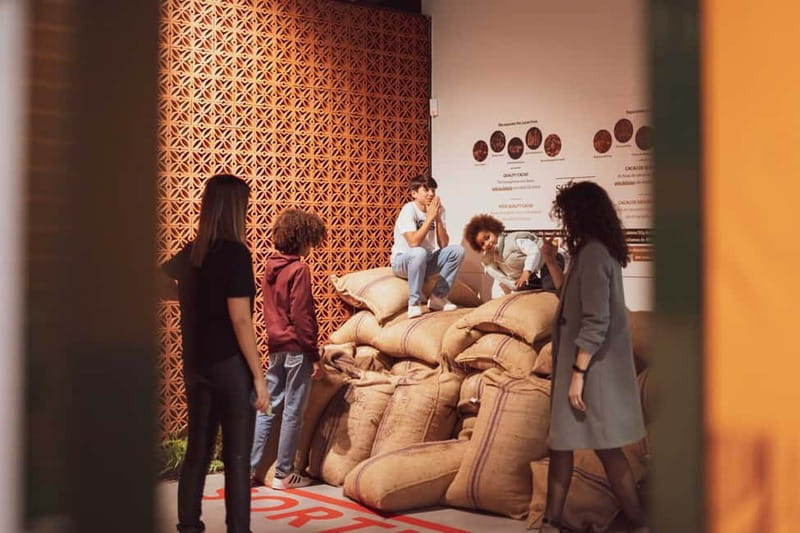
I would recommend this for anyone who likes food museums, brand history, or the science behind everyday products. It also works well as a rainy-day Porto activity because the visit combines indoor displays, samples, and a factory view.
Families with children older than about eight are likely to get the most from it. The material covers history and production in enough detail to reward curious children, while the tastings and interactive parts give them something concrete to do.
Chocolate fans should come for the production story rather than expecting a luxury tasting class. You will sample several chocolate styles, but the focus is broader: culture, trade, manufacturing, marketing, and taste.
It is less suitable if you want a fully guided, hands-on factory visit. The audio guide replaces a live guide, and the production area is behind glass. It is also less ideal for anyone who dislikes reading in museums.
Should you book Porto’s Chocolate Story?

Book it if you want a balanced chocolate experience that gives you history, production, and tasting in one visit. The strongest features are the long view from ancient cacao use to modern chocolate, the chance to see the Vinte Vinte factory, and the samples that make the lessons easier to understand.
Skip it if your priority is a large chocolate tasting, a hands-on workshop, or direct access to factory machinery. At $23, the ticket makes sense when you use the museum as a 90-minute cultural stop, not as a quick treat.
For the best fit, go on a day when the factory is operating, use the audio guide, and allow time for the written displays. If you are in Porto with older children or want a break from churches, tiles, and port wine, this is a sweet and useful change of pace.
FAQ
How long does the Chocolate Museum experience last?
The experience lasts about 90 minutes.
What are the opening hours?
The Chocolate Experience by 20|20 is open daily from 10:00 AM until 7:00 PM, with last entry at 7:00 PM.
Can I visit at any time on my selected date?
Yes. You can use your ticket at any time during the museum’s opening hours on the selected date.
What languages are available for the audio guide?
The audio guide is available in English, Spanish, Portuguese, and French.
Is chocolate tasting included?
Yes. The ticket includes a tasting of 20|20 chocolate, with samples available during the experience.
Can I see chocolate being made?
You can view the Vinte Vinte factory in operation through the museum’s viewing areas. The production area is behind glass, and the factory may not be working on Sundays.
Is the museum wheelchair accessible?
Yes. The experience is wheelchair accessible.
Are children allowed to visit alone?
No. Unaccompanied minors are not allowed.
Can I cancel my booking?
Yes. You can cancel up to 24 hours in advance for a full refund. You can also reserve now and pay later.
Freshly tempered around the world
- Zurich Open-top Tour and Chocolate and Cheese Countryside★ 3.5 · 11 reviews
- Zurich: Chocolate Tasting and Walking Tour with a Local★ 4.2 · 13 reviews
- Lindt Chocolate Museum with Cruise Transfer from Zurich★ 4.6 · 7 reviews
- Zagreb: Lake Bled and Ljubljana Day Tour with Chocolate Gift★ 5.0 · 26 reviews
- York: Introduction to Chocolate Making Experience★ 4.9 · 10 reviews
- Zaandijk-Near Zaanse Schans Chocolate making demo & tasting★ 4.8 · 13 reviews
- Yarra Valley: Wine and Chocolate tasting tour.★ 5.0 · 5 reviews
- Private Wine and Chocolate Tasting Experience★ 4.4 · 3 reviews
More Portugal Chocolate Tours to compare.
Porto: Cálem Cellar with Chocolate, Cheese, and Wine Tasting
Read our review →
Tavira Tuk Tuk Tour – Chocolate Tour – Tavira City & Chocolate
Read our review →
Porto Best of the Best Port Tasting with Artisan Chocolates
Read our review →
Porto: Chocolate Museum – Chocolate’s Delicious Journey + Tasting
Read our review →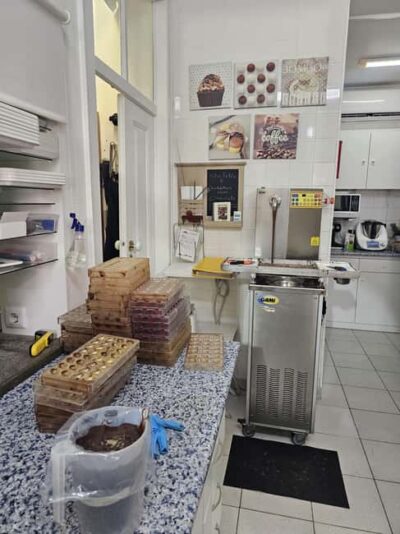

Chocolate lists with this tour