
Review · CHOCOLATE MAKING WORKSHOPS
The Art of Chocolate Making Bean-To-Bar Experience in Cape Town
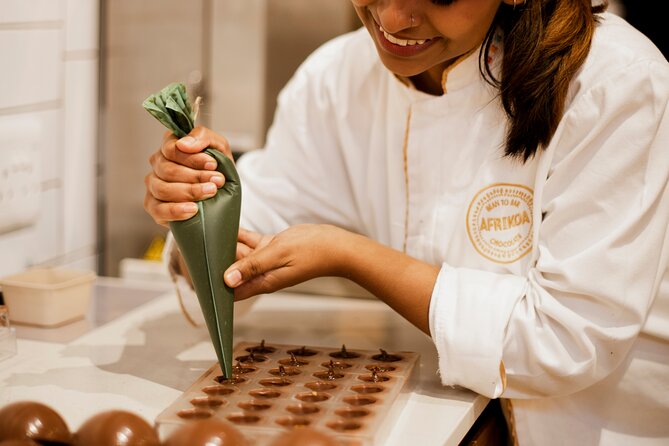
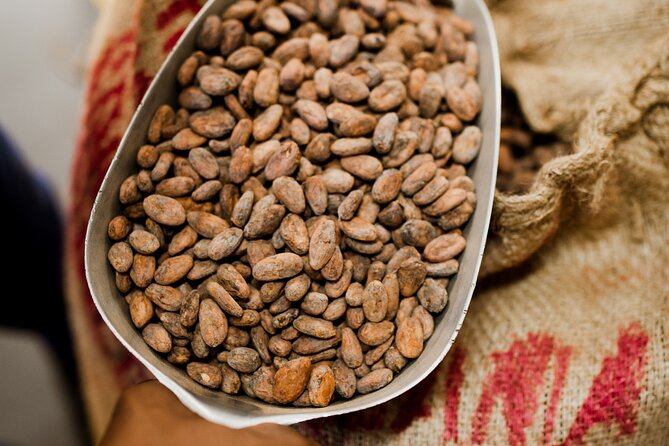
Chocolate here begins with the bean, not the candy counter. In about 25 minutes at Makers Landing, you’ll follow Tanzanian cacao through fermentation, drying, roasting, grinding, refining, conching, and tempering before tasting the finished chocolate. The single-origin focus gives the session a useful sense of place.
I like the direct connection with farmers in Tanzania, and I like that the tasting explains what you’re eating rather than simply handing you a few sweets. The price is modest, too. The catch is time: the presentation can feel rushed, so this suits a quick introduction more than a full chocolate workshop.
Key points to know before you book
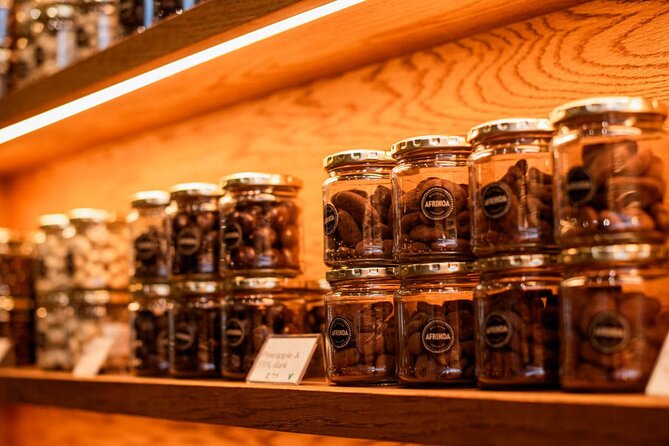
- Tanzanian cacao takes center stage: AFRIKOA sources heirloom beans directly from farmers in Tanzania and keeps the cocoa tied to one region.
- You taste the full bean-to-bar journey: The session covers fermentation, drying, roasting, grinding, refining, conching, and tempering.
- The visit lasts about 25 minutes: It is easy to fit into a day at the V&A Waterfront, but it leaves little room for a slow lesson.
- Your group has the space to itself: This is a private activity, with only your party taking part.
- Workshops go beyond the short tasting: Store-based sessions may include tempering, molding, and making personal chocolates, but they are presented as workshops and masterclasses rather than part of this basic booking.
- Wednesday timing matters: The stated hours are Wednesday from 9:00 AM to 3:30 PM.
Starting with Tanzanian cacao at Makers Landing
You meet at Makers Landing, The Cruise Terminal, Victoria & Alfred Waterfront, Cape Town. This puts the chocolate stop in a handy setting if you are already spending time around the waterfront, and the venue is near public transportation.
The activity starts and ends at the same place. That simple arrangement matters in Cape Town, where a short food stop is easier to manage when you do not need to arrange a separate drop-off or find your way to another part of town afterward.
The booking uses a mobile ticket, and confirmation is provided when you reserve. The activity is listed for Wednesdays only, from 9:00 AM to 3:30 PM, during the stated operating period of December 22, 2023, through June 18, 2026. Check the selected date carefully, since this is not a daily experience.
You also get a private format. Only your group participates, which should make it easier to ask questions or keep the pace suited to your party. Still, private does not mean lengthy. The advertised duration is approximately 25 minutes, and that is the main limit to keep in mind.
More Bean-to-Bar Chocolate Tours in the world:
- 1.5h Belgian Chocolate Workshop in Brussels (bean to bar)
★ 4.5 · 462 reviews - Bean to Bar Chocolate Workshop in Puerto Vallarta
★ 5.0 · 381 reviews - Bean to Bar Chocolate Workshop in Barcelona
★ 5.0 · 172 reviews
What single-origin chocolate means in the cup and bar
The central idea is single-origin chocolate. That means the cacao comes from one specific region rather than being blended from beans gathered in several countries. Here, the focus is on heirloom cacao from Tanzania.
For you, this makes the tasting more than a choice between dark and milk chocolate. You are being asked to notice how the place where cacao grows affects its flavor. The session presents Tanzanian cacao as having its own character, and the tasting lets you compare those notes in finished chocolate.
The supplied details do not name particular bars or list the exact tasting portions, so you should not expect a fixed menu of specific flavors. You can expect a selection of AFRIKOA chocolate, including dark chocolate and specialty bars with different flavor combinations.
That approach works well for curious eaters. If you already buy single-origin chocolate, you will have a clearer way to think about the label. If you normally choose chocolate by sweetness alone, the session gives you a short lesson in why cacao origin, processing, and recipe all matter.
Following the bean-to-bar process in seven steps
The heart of the activity is the production chain. You are introduced to the stages that take cacao from harvested bean to finished chocolate.
Fermenting and drying the beans
Fermentation is one of the first major steps after cacao is harvested. It helps develop the compounds that later become recognizable chocolate flavors. Drying then reduces moisture and prepares the beans for storage, transport, and roasting.
These early steps are easy to overlook because they happen before the bean looks or smells like chocolate. That is precisely why they add value to a short tasting. You learn that the final bar is shaped long before sugar, cocoa butter, or flavor additions enter the picture.
More Chocolate Making Workshops in the world:
- Vienna: Chocolate Workshop in Chocolate Museum w/ Tasting
★ 4.5 · 1,802 reviews - Brussels: Belgian Chocolate Making Workshop with Tastings
★ 4.7 · 1,629 reviews - Brussels: 2.5-Hour Belgian Chocolate Making Workshop
★ 4.8 · 933 reviews - Belgian Chocolate Workshop in Bruges
★ 5.0 · 660 reviews
Roasting the cacao
Roasting brings out aromas and changes the flavor of the beans. It is much like roasting coffee in the sense that heat can draw out different notes, but the details of the process are specific to cacao.
You may not spend enough time here to study roasting in a technical way. Still, it is an important part of understanding why two bars made from different beans can taste quite different even when the basic ingredients look similar.
Grinding and refining
Once roasted, cacao beans are ground. Refining then works the chocolate toward a smoother texture by reducing the size of the particles.
For a chocolate eater, this is where the process starts to connect clearly with the feel of the finished bar. A smooth piece of chocolate is not just the result of a good recipe. It also depends on how thoroughly the cocoa particles are processed.
Conching
Conching continues the work of refining and helps develop the texture and flavor of chocolate. It can soften harsh notes and produce a more polished result.
The session treats conching as part of the path from bean to bar, giving you a better reason to pay attention to texture when you taste. A bar can have appealing flavor but still feel rough or unbalanced if this stage is not handled well.
Tempering
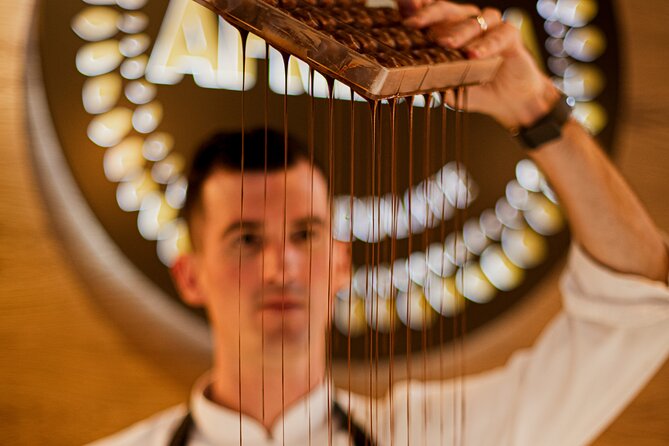
Tempering is the final technical step highlighted in the activity. It controls how cocoa butter crystals form, which affects the bar’s shine, snap, and melt.
This is also one of the skills offered in the store’s workshops and masterclasses. If you want to learn the practical side of chocolate making, tempering is the sort of process that benefits from hands-on instruction. In the basic 25-minute visit, however, you should expect an explanation and tasting rather than a long session at a workbench.
The tasting: dark chocolate, specialty bars, and African cocoa
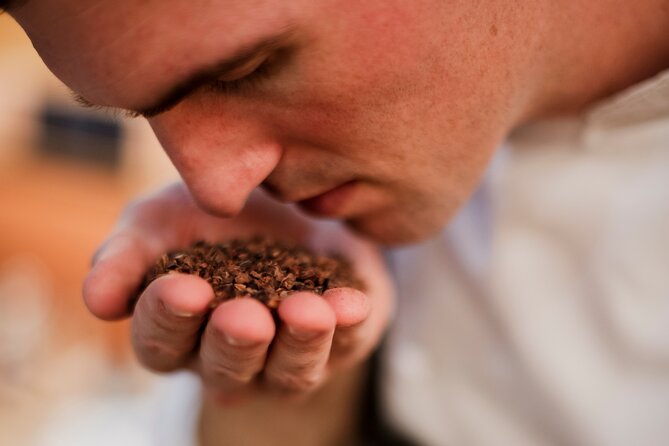
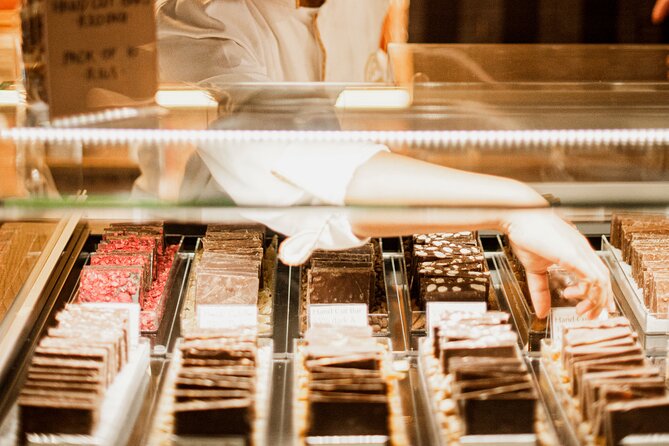
The tasting is the payoff. You sample some of AFRIKOA’s favorite chocolate and consider how the Tanzanian cacao appears in the finished product.
The selection is described as including velvety dark chocolate and specialty bars with balanced flavor combinations. The exact number of samples is not stated, so I would treat this as a guided introduction rather than a large tasting flight.
One useful feature is the connection between the tasting and the production stages. You are not simply eating chocolate and trying to guess whether you like it. You have a framework for noticing texture, bitterness, sweetness, aroma, and the way added flavors work with the cocoa.
The word overload can apply if you are particularly fond of chocolate, but the session is not designed as a long sit-down tasting. Its strength is efficiency. You get a compact look at African cocoa and a chance to taste the finished result without giving up a large part of your day.
The main weakness is pace. The published score is 3.3 from six ratings, and the clearest criticism is that the activity can feel rushed, with explanation and tasting packed into a short period. The staff are described as nice, but friendliness cannot create extra minutes. If you want detailed answers about every production stage, you may leave wishing for more time.
Why the direct farmer connection matters

AFRIKOA says it sources heirloom cacao beans directly from farmers in Tanzania. That detail gives the activity an important practical angle, because you can connect the final chocolate to a specific farming region rather than treating cocoa as an anonymous ingredient.
The bean-to-bar model also means the maker controls each step after receiving the beans. That includes roasting, grinding, refining, conching, and tempering. For you, this offers a clearer way to understand how a small producer can shape flavor through production choices.
The activity also presents sustainability, transparency, and ethical practices as key parts of the bean-to-bar movement. It does not provide detailed certification information, pricing for farmers, or a full account of the supply chain, so I would not treat the short visit as a complete lesson in ethical chocolate sourcing.
It does, however, give you useful questions to ask. You can pay attention to where the beans come from, how the maker works with farmers, and how much of the process is handled in-house. That kind of context makes a tasting more meaningful than a quick sugar stop.
The optional workshop route for serious chocolate fans
The store offers workshops and masterclasses led by expert chocolatiers. These sessions are described as hands-on and may cover tempering, molding, and creating personalized chocolates.
That is a different level of activity from the short bean-to-bar tasting. If your main goal is to make chocolate yourself, check the exact booking details before you reserve. The information provided here confirms that these sessions exist, but it does not state their duration, price, schedule, or whether they are included in the $10.79 experience.
For groups, the workshop option could be the better fit. Making personal chocolates gives families, friends, or colleagues a shared task rather than a short presentation. For a solo visitor or a couple with limited time, the 25-minute tasting is easier to add to a day at the waterfront.
I would also avoid assuming that the tasting includes molding or tempering practice. The basic experience is best understood as an explanation of the bean-to-bar process followed by chocolate tasting. The workshops are where the hands-on work belongs.
Is $10.79 good value for 25 minutes?
At $10.79 per person, the price is reasonable for a private, guided tasting in a central Cape Town location. You are paying for a compact lesson, a taste of specialty chocolate, and the chance to learn about Tanzanian cacao without committing to a long class.
The value depends on what you want. If you are already at Makers Landing and enjoy food education, the cost is easy to justify. It adds a focused activity to your waterfront plans and does not take much time.
If you expect a full chocolate-making class, the price may feel less attractive. The short duration leaves limited room for detailed instruction or hands-on practice. You should not book this expecting to temper and mold your own bars unless the reservation specifically names a workshop or masterclass.
The private format improves the value for a small group. Your party does not share the session with other participants, and that can make questions easier. Yet the group size is not stated, so I cannot tell you how many people the private booking accommodates or whether a larger party changes the price.
How to fit this into a Cape Town day

The location makes the activity simple to pair with time at the V&A Waterfront. Since you return to the same meeting point, you can continue your plans afterward without arranging transport from a different neighborhood.
I would schedule it when you already expect to be near Makers Landing. A 25-minute appointment is short enough to fit between other stops, but the Wednesday-only schedule requires planning. The stated hours run from 9:00 AM to 3:30 PM, so do not assume an evening visit is possible.
Because the activity can move quickly, arrive ready to listen and taste rather than expecting a leisurely break. If you are with children, the chocolate itself may hold their attention, but the technical explanation of fermentation, refining, and tempering may be more appealing to older children and adults.
The private setup is also useful for a group with mixed interests. Chocolate fans can ask about production, while less committed companions can enjoy a short tasting without spending half a day in a class.
Who should book this chocolate experience?
I would recommend it to you if you like food with a story, want a short activity near the waterfront, or have an interest in African cocoa and small-scale chocolate production. The Tanzanian single-origin focus gives it more purpose than a generic chocolate sample.
It also fits a first-time chocolate enthusiast. You do not need technical knowledge to follow the basic bean-to-bar sequence, and the tasting gives you a few ideas for what to notice in future bars.
You may want another option if you are looking for a long workshop, a detailed factory tour, or a broad tasting with many samples. The short schedule is the defining feature, and the rushed pace is a real consideration.
Book at least a day ahead if your plans are firm, since the activity is often reserved about 20 days in advance. Free cancellation is available if you cancel at least 24 hours before the start time. A cancellation within 24 hours is not refunded, and changes inside that window are not accepted.
Should you book it?
Book this if you want a short, affordable introduction to Tanzanian bean-to-bar chocolate at the V&A Waterfront. The direct farmer connection, single-origin focus, and explanation of the full production chain give the tasting real substance.
Skip it if you expect a substantial hands-on class. For that, ask about the separate workshops and masterclasses. The basic experience works best as a compact chocolate lesson and tasting, not as a full afternoon of making sweets.
FAQ
How much does the experience cost?
The listed price is $10.79 per person.
How long does the activity last?
The experience lasts approximately 25 minutes.
Where does the activity start?
It starts at Makers Landing, The Cruise Terminal, Victoria & Alfred Waterfront, Cape Town, 8001, South Africa.
Where does the activity finish?
It ends back at the same meeting point.
On which days and times is it available?
The stated opening hours are Wednesday from 9:00 AM to 3:30 PM.
Is this a private activity?
Yes. Only your group participates in the activity.
What chocolate-making stages are covered?
The activity explains fermenting, drying, roasting, grinding, refining, conching, and tempering of cacao beans.
Can I cancel for a full refund?
Yes, if you cancel at least 24 hours before the experience starts. Cancellations made within 24 hours are not refunded, and changes during that period are not accepted.
Freshly tempered around the world
- Zurich Open-top Tour and Chocolate and Cheese Countryside★ 3.5 · 11 reviews
- Zurich: Chocolate Tasting and Walking Tour with a Local★ 4.2 · 13 reviews
- Lindt Chocolate Museum with Cruise Transfer from Zurich★ 4.6 · 7 reviews
- Zagreb: Lake Bled and Ljubljana Day Tour with Chocolate Gift★ 5.0 · 26 reviews
- Zaandijk-Near Zaanse Schans Chocolate making demo & tasting★ 4.8 · 13 reviews
- York: Introduction to Chocolate Making Experience★ 4.9 · 10 reviews
- Private Wine and Chocolate Tasting Experience★ 4.4 · 3 reviews
- Yarra Valley: Wine and Chocolate tasting tour.★ 5.0 · 5 reviews
More Chocolate Making Workshops to compare.

Vienna: Chocolate Workshop in Chocolate Museum w/ Tasting
Read our review →
Brussels: Belgian Chocolate Making Workshop with Tastings
Read our review →
Brussels: 2.5-Hour Belgian Chocolate Making Workshop
Read our review →
Bruges: Belgian Praline and Mendiants Chocolate Workshop
Read our review →
1.5h Belgian Chocolate Workshop in Brussels (bean to bar)
Read our review →
Paris: 45-minute Chocolate Making Workshop at Choco-Story
Read our review →
York: Chocolate Bar Making Workshop at York Cocoa Works
Read our review →Chocolate lists with this tour