
Review · FRANCE
Trio Chocolaté – Tour en français – Champagne Passy-Grigny
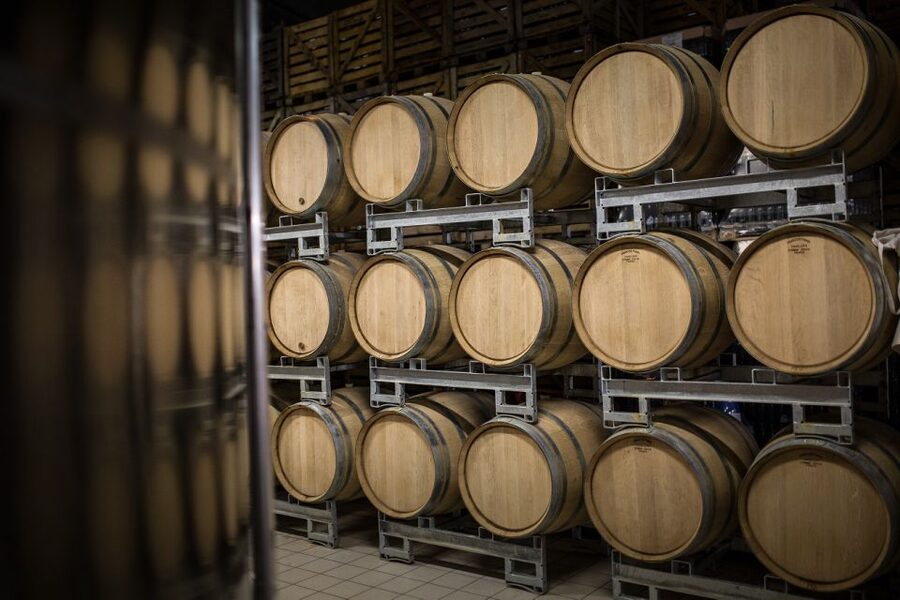
The best part of this short tour is the link between old village winemaking and today’s Champagne production. At Champagne Dom Caudron in Passy-Grigny, you’ll see the first press used by local growers and compare it with the modern vat house before sitting down to pair three Champagnes with three chocolates.
I like the clear, compact format, and I like that the tasting is built around food rather than a line of unrelated pours. The main consideration is simple: the tour is in French, lasts only 45 minutes, and the winery is kept at 12°C, so bring a jacket and expect a brisk introduction rather than a long cellar visit.
Key points to know before booking
- The village connection: Learn how Passy-Grigny growers came together in 1929 around Aimé Caudron’s vision and the Meunier grape.
- Old and new side by side: See the first local press alongside the current modern vat house.
- Three useful pairings: Taste three Champagnes with three chocolates, giving the final tasting a clear structure.
- French-language guiding: The live tour guide speaks French, so basic French will help you follow the explanations.
- Short and practical: The 45-minute format suits a busy Champagne itinerary, but leaves little time for lingering.
- Easy planning: The winery is wheelchair accessible, and cancellation is free up to 24 hours before the start time.
A Champagne visit rooted in Passy-Grigny
Passy-Grigny sits in the Marne Valley, one of the areas associated with Champagne production. This is not presented as a grand château visit or a long countryside excursion. It is a focused look at how one Champagne house connects local growers, grape varieties, pressing, vats, and tasting.
The story begins with Aimé Caudron, a priest from the village who saw potential in bringing local winegrowers together. In 1929, he gathered the growers and helped shape the cooperative tradition linked with what is now Champagne Dom Caudron.
That detail gives the visit a useful human scale. Champagne can seem like a world of famous labels and expensive bottles. Here, you get a reminder that its production also depends on village growers and shared local effort.
The Meunier grape is central to this story. Along with Chardonnay and Pinot Noir, Meunier is one of the principal grape varieties used in Champagne. The tour gives you a chance to learn how the different grapes contribute to the finished wine, rather than treating Champagne as a single, simple recipe.
More Wine and Chocolate Tours in France
- Passy-Grigny: Chocolate and Champagne Tasting Tour
★ 4.8 · 284 reviews - Libourne: Winery Tour with Wine and Chocolate Tasting
★ 4.9 · 74 reviews - tasting workshop of 6 to 8 wines with charcuterie chocolate cheese
★ 5.0 · 48 reviews
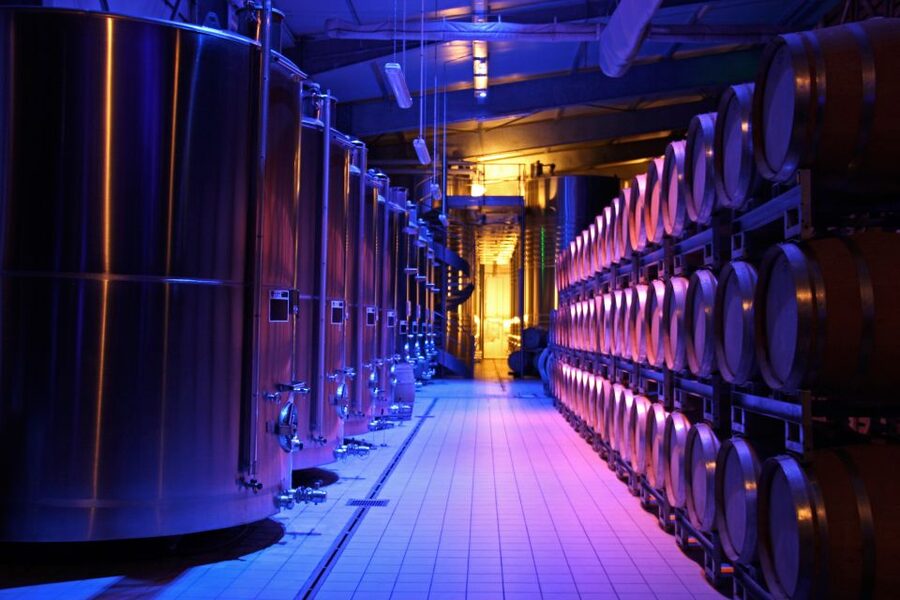
Seeing the first press and the modern vat house
The most interesting visual contrast comes between the old press and the newer production equipment. You’ll see the first press used by the Passy-Grigny vine growers, then learn how the current modern vat house handles the next stages of production.
That comparison matters. A Champagne tour can easily become a list of technical terms, but old and new equipment gives those explanations something concrete. You can picture the scale and method of earlier village production, then compare it with the controlled facilities used today.
The visit is aimed at both newcomers and people who already know a little about wine. If you are starting from scratch, the guide’s explanations should help you understand the basic path from grape to bottle. If you already know Champagne, the local history and focus on Dom Caudron’s production may give the tour more interest than a general tasting alone.
You should keep your expectations measured. The information provided does not promise a full view of every stage of Champagne making or access to every part of the production site. The strength of this visit is its clear story: local growers, grape varieties, pressing, the vat house, and tasting.
What the 45-minute route feels like
At 45 minutes, this is a tidy addition to a day in the Marne Valley. You can fit it into a larger schedule without giving up half a day, which is useful if you plan to visit more than one village or winery.
The tour starts with the production story. A French-speaking guide explains the roots of the house and the role of Passy-Grigny. You’ll then move through the history and equipment, including the older press and the current vat house.
The pace is likely to be steady. There is enough time for explanations and a final tasting, but not enough for a slow, unstructured wander. I see that as a benefit if you want the main points without a long technical lecture. It is less suitable if your ideal winery visit means hours among the vines, a large production complex, or a long conversation over several bottles.
Starting times vary, so check availability before you plan the rest of your day. A fixed 45-minute visit is easy to place on an itinerary, but a late booking or an awkward start time could affect meals and transport between villages.
The tour is conducted in French. That is the most important practical point. If you understand French well, you should be able to follow the guide’s explanations directly. If your French is limited, you may still appreciate the equipment and tasting, but the history and production details will be harder to catch. The supplied information does not indicate that translation or another language is available.
The tasting: three Champagnes and three chocolates
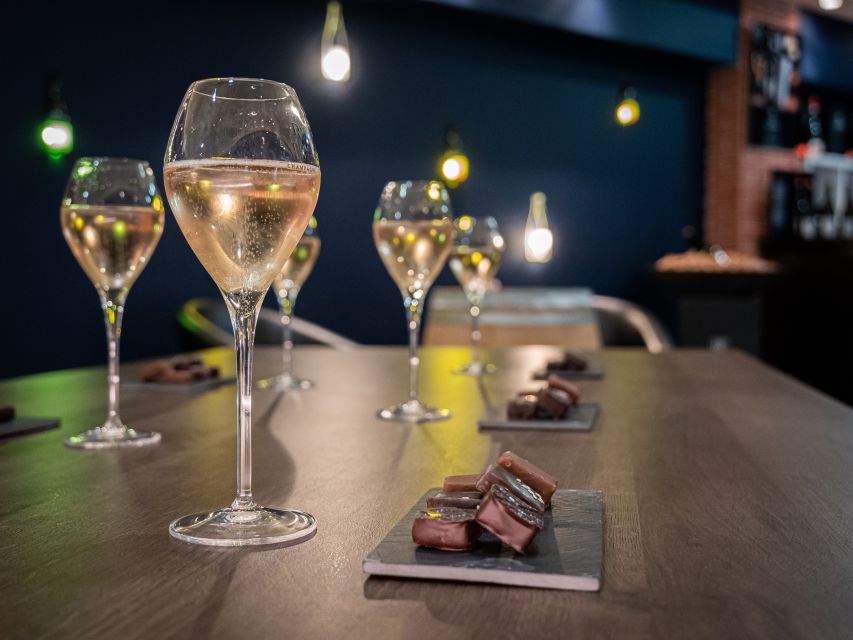
The final tasting is the reward for the production visit. You’ll taste three different Champagnes, each paired with a different chocolate.
That structure is more useful than simply sampling three glasses. Chocolate changes how you notice sweetness, acidity, fruit, bitterness, and texture. You may find that one Champagne feels sharper beside a particular chocolate, while another seems rounder or more balanced. The point is not to decide which pairing is universally best. It is to notice how food changes the wine.
This also makes the tasting friendly to beginners. You do not need a trained palate to compare three wines and three chocolates. Start by tasting a little Champagne on its own, then take a bite of chocolate and try the wine again. You’ll get more from the pairing if you slow down for those two comparisons.
The tasting is still short, so do not expect a full wine course. The available information does not specify the Champagne styles, grape percentages, vintages, or chocolate varieties. If those details matter to you, ask the French-speaking guide during the visit.
The tasting also explains why the experience is not suitable for pregnant women. The tour includes Champagne sampling, not just a production demonstration. If you do not drink alcohol, the chocolate portion may still appeal, but no nonalcoholic tasting option is stated.
Same cocoa, a different bite:
- Paris: Entrance Ticket to the Chocolate Museum
★ 4.1 · 1,105 reviews - Paris French Sweets Tasting Tour with Pastries and Chocolates
★ 4.5 · 947 reviews - A Morning in Paris Food Tour: Croissants, Baguettes & Chocolate
★ 5.0 · 556 reviews - Saint-Germain: Gourmet Chocolate & Pastry Walking Food Tour
★ 4.8 · 495 reviews
Why the Meunier story adds value
Meunier is often less familiar to casual wine drinkers than Chardonnay or Pinot Noir. That makes the local story useful. The house traces its roots to a 1929 gathering of Passy-Grigny growers connected with Aimé Caudron and the Meunier grape.
You’ll learn about the different grape varieties used in Champagne and how they contribute to production. The experience does not promise a specialist lecture on every vineyard or vintage, but it gives you a better foundation for tasting Champagne with more attention.
This village-based background also keeps the visit tied to place. You are not simply drinking a famous style in a generic tasting room. You are learning about a house born from local growers and a cooperative idea. For me, that is the part that gives the tour a stronger sense of purpose.
The name Dom Caudron reflects that local connection. Aimé Caudron’s role in bringing growers together is not just a decorative anecdote. It explains why the house matters to the village and why the tour begins with its history before moving into production.
The cold cellar and what to wear
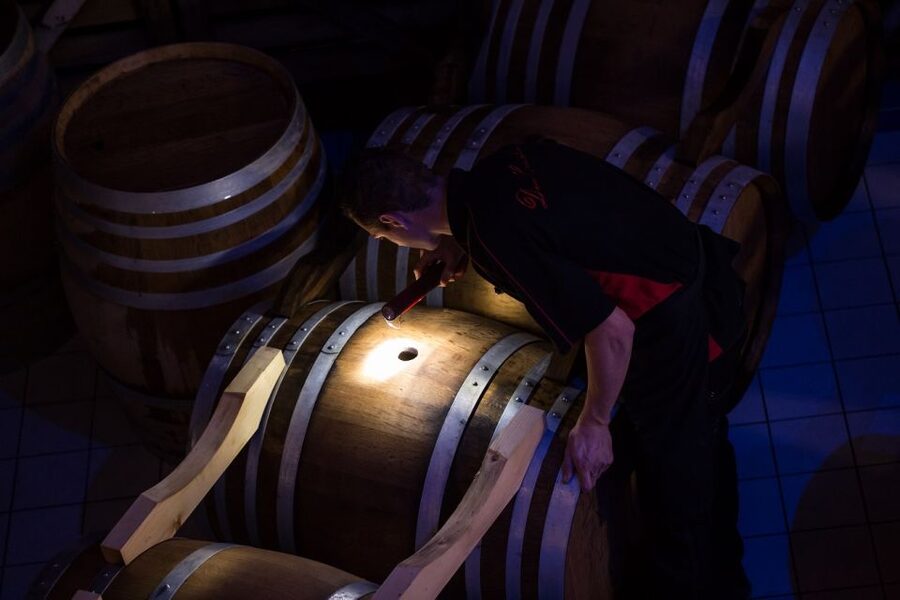
The winery is kept at 12°C. That is cool enough to make a jacket worthwhile, even on a warm day in the Marne Valley.
Do not treat this as a minor note. You may be comfortable outside and then feel chilled once the visit moves indoors. A light jacket or warm layer is the easiest fix. Comfortable shoes are also sensible for any winery visit, though no special footwear requirement is given.
The temperature has a practical reason in a wine setting, but the key point for you is comfort. You’ll pay more attention to the guide and the tasting if you are not thinking about cold hands.
Price and practical value at $31
At $31 per person, the experience sits in a reasonable range for a short Champagne visit that includes a guided tour, three Champagne tastings, and three chocolates.
The value depends on what you want from a winery stop. If you mainly want to drink Champagne, the price may feel high for three samples and a 45-minute visit. If you want context, production history, and a structured pairing, the price is easier to justify.
I especially like that the tasting is included rather than left as an optional extra. You pay for a complete small experience: the story of the house, the production spaces, and the food pairing. That makes budgeting easier.
The short duration also has value. A full winery visit can take up much of a day, while this one leaves room for other stops. The tradeoff is that you will not get the same amount of time for questions or leisurely tasting as you would on a longer tour.
Free cancellation up to 24 hours before the visit gives you some useful flexibility. You can also reserve now and pay later, which helps if you are still arranging several Champagne stops. Check the available start times before booking, since the visit may need to fit around transport, lunch, and other appointments.
Who will enjoy this most
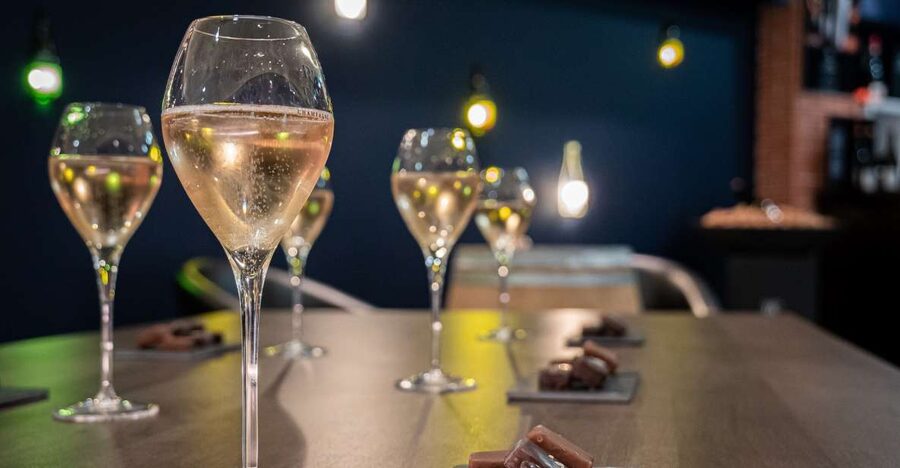
I would choose this tour if you want an introduction to Champagne that has a clear beginning, middle, and end. The production history gives you context, the old and modern presses give you something to see, and the chocolate pairing makes the tasting easy to follow.
It should suit:
- First-time Champagne visitors who want a basic explanation of how the wine is made.
- Wine drinkers curious about Meunier and the other grape varieties used in Champagne.
- Couples and small groups looking for a short tasting with a food pairing.
- People building a full day around Passy-Grigny and the Marne Valley.
- Visitors who can follow a guided tour in French.
- Anyone who prefers a focused visit over a long, formal wine seminar.
It may not suit you if you need an English-language tour, want a lengthy cellar experience, or are looking for a nonalcoholic activity. It is also not suitable for pregnant women because Champagne tasting is part of the experience.
The visit is wheelchair accessible, which removes one common concern when choosing a winery stop. Still, if you have particular mobility needs, it is sensible to confirm the details when booking, since the available information does not describe the exact route or facilities.
How to get more from the visit
Read up on the three main Champagne grapes before you go: Meunier, Chardonnay, and Pinot Noir. You do not need a technical lesson. Just knowing the names will make the guide’s explanation easier to follow.
During the production section, pay attention to the contrast between the old press and the modern vat house. Those two points help you understand how the house has changed while staying linked to local growers.
At the tasting, do not rush the chocolates. Taste each Champagne first, then pair it with its chocolate. Think about the change in texture and finish rather than trying to identify every flavor.
If your French is good enough for conversation, ask about the three Champagne styles being poured and the role of Meunier in each one. The available details do not identify the wines, so the guide is the best source for those specifics on the day.
Finally, bring that jacket. It is the simplest way to make a cool winery visit much more comfortable.
Should you book Trio Chocolaté?
Book it if you want a short French-language introduction to Champagne with a strong local story and a tasting that adds three chocolate pairings. The old press, modern vat house, and Aimé Caudron connection give the visit more substance than a quick glass at a bar.
Skip it if you need an English guide, want a long technical tour, or are avoiding alcohol. At $31, it offers fair value for a compact guided visit with six tasting elements, but its appeal depends on appreciating the explanation as much as the Champagne itself.
For the right visitor, this is a smart stop in Passy-Grigny: focused, local, easy to fit into a day, and finished with a pleasant bit of chocolate.
FAQ
Where does the Trio Chocolaté tour take place?
The tour takes place at Champagne Dom Caudron in Passy-Grigny, in the Grand Est region of France and the Marne Valley.
How long does the experience last?
The guided experience lasts 45 minutes.
What language is the tour in?
The live tour guide speaks French, and the visit is conducted in French.
What is included in the price?
The experience includes the guided tour, a Champagne tasting, and a chocolate tasting.
How many Champagnes and chocolates do I taste?
You taste three different Champagnes paired with three different chocolates.
Is the winery accessible by wheelchair?
Yes. The experience is listed as wheelchair accessible.
Is cancellation available?
Yes. You can cancel up to 24 hours in advance for a full refund. You can also reserve now and pay later.
What should I wear?
The winery is kept at 12°C, so you should bring or wear a jacket.
Is the experience suitable for pregnant women?
No. The experience is not suitable for pregnant women because Champagne tasting is included.
Freshly tempered around France
- Private Wine and Chocolate Tasting Experience★ 4.4 · 3 reviews
- Wine and Chocolate experience★ 4.6 · 3 reviews
- Wine and chocolat tasting at Chablis.★ 4.9 · 5 reviews
- Paris Sweet & Chocolate Family Treasure Hunt★ 5.0 · 37 reviews
- Molded Bonbons Chocolate making class in Paris (collective)★ 4.5 · 20 reviews
- Pure Chocolate Tour in Paris★ 5.0 · 20 reviews
- Private Wine and Chocolate Tasting in Paris★ 4.5 · 4 reviews
- Expert-Led Sweet Secrets of Paris Pastry & Chocolate Marathon★ 5.0 · 3 reviews
More France Chocolate Tours to compare.
Paris: Entrance Ticket to the Chocolate Museum
Read our review →
Paris French Sweets Tasting Tour with Pastries and Chocolates
Read our review →
A Morning in Paris Food Tour: Croissants, Baguettes & Chocolate
Read our review →
Saint-Germain: Gourmet Chocolate & Pastry Walking Food Tour
Read our review →
Paris: 45-minute Chocolate Making Workshop at Choco-Story
Read our review →
Paris Chocolate, Macaron & Pastry Food Tour: 10 Gourmet Tastings
Read our review →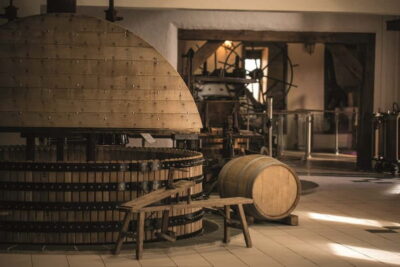
Passy-Grigny: Chocolate and Champagne Tasting Tour
Read our review →
Paris Pastry Tour – Croissants, Macarons & Iconic French Desserts
Read our review →Chocolate lists with this tour