
Review · FRANCE
Paris: Entrance Ticket to the Chocolate Museum
Chocolate gets the full museum treatment at Paris’s Le Musée Gourmand du Chocolat, where cacao travels from ancient Olmec, Maya, and Aztec rituals to today’s glossy pralines. The best part is that this is not a look-but-don’t-touch museum: you taste samples as you go and watch chocolate being turned into sweets.
I like the clear historical story and the family-friendly treasure hunt. I also like the samples from different cacao-growing regions, including Costa Rica, Peru, and Vanuatu. The main caution is value: at $21 per person, the museum may feel expensive if you hurry through it, and the hot chocolate costs extra.
Key points at a glance
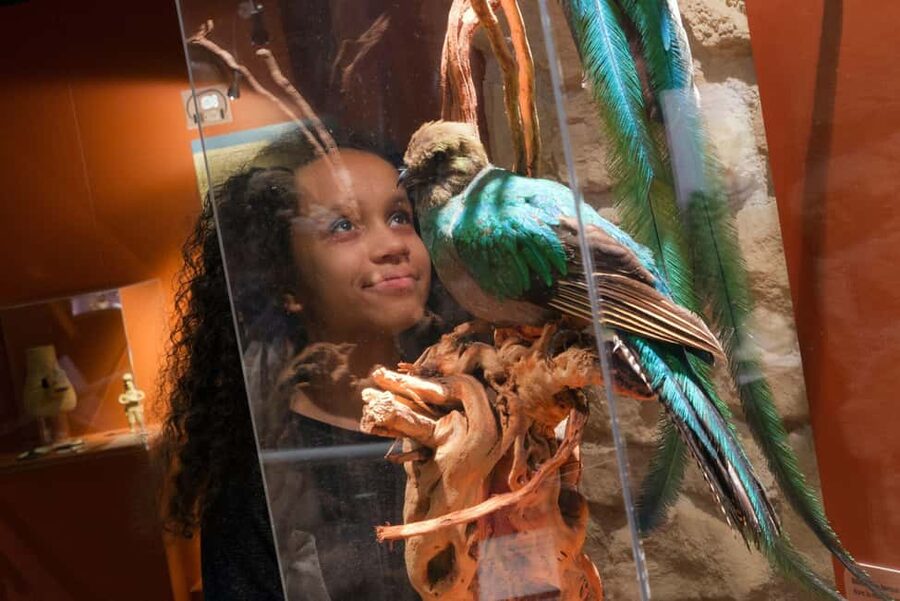
- Four thousand years of cacao history: Follow chocolate from ancient rituals to modern production, with displays on the Olmecs, Mayas, Aztecs, and European history.
- Tasting is built into the visit: Sample chocolate made on-site, including praliné and ganache, and compare cacao from several parts of the world.
- Two Meilleurs Ouvriers de France: A virtual demonstration shows how chocolate gains its smooth, shiny outer coating.
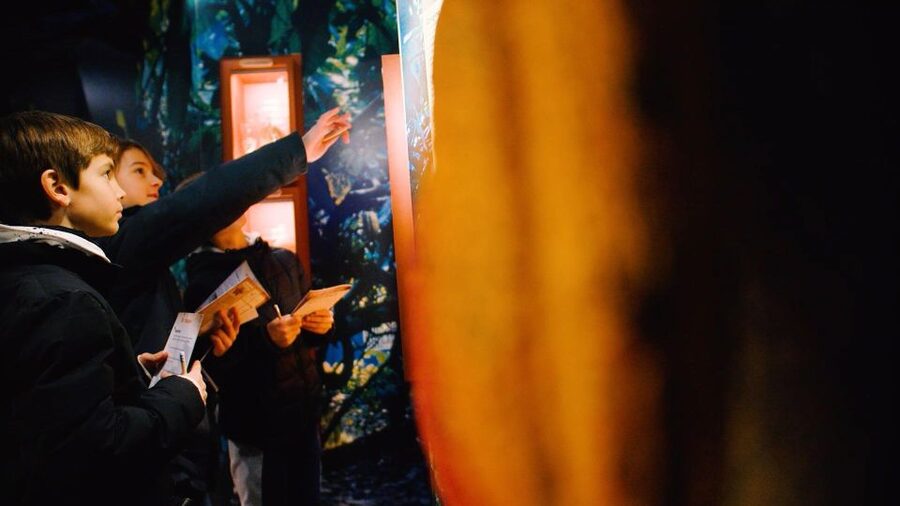
- Good for children: A treasure hunt and activity booklet give younger visitors something to do while adults read the displays.
- Plan for extra time if you want the full story: A quick visit can take under an hour, while careful reading and the demonstrations can stretch the stop to several hours.
- Useful practical detail: The museum is at 28 Boulevard de Bonne Nouvelle, is wheelchair accessible, and does not allow luggage or large bags.
A chocolate museum with something to eat
Many museums explain how an ordinary object came to be. This one explains it with chocolate in your hand. The route through the museum is self-guided, so you can move at your own pace, pause at the displays, and take your time at the tasting points.
The museum occupies about 850 square meters, or 2,789 square feet. That is enough room for more than 1,000 chocolate-related objects, historical displays, videos, demonstrations, and a shop. It is not a grand national museum that takes half a day by default. It is a focused attraction, and the quality of your visit depends on how much you enjoy reading, tasting, and looking closely.
I would allow at least an hour if you want more than a quick browse. If you read the panels, follow the historical sequence, watch the demonstrations, and spend time with the samples, you could stay for two or three hours. One important point: some people move through the museum in less than 30 minutes, so do not book it expecting a large, all-day attraction.
More Chocolate Museums in France
- Paris: 45-minute Chocolate Making Workshop at Choco-Story
★ 4.4 · 444 reviews - Choco-Story Paris – The Chocolate Museum
★ 4.0 · 183 reviews - Paris : 45 min Chocolate Workshop at Choco-Story Paris
★ 4.0 · 51 reviews
Starting with Olmecs, Mayas, and Aztecs
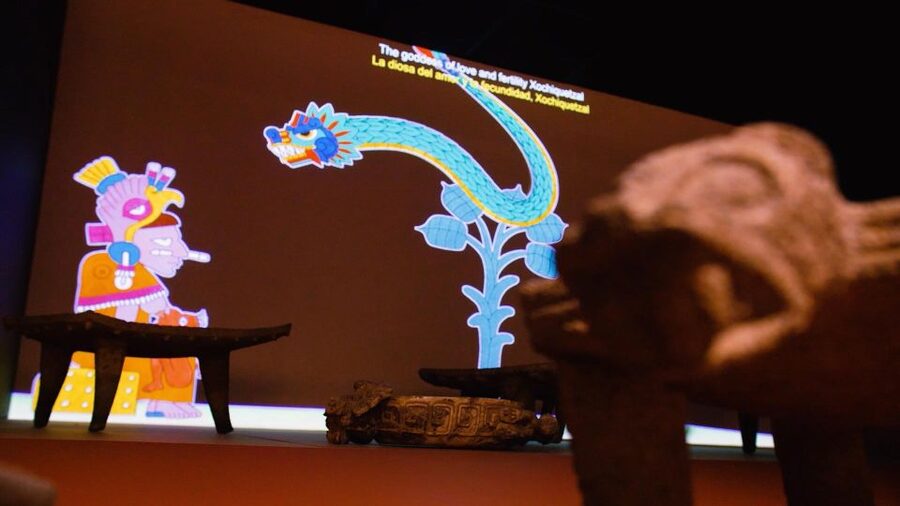
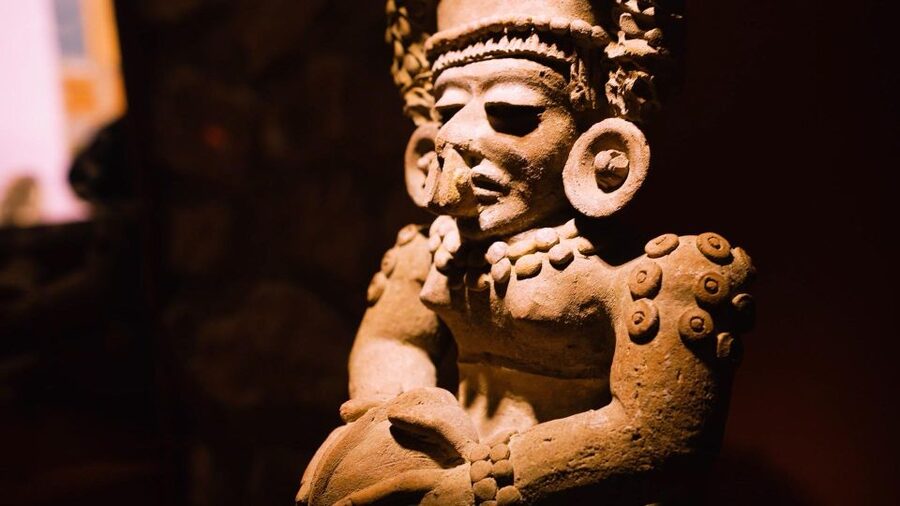
The first part gives chocolate a proper origin story. Cacao was not simply a sweet treat in ancient Mesoamerican cultures. The displays explain how it played a role in rituals and mystical practices, helping you understand why the bean mattered before Europeans turned it into a confection.
This section is useful because it corrects a common modern assumption. Chocolate did not begin as a candy bar or a dessert. It began as a bitter drink with cultural and ceremonial importance. The museum follows that change through objects, panels, and visual displays rather than treating the past as a short introductory paragraph.
The descriptive panels are in English, French, and Spanish. That makes the self-guided route fairly easy to follow, even without the optional audioguide. If you prefer listening to reading, an audioguide is available at the welcome desk for €3 per person in French, English, German, Dutch, Spanish, Italian, and Portuguese.
For families, the historical section works best when children have the activity booklet or treasure hunt. Without something to do, younger children may lose interest while adults read about cacao cultivation and ancient rituals. With it, the museum becomes more active and easier to share as a family.
Columbus, Montezuma, and chocolate’s European arrival
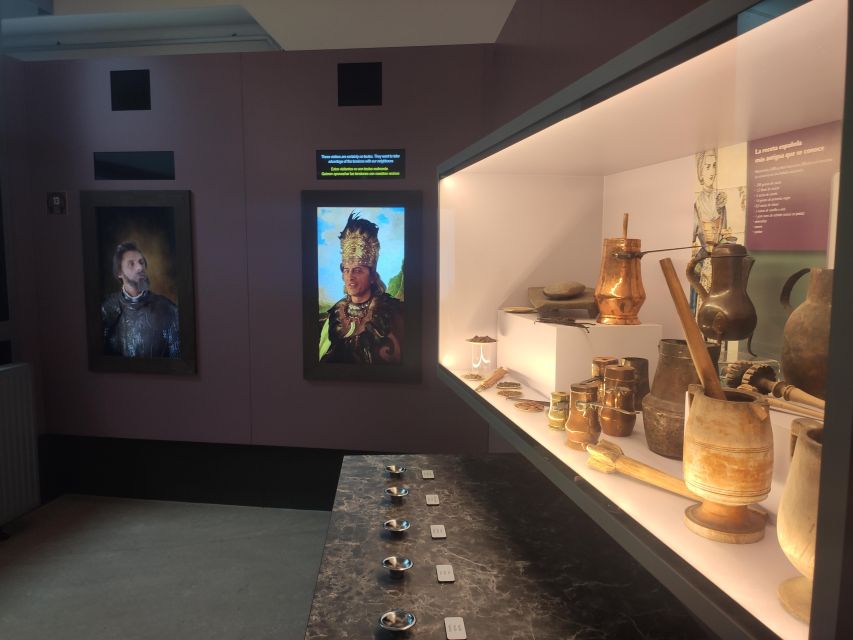
The story then moves into the 1500s, when cacao reached Europe after contact with the Aztec world. The museum explains the connection with Montezuma and the early European response to the drink.
One amusing detail is that Christopher Columbus was the first European to taste the drink known as tchocoatl, but he did not like it and paid little attention to chocolate. That small historical twist helps the story feel human. A different first impression might have changed the path of chocolate in Europe, but fortunately the drink found more enthusiastic supporters later.
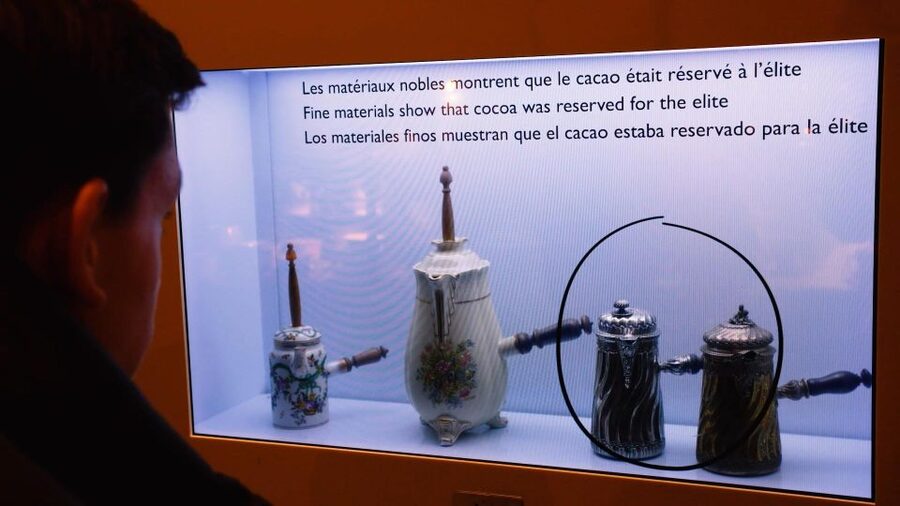
This part also shows that chocolate’s journey was not a single dramatic arrival. The ingredient had to be understood, adapted, sweetened, and developed into forms more familiar to modern tastes. The museum is at its best when it connects the objects in its cases with that gradual change.
You will see historical containers, utensils, and chocolate-related objects. The displays are especially appealing if you enjoy food history, design, or old kitchen equipment. One of the quieter pleasures is looking at the decorative chocolate tools and serving pieces, not just the edible samples.
From cacao bean to glossy chocolate
The modern production section explains how chocolate changed as the trade and manufacturing process became more streamlined. You learn what happens between the cacao bean and the finished sweet, and why modern chocolate has the texture and shine people expect.
The virtual demonstration with two Meilleurs Ouvriers de France is the technical centerpiece. These French craftspeople hold one of the country’s highest professional distinctions, and the presentation focuses on the secret behind chocolate’s smooth, shiny coating. It is a useful lesson in technique rather than a long live cooking class.
The word virtual matters. This is not the same as standing beside a chef at a worktable for an extended workshop. The presentation gives you a clear look at the process, but the format may disappoint you if you expect a hands-on class or a long, live performance.
Scheduling and crowd levels can affect how easily you see the demonstration. If a school group is present, you may have trouble finding a good place to watch. I would not rush through the earlier displays if the demonstration is important to you. Check the timing when you arrive and plan to return to the demonstration area if needed.
More Chocolate Museums in Paris:
- Lindt Home of Chocolate Museum Entry Ticket
★ 4.7 · 9,329 reviews - Choco-Story Brussels: Chocolate Museum Entrance with Tasting
★ 4.3 · 4,883 reviews - Cologne: Chocolate Museum Entrance Ticket
★ 4.4 · 2,790 reviews - Vienna: Chocolate Workshop in Chocolate Museum w/ Tasting
★ 4.5 · 1,802 reviews
Tasting praliné, ganache, and cacao from around the world
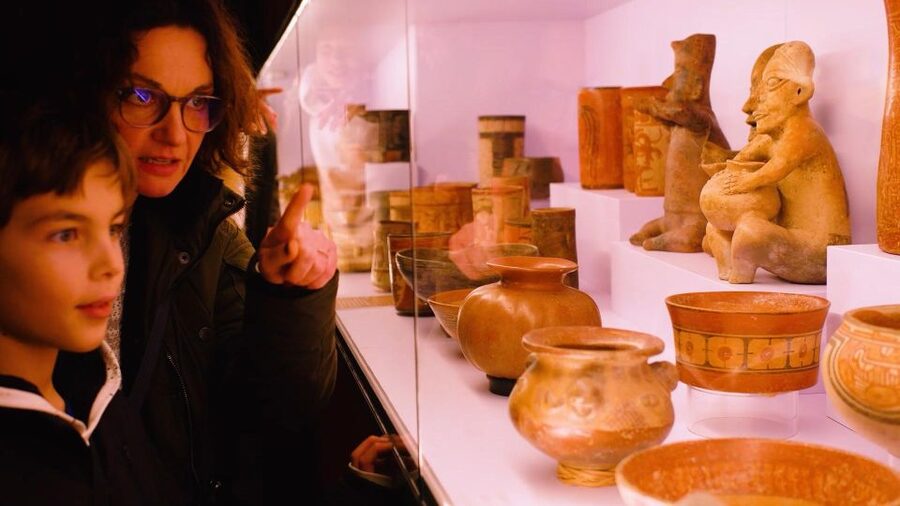
The tastings give the museum its strongest practical appeal. You are not only told that cacao varies by region. You can compare samples and notice how the flavor changes.
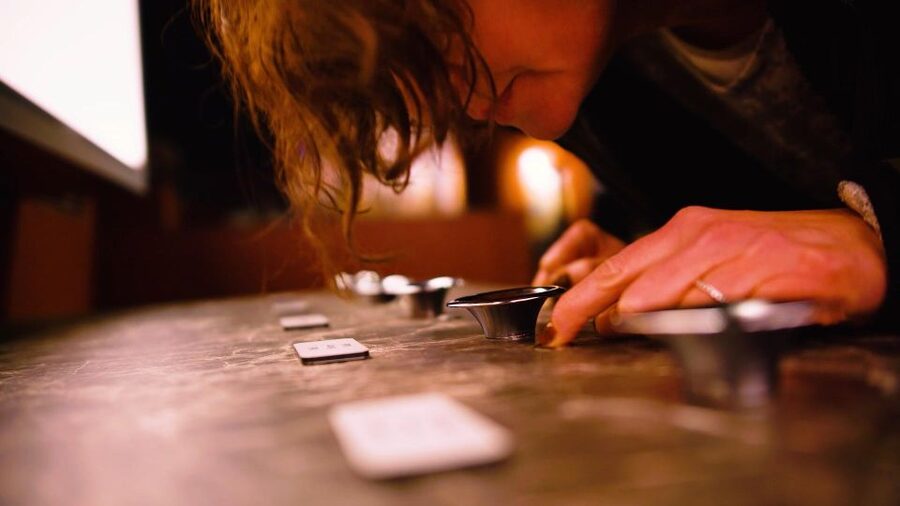
The experience includes chocolate products made on-site, including praliné and ganache. You can also taste chocolate associated with different cacao-growing regions, such as the milky smoothness of Costa Rican chocolate, the fruity character of Peruvian chocolate, and the sweet aromas linked with Vanuatu cacao.
This is a better approach than handing out one generic square and calling it a tasting. It encourages you to pay attention to texture, aroma, sweetness, and finish. Even if you are not a serious chocolate expert, you can start to notice why two chocolates that look similar can taste quite different.
The amount available may feel generous, and some people describe the samples as close to unlimited during the visit. Still, the official inclusion is chocolate samples, not a full meal. Go ready to taste, but do not plan to replace lunch with chocolate.
Hot chocolate is a separate point. It is not included in the entrance ticket and costs €3 per cup. The drink is often treated as one of the highlights of the visit, but you should budget for it separately. If you have already sampled a great deal of chocolate, you may find the extra drink too much. If you like thick, sweet hot chocolate, it can be a satisfying finish.
Why the family activities matter
This is one of the better Paris museum choices for a family that cannot face another room of silent paintings. Children receive a treasure hunt or activity booklet that sends them through the displays in search of answers and details. A prize at the end gives the hunt a clear purpose.
The activity is especially useful for children around primary-school age, though older children can enjoy the tastings and unusual objects too. The museum is not only for children. Adults get the historical material, production details, and regional tasting, while children have a reason to stay engaged.
I would still set expectations before arriving. This is a museum about chocolate, not a full chocolate-making workshop. Children may see how sweets are produced and learn about the process, but the standard admission does not guarantee a hands-on class. Some past visitors have wished they had known more about workshop options before arriving.
The chocolate samples also make the visit feel less formal. A child who is not interested in ancient history may still pay attention when the next tasting is nearby. That is a small but effective way to keep the whole family moving through the museum.
How long should you allow?
The museum is sold as a one-day admission, meaning your ticket is valid for the day and you should check the available starting times when booking. That does not mean you need to spend an entire day inside.
Your visit length depends on your style:
- If you skim the displays and focus on tasting, you may finish in under an hour.
- If you read the panels, watch the virtual demonstration, and follow the children’s activity, allow around one to two hours.
- If you take your time with the history, objects, films, tastings, and shop, you may stay closer to three hours.
The last admission is at 4:30 PM. Do not arrive near closing and expect a relaxed visit, especially if you want the demonstration and tastings. The museum works well as a rainy-day stop, a break from major monuments, or a family activity between other sights in central Paris.
The location and practical details
The museum is at 28 Boulevard de Bonne Nouvelle, 75010 Paris, in the Ile-de-France region. The address makes it easy to combine with other time in Paris, though the experience itself is self-contained and does not include transportation or a guide leading you through the city.
Large bags and luggage are not allowed. If you are changing hotels or carrying full suitcases, this is not a convenient stop until your bags are stored elsewhere. A small day bag is the sensible choice, but the restriction means you should check your plans before setting out.
The museum is wheelchair accessible. The displays, tastings, and demonstrations are indoors, which also makes this a useful option during poor weather. The information panels are in English, French, and Spanish, while the audioguide offers a wider language choice for an additional €3.
Staff friendliness is another practical plus. The museum’s team can help at the welcome desk, and English is available. That matters in a self-guided museum because a quick question about the tasting points or demonstration timing can save you from missing something.
Is $21 a fair price?
At $21 per person, the ticket is not a bargain if you only want a cup of hot chocolate and a handful of sweets. You can find chocolate shops throughout Paris, and the visit is small enough that a fast stop may feel short for the price.
The value improves when you use the museum as a full experience. You receive admission, chocolate samples, historical displays, the virtual demonstration, and the children’s treasure hunt. Families can get more from the ticket because the activity booklet gives children a reason to stay longer, and the museum works for both adults and children.
I would also factor in the cost of the audioguide and hot chocolate. The audioguide adds €3 per person, and hot chocolate is another €3 per cup. Neither is essential, but both can make the visit more satisfying for the right person.
The strongest value comes from treating this as a focused cultural stop, not just a free-sample counter. Read the history, compare the regional chocolates, watch the demonstration, and look at the artifacts. If you do that, the price is easier to justify. If you plan to spend only 30 minutes inside, I would think twice.
What the museum shop adds
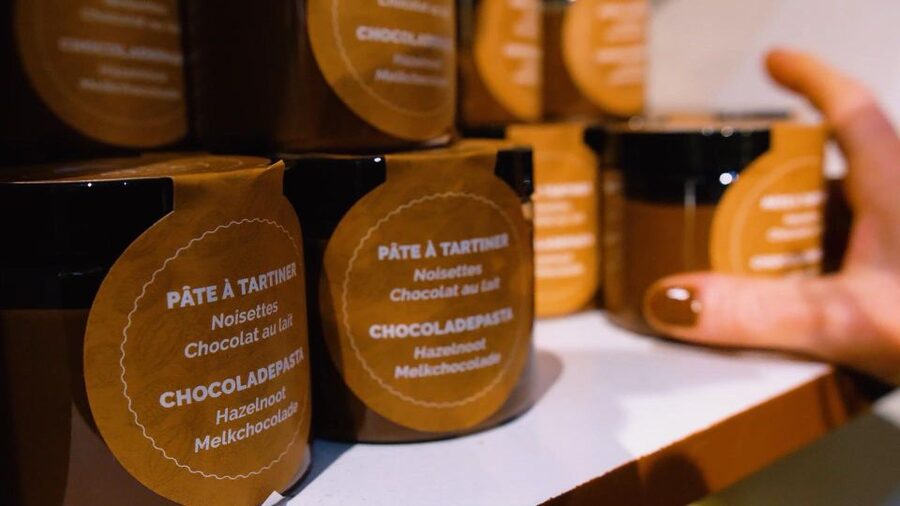
The shop gives you a chance to take the subject home without buying a generic souvenir. You can browse chocolate products, books, and chocolate-related objects, including molds and other unusual items.
The shop is useful for families because children can choose something connected to the visit. It is also a practical place to find a food gift, though the entrance ticket does not include shop purchases.
I would leave the shop until the end. The museum’s displays explain what you are buying, and the tastings may help you decide which types of chocolate you prefer. The shop is a pleasant final stop, but it is not a reason on its own to pay the entrance fee.
Who will enjoy this most?
I would recommend this museum to:
- Families with children who need an activity as well as information.
- Chocolate lovers who want tastings, not just displays.
- Adults interested in food history, trade, rituals, and craft.
- Visitors looking for an indoor activity that does not require a full day.
- Anyone who enjoys comparing regional flavors and learning how chocolate is made.
I would be more cautious if you dislike self-guided museums, want a long live demonstration, or expect an extensive workshop. The museum gives you plenty to see, but its size and format are modest. You need to bring your own pace and curiosity.
My verdict on the Chocolate Museum Paris
I like the way this attraction joins history with tasting. The story begins with ancient rituals, moves through Columbus and Montezuma, and ends with modern chocolate-making methods. The samples make the information easier to remember, and the children’s treasure hunt solves the usual family problem of keeping younger visitors involved.
The drawbacks are clear. The museum can be completed quickly, the main demonstration is virtual, and hot chocolate costs extra. At $21, you should plan to spend enough time reading, watching, and tasting to make the admission worthwhile.
Book it if you want a friendly, family-ready museum with edible examples and a clear story about cacao. Skip it if you are looking only for a quick dessert or a hands-on chocolate workshop. For the best visit, arrive well before the 4:30 PM last admission, use the activity booklet with children, consider the €3 audioguide if you prefer listening, and save room for the samples.
FAQ
Where is the Chocolate Museum Paris?
The museum is at 28 Boulevard de Bonne Nouvelle, 75010 Paris, in the Ile-de-France region of France.
How much does admission cost?
The listed price is $21 per person. The audioguide costs an additional €3 per person, and hot chocolate also costs €3 per cup.
Is the visit guided?
No. The standard visit is self-guided. You can explore the displays at your own pace, and an audioguide is available at the welcome desk for €3.
What languages are available?
The descriptive panels are in English, French, and Spanish. The audioguide is available in French, English, German, Dutch, Spanish, Italian, and Portuguese.
Are chocolate tastings included?
Yes. Chocolate samples are included with admission, including products made on-site. The experience includes tastings such as praliné and ganache.
Is hot chocolate included?
No. Hot chocolate costs €3 per cup and is paid for separately.
Is the museum suitable for children?
Yes. Children can take part in a treasure hunt and use an activity booklet. These activities are designed to keep younger visitors engaged during the self-guided visit.
Is the museum wheelchair accessible?
Yes. The museum is wheelchair accessible. Large bags and luggage are not allowed.
Freshly tempered around Paris
- Private Wine and Chocolate Tasting Experience★ 4.4 · 3 reviews
- Paris Sweet & Chocolate Family Treasure Hunt★ 5.0 · 37 reviews
- Molded Bonbons Chocolate making class in Paris (collective)★ 4.5 · 20 reviews
- Private Wine and Chocolate Tasting in Paris★ 4.5 · 4 reviews
- Pure Chocolate Tour in Paris★ 5.0 · 20 reviews
- Expert-Led Sweet Secrets of Paris Pastry & Chocolate Marathon★ 5.0 · 3 reviews
- Paris Small-Group Montmartre Chocolate & Pastry Walking Tour★ 5.0 · 15 reviews
- Private Dark Chocolate Tasting Tour in Paris★ 5.0 · 4 reviews
More France Chocolate Tours to compare.
Paris French Sweets Tasting Tour with Pastries and Chocolates
Read our review →
A Morning in Paris Food Tour: Croissants, Baguettes & Chocolate
Read our review →
Saint-Germain: Gourmet Chocolate & Pastry Walking Food Tour
Read our review →
Paris: 45-minute Chocolate Making Workshop at Choco-Story
Read our review →
Paris Chocolate, Macaron & Pastry Food Tour: 10 Gourmet Tastings
Read our review →
Passy-Grigny: Chocolate and Champagne Tasting Tour
Read our review →
Paris Pastry Tour – Croissants, Macarons & Iconic French Desserts
Read our review →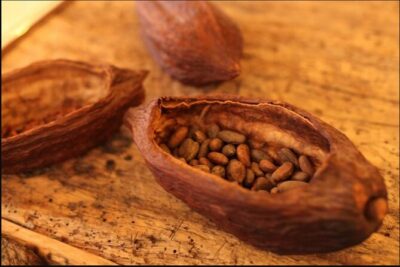
Saint-Germain The Original Chocolate Tasting Tour with Pastries and Macaron
Read our review →Chocolate lists with this tour